Miss Ellen
Black BeautyMiss Ellen is among the women who consider taking Black Beauty into their household near the end of his story, and she becomes the first to ride him there. Her favorable judgment helps give him a trial, while the ensuing days of careful use establish that he can be trusted. In a narrative marked by the consequences of treating horses as disposable workers, her household’s eventual decision to keep him and never sell him again makes her part of the security that closes his autobiography.
Identity and Decision Context
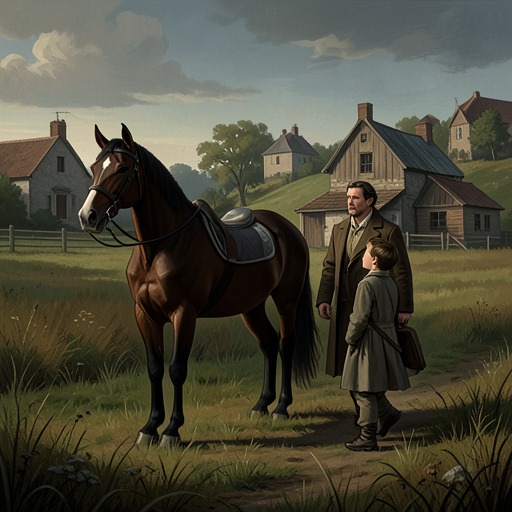
Miss Ellen is a younger woman in a family whose home stands a mile or two from the village. When Willie brings Mr. Thoroughgood to ask whether Miss Blomefield or Miss Ellen is at home, the three women come out to inspect Black Beauty. The group includes Miss Blomefield, a tall, pale woman leaning on a younger woman, and another stately-looking woman. The younger woman is identified as Miss Ellen; her dark eyes and merry face distinguish her in the narrator’s account. The scene gives no further family history, but places her within a household whose members discuss the horse’s safety together rather than leaving the choice to one person.
The decision is not made without reservations. The tall, pale woman is nervous about riding behind a horse that has once fallen, fearing that another fall would be more than she could bear. Mr. Thoroughgood answers by explaining that even excellent horses can suffer knee injuries through drivers’ carelessness and that, from what he sees, Black Beauty may be such a case. He does not press the women to accept his view: he offers the horse on trial so their coachman can judge him. Miss Ellen’s readiness to try Black Beauty therefore takes place amid an explicit concern about his past fall and the risk it might seem to pose.
First Impressions and the Trial
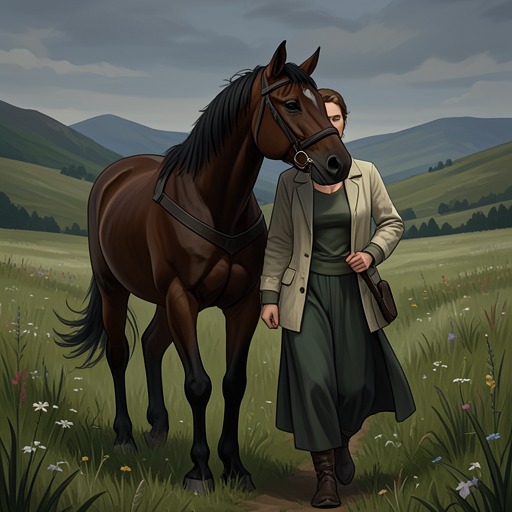
Miss Ellen is immediately drawn to Black Beauty’s appearance and manner. She says she is sure she would like him because he has such a good face. Her response contrasts with the other woman’s apprehension: the same history that makes Black Beauty seem uncertain to a prospective rider does not erase the favorable impression he makes on Miss Ellen. The evidence presents this as an initial personal response, not as proof that she already knows his past or has reached a final decision.
Her first drive tests that impression in practice. Miss Ellen takes Black Beauty out in a low park chair, with Joe Green accompanying her. The horse recognizes that she is a good driver and observes that she is pleased with his paces. Her choice to drive him herself makes the trial more than a discussion of Mr. Thoroughgood’s recommendation: she experiences his movement directly, while Joe is present to accompany her and provide information about him.
On returning, Miss Ellen tells the other sisters what she has heard from Joe: that he is sure this horse is Squire Gordon’s former Black Beauty. She then says she will write to Mrs. Gordon to tell her that her favorite horse has come to them, anticipating the pleasure the news will bring. The recognition links Black Beauty’s present situation to his earlier life at Birtwick and to the people who valued him there. It also gives Miss Ellen a role as a messenger between his former home and his prospective new one.
From Trial to a Lasting Home
The household does not decide on the strength of a single drive. Black Beauty is driven every day for about a week, and his apparent safety gives the women further grounds to trust him. Miss Lavinia eventually ventures out in the small close carriage; after these trials, the decision is made to keep the horse and restore his old name, Black Beauty. Miss Ellen’s first ride begins the practical assessment, but the final commitment belongs to the household collectively. The sequence matters: favorable first impressions are tested through repeated use before they become a promise of permanence.
A year later, Black Beauty describes his work as easy and pleasant and says that his strength and spirits are returning. Joe Green is now his kind and attentive groom, and Willie treats him as a special friend. The ladies have promised that he will never be sold. Miss Ellen is not presented as the sole source of these conditions, but her early approval helped bring Black Beauty into the household in which they become possible. His last home reverses the insecurity of repeated sale: he is no longer being assessed only for what work he can perform or what price he may fetch.
Narrative Role and Significance
Miss Ellen’s part in the ending is conveyed through Black Beauty’s autobiographical account. The reader receives her actions and words as he observes them: her first favorable response, her drive with Joe Green, her report to the sisters, and the household’s gradual decision. The perspective keeps attention on the horse’s experience of being evaluated, driven, and finally kept. It does not supply a private account of Miss Ellen’s thoughts beyond what she says and does, so her importance rests on observable acts of welcome and practical care rather than on an imagined inner history.
Her contribution is modest in scale but decisive in effect. Mr. Thoroughgood proposes a trial; Miss Ellen accepts the possibility of liking Black Beauty, puts that possibility to the test, and helps recognize him as the horse once loved by Squire Gordon’s family. The week of driving and the eventual promise that he will never be sold extend that first welcome into lasting safety. In the book’s final movement, Miss Ellen’s household does not erase Black Beauty’s difficult past; it gives him a present in which dependable work, kindness, and the prospect of remaining at home can replace uncertainty.