Reuben Smith
Black BeautyReuben Smith is a highly capable stableman and driver whose intermittent drinking turns professional trust into tragedy. Gentle and skilled when sober, he is given another chance after an earlier dismissal; on a night journey with Black Beauty, however, he drinks, ignores signs that the horse’s shoe is loose, and drives on at speed. Smith dies in the resulting fall, and his family once again loses its home.
Identity and abilities
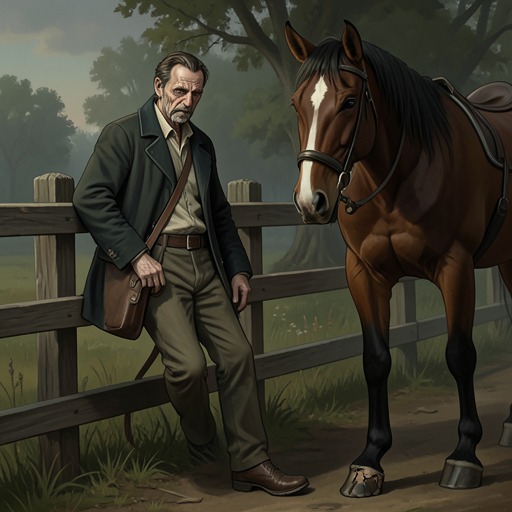
When York leaves for London, Smith is placed in charge of the stables. Black Beauty’s account presents him as a man unusually well suited to the work: he understands horses, handles them gently, and can treat them with knowledge gained during two years living with a veterinary surgeon. He is also an accomplished driver, able to manage either a four-in-hand or a tandem. Handsome, well educated, and pleasant in manner, he is liked by people and horses alike.
Smith’s abilities make his subordinate position at the stable notable: in ordinary circumstances, he seems qualified to be a head coachman. But competence does not protect the horses or the household from his recurring drinking. His characterization rests on the distance between what he can do when dependable and the harm caused when that dependability collapses.
Drinking, dismissal, and reinstatement
Smith does not drink continuously. Instead, he keeps steady for weeks or months and then has a bout that makes him a disgrace to himself, a source of fear to his wife, and a problem for those around him. York has concealed these episodes from the Earl of W—— more than once because Smith is so useful. That protection ends after Smith becomes too drunk to hold the reins while driving a party home from a ball. One of the gentlemen has to take the reins and drive the ladies back, making the incident impossible to hide. Smith is dismissed, and his wife and young children must leave their cottage by the park gate.
Before Black Beauty’s final journey with him, York intercedes with the kind-hearted Earl of W——, and Smith is taken back on the condition that he will not drink again while living there. He keeps that promise well enough for York to trust him with responsibility during his absence. The arrangement establishes both Smith’s genuine return to reliable work and the precariousness of the confidence placed in him: a promise and a history of relapse stand side by side, but the apparent success of his reform wins him another important assignment.
The journey with Black Beauty
In early April, with the family expected home in May, Smith is assigned to drive Colonel Blantyre to town in a light brougham and ride back. At the station, Blantyre gives him money and asks him to take care of his young mistress and reserve Black Beauty for her. The instructions place Smith in a position of trust, while making clear that the horse is valuable and intended for a particular rider.
Smith rides Black Beauty to the White Lion and asks the hostler to feed the horse and have him ready for four o’clock. A nail in one of the front shoes has started to come loose on the way, but the hostler notices it only near the appointed time. Smith does not arrive until five. Told about the shoe, he refuses to have it attended to before setting off, although Black Beauty recalls that Smith had ordinarily been careful about loose shoe nails. Smith delays again, first saying that he will leave at six, then failing to come at six, seven, or eight. When he finally calls for the horse, nearly nine o’clock, his voice is rough and loud, and he is in a temper.
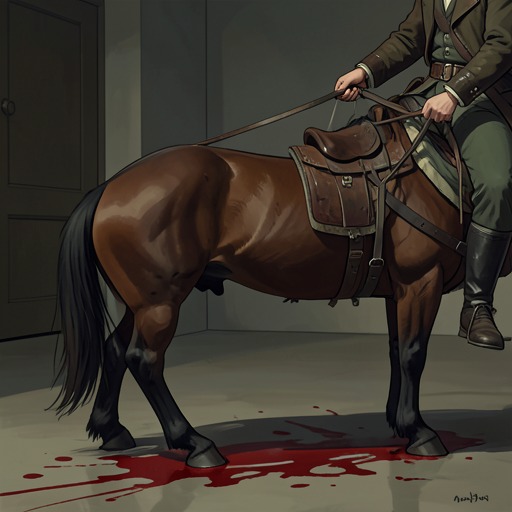
The landlord warns Smith to be careful. Smith answers angrily, then soon begins galloping, repeatedly using the whip even though Black Beauty is already going at full speed. It is dark, and the road is stony. As they approach the turnpike, the loose shoe comes off. Beyond the gate, newly laid large stones make fast travel dangerous, but Smith is too drunk to recognize that the horse’s pace has changed or respond to the danger. Black Beauty continues at speed without the shoe, until the pain and difficulty of the journey bring him down on both knees. Smith is thrown from the horse and does not get up after making a brief effort to rise.
Death and consequences
Black Beauty cannot assist Smith or himself. He waits by the road until help arrives; the horse is eventually led home and receives treatment for the damage caused during the ride. Smith’s death is sudden, and because there were no witnesses to the fall, an inquest is held. The landlord and hostler at the White Lion, among others, testify that Smith was intoxicated when he left the inn. The toll-gate keeper confirms that he rode through at a hard gallop, and Black Beauty’s lost shoe is found among the stones. On this evidence, the case is considered clear, and Black Beauty is cleared of blame.
Smith’s wife, Susan, is left with their six children. After his burial, with no home or relations to turn to, she and the children have to leave the cottage again and enter the Union House. The consequence echoes the earlier dismissal: Smith’s drinking first costs his family its home, and his reinstatement does not prevent the same hardship from returning in a more final form.
Character and narrative significance
Smith is not depicted as incapable or uncaring in every circumstance. His horse-handling, driving, learning, and pleasant manner are repeatedly recognized, and those strengths explain why York tries to protect and restore him. The tragedy comes from the sharp contrast between these qualities and his failure on the night when careful judgment matters most: he disregards the loose shoe, rides too fast over hazardous stones, and cannot perceive the danger to Black Beauty.
Because Black Beauty recounts the journey through the horse’s experience, Smith’s decline is shown chiefly through observable changes: delay, rough speech, anger, the whip, and an unsafe pace. The account does not offer an explanation that cancels his responsibility. Instead, the consequences extend beyond the dead rider. The horse suffers, the household’s trust is broken, and Susan and the children lose their home once more. Smith’s story therefore links personal relapse to the vulnerability of both working animals and dependants who bear the costs of a person’s failure.