Six-Day Cab License Regulations
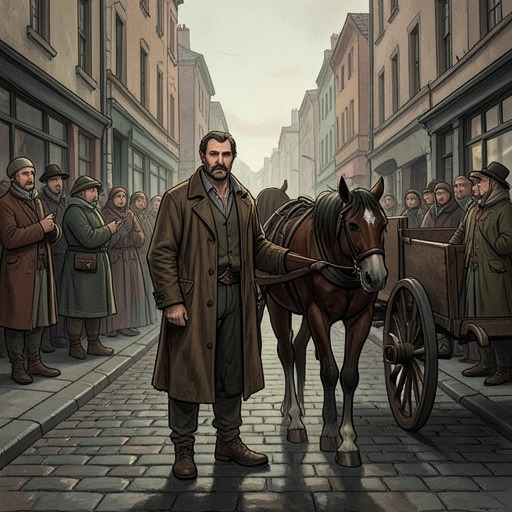
Black BeautyThe Six-Day Cab License Regulations define the boundary of Jerry Barker’s cab work and give practical force to his refusal to drive on Sunday. In Black Beauty’s account, the six-day license is not merely a personal preference: Jerry says it bars him from taking a fare that day, while his experience makes weekly rest a safeguard for his health, family life, and horses.
Definition and Legal Operation
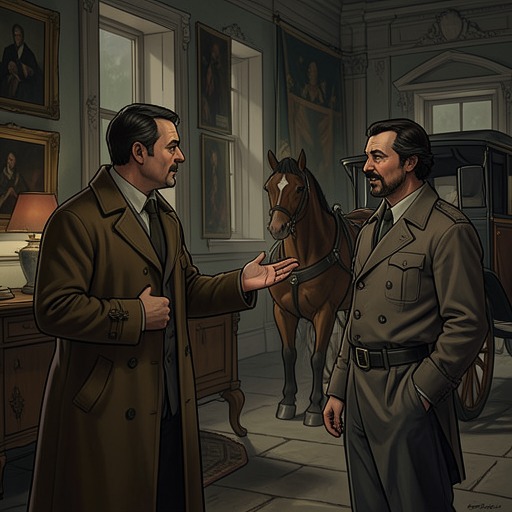
When a gentleman asks Jerry to take Mrs. Briggs regularly to the New Church on Sunday mornings, Jerry explains that he has a six-day license and cannot legally carry a Sunday fare. The proposed journey is described as a short distance, but the licensing restriction applies nonetheless. Mr. Briggs offers to arrange a change of license and ensure Jerry does not lose money, yet Jerry declines.
A footnote qualifies the arrangement’s history: it states that the annual charge for a cab license had been substantially reduced and that the distinction between six-day and seven-day cabs was abolished some years earlier. The narrative nevertheless presents Jerry’s six-day license as the operative limit in this conversation, preserving the practical and moral importance he attaches to Sunday rest.
Jerry’s Refusal and Its Rationale
Jerry explains that he once held a seven-day license, but found the continuous work too hard for himself and his horses. For the last five years, he says, he has taken only a six-day license. The change has given him a regular day away from the cab, time with his wife and children, and the opportunity to attend worship as he had before becoming a driver.
He also argues that rest improves the work itself. Jerry says he is stronger and healthier, while his horses remain fresher and wear out less quickly. He reports that other six-day drivers agree and that he has saved more money in the bank than when he worked every day. His family, he adds, would not return to the seven-day arrangement. For Jerry, then, rest is not simply a concession that costs a working household income; it is a condition that supports health, sustainable work, and domestic life.
Mr. Briggs accepts that people should have rest and attend church, but suggests that one short Sunday journey would leave Jerry most of the day free and points to the family’s custom as a reason to agree. Jerry acknowledges the customer’s generosity and says he would be glad to oblige, but maintains that he cannot give up his Sundays. The exchange turns on a contrast between an apparently minor service for a valued customer and the recurring cost of surrendering a day of rest.
Wider Cab-Work Context
The account places Jerry’s choice against a cab trade in which working conditions vary sharply. Because Jerry owns his cab and is his own driver, Black Beauty observes that his interest in treating the horse well is aligned with his ownership, even apart from his kindness. By contrast, horses hired out by large cab owners may be driven by men pressed to earn enough each day to pay the rental charge and support their households.
Seedy Sam describes that pressure in specific terms: many drivers must find eighteen shillings a day for a cab and two horses before earning anything for themselves. He says he may spend fourteen or sixteen hours on the stand, can go weeks without a Sunday, and is constrained by a fare limit of sixpence per mile after the first within the four-mile radius. In one example, a six-mile journey brings him only three shillings, followed by a return without a fare. This account shows why a day off cannot be understood apart from the economic arrangements governing cabmen and horses.
The contrast sharpens when Black Beauty later works for Nicholas Skinner. There is no Sunday rest in Skinner’s establishment, and Sunday hires can mean taking a party ten or fifteen miles into the country and back. Jerry’s earlier practice of resting his horses therefore stands against a regime of continuous work, not just against one customer’s request. The license rule’s significance in the novel lies in this connection between a formal limit on work and the larger question of who bears the cost when rest is denied.