The Ruining and Separation of Black Beauty and Ginger
Black BeautyThe Ruining and Separation of Black Beauty and Ginger is a turning point in Black Beauty’s working life and friendship with Ginger: after both horses have been damaged, they find comfort together in a meadow, only to be parted when the Earl decides that Black Beauty’s scarred knees make him unsuitable for the stable. Their reunion is tender but temporary, and the causes of their injuries show two different forms of human disregard for a horse’s limits.
Causes and Background
Black Beauty’s injuries follow the fatal ride of Reuben Smith. After Smith’s death, an inquest heard evidence that he had been intoxicated when he left the White Lion and had ridden at a hard gallop through the toll-gate. Black Beauty’s lost shoe was found among the stones, and the inquest cleared him of blame. His wounds took a long time to heal: proud flesh formed at his knees and was treated with caustic, after which a blistering fluid removed the hair from the fronts of both knees. The wounds eventually closed, but the treatment left visible blemishes.
Ginger’s decline came by a different route. Lord George was a young, hard rider who hunted whenever he could and took little heed of warnings about his horse. After Black Beauty had left the stable, Lord George entered Ginger in a steeplechase despite the groom’s warning that she was strained and unfit to race. He urged her to keep pace with the leading horses. Ginger’s high spirit carried her among the first three finishers, but the effort damaged her wind and strained her back; Lord George’s weight added to the burden. Her injury was not an isolated mishap but the consequence of a warning disregarded and a horse pushed to perform.
Reunion in the Meadow
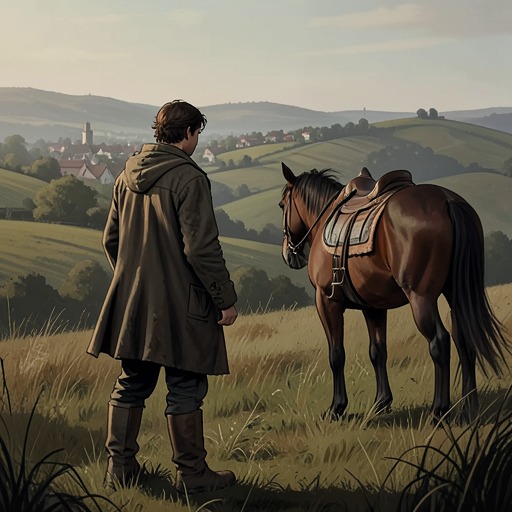
Once Black Beauty’s knees had healed enough for him to leave the stable, he was turned out alone in a small meadow for a month or two. He enjoyed the freedom and grass, but the isolation weighed on him. Having grown used to the company of other horses, he often neighed when he heard horses passing on the road, generally without receiving an answer.
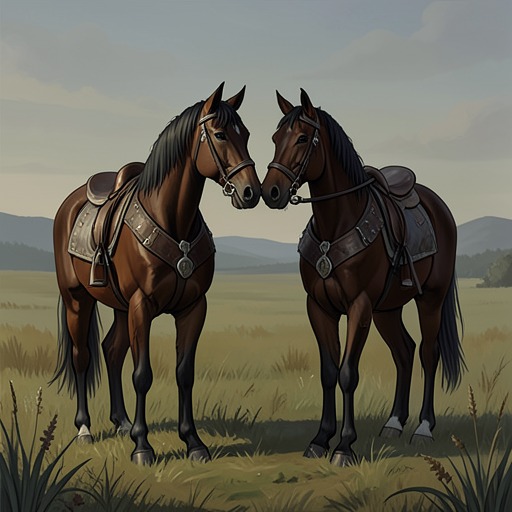
One morning the gate opened and Ginger was brought into the meadow. The man removed her halter and left her there. Black Beauty trotted to meet her, and both welcomed the reunion. It soon became clear, however, that Ginger had not been brought for their pleasure: she had been turned out to see whether rest might help after hard riding had ruined her health. Their closeness could no longer restore the strength they had lost. They did not gallop as they once had; instead, they fed, lay down together, and spent long hours beneath a lime-tree, standing with their heads close. Their companionship softened the constraints of recovery without reversing its cause.
The Earl’s Decision and Their Parting
The Earl came into the meadow with York and examined both horses. He was displeased at the loss of the money spent on them, but said his greater regret was that the horses of his old friend, who had expected them to find a good home, were ruined. He decided that Ginger should have a year’s run to see whether rest would help her. Black Beauty, by contrast, was to be sold: the Earl would not keep knees like his in the stable.
York proposed a destination where appearance mattered less: a livery-stable owner in Bath whom he knew to look after his horses. He also pointed out that the inquest had cleared Black Beauty’s character and that a recommendation from York or the Earl would support the sale. The Earl instructed York to write, emphasizing that the place mattered more than the price. His decision offered Black Beauty a prospect of continued care, but it made his separation from Ginger unavoidable.
About a week later, Robert came to the meadow with a halter and led Black Beauty away. There was no formal leave-taking. The two horses neighed to one another, and Ginger followed anxiously along the hedge, calling as long as she could hear the sound of his feet. The scene turns on the difference between practical arrangements and emotional consequence: the sale is discussed in terms of blemishes, care, and price, while the horses’ calls register the loss those arrangements impose.
Aftermath and Significance
York’s recommendation led to Black Beauty’s purchase by the Bath livery-stable owner. The journey by train was new to him and required courage, though he soon became accustomed to the movement of the horse-box. His new stable was reasonably comfortable and its staff attended to him, but it was less airy than the home he had known. The stalls sloped, and his head was tied to the manger, leaving him to stand on the incline. The change therefore brought a measure of care without restoring the conditions or companionship of his former life.
The episode places Ginger’s injury and Black Beauty’s blemishes side by side: one horse is strained in a race despite a groom’s warning; the other bears lasting marks after a fatal ride, though an inquest establishes that he was not at fault. Their separation follows not from any failure of friendship but from the consequences human conduct leaves on their bodies and from the value assigned to those bodies. Elsewhere, the household at Birtwick is described as protecting ill-used creatures, while John and Joe affirm that people who witness cruelty should intervene. Against that standard, the horses’ histories make the cost of neglect concrete: affection can console them, and responsible people can sometimes arrange safer care, but neither kindness nor a new home can simply undo damage already done.