The Rule of One Day’s Rest Every Seven Days
Black BeautyThe Rule of One Day’s Rest Every Seven Days is both a religious precept and a standard for humane working conditions in Black Beauty. Jerry Barker’s refusal to take Sunday fares makes the rule concrete: a day of rest protects the driver’s health and family life as well as the horse’s strength, but the book’s accounts of cab work show how commercial pressures can deny that rest to both.
Principle and Practice
Jerry Barker explains that he once held a seven-day cab license, but found the work too hard for himself and his horses. Year-round labor left him without Sundays with his family or the opportunity to attend worship, and he says that for the previous five years he has kept only a six-day license. In his experience, a weekly break has made him stronger and healthier, while his horses stay fresher and are worn down less quickly. He also reports having saved more money than when he worked every day, suggesting that rest need not mean economic failure.
For Jerry, the rule is not simply a private religious observance. He understands the day of rest to apply to people, horses, and other animals, and believes it reflects what is good for them. The book’s presentation makes the horse’s need for respite inseparable from the worker’s: the same schedule that gives Jerry time with his wife and children also prevents his animals from being driven without a break.
A Sunday Fare Refused
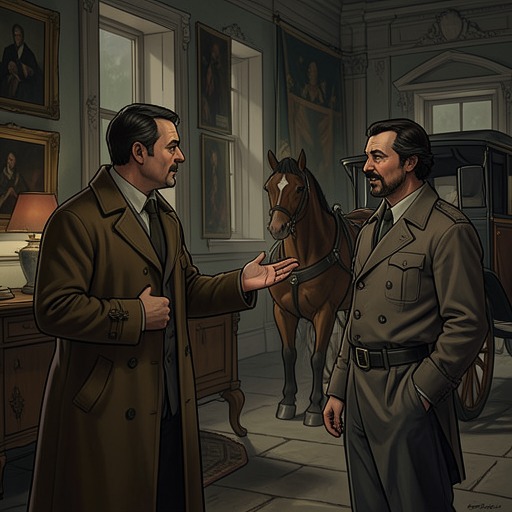
When a regular customer asks Jerry to take a woman to church on Sunday, Jerry declines. He says his six-day license does not permit him to take a Sunday fare. The customer offers to arrange a change of license and compensate him for the difference, and argues that the journey is short and would happen only once a day. Jerry remains unwilling to surrender the day, despite the value of keeping a good customer. An accompanying note explains that the distinction between six- and seven-day cabs was later abolished after the annual license charge was reduced.
The immediate consequence is that Jerry loses a customer, and some drivers call his decision foolish. Truman defends the right to Sunday rest as belonging to working people and animals alike, and argues that rights granted by religious and English law should be preserved for their children. Larry counters that he would take an opportunity to earn money, while Jerry answers that hypocrisy among religious people does not invalidate religion itself. The exchange frames the rule as a contested claim about both conscience and livelihood, not as a custom everyone can afford or chooses to observe.
Mercy and the Meaning of Rest
The rule does not mean that every Sunday journey is treated as equally wrong. When Polly Barker tells Jerry that Dinah Brown must travel more than ten miles to reach her dangerously ill mother, Jerry initially worries that the trip would cost him his day off and add work for already tired horses. Polly appeals to the Golden Rule, asking him to consider what he would want if his own mother were dying. She also distinguishes helping someone in urgent need from ordinary paid labor.
Jerry agrees to take Dinah at ten o’clock, but seeks to reduce the burden on his horse by borrowing a light trap from a butcher who does not use it on Sunday. The episode places compassion beside Sabbath observance: rest is a protection against routine demands, not an excuse to refuse exceptional aid. The horse’s workload remains part of the decision, and the borrowed vehicle is a practical expression of care.
Economic Pressure and Unequal Access
The accounts of cab work show why a weekly rest day is easier for some drivers to keep than others. Black Beauty observes that Jerry owns his cab and horse, giving him a direct interest in treating the horse well. By contrast, drivers who hire horses and cabs from large proprietors must earn enough to cover the daily charge before providing for their families. Their dependence on the owners’ terms can transfer the pressure for income onto the horses’ bodies.
Seedy Sam describes paying eighteen shillings a day for a cab and two horses, with nine shillings required from each horse before he earns anything for himself. He says he has gone ten or twelve weeks without a Sunday and often works fourteen or sixteen hours a day. Low fares compound the burden: within the four-mile radius, the charge after the first mile is capped at sixpence per mile. Sam recounts a six-mile journey for which he received three shillings, then returned without a fare, making twelve miles for the horse. He argues that a driver under this pressure may resort to the whip when a horse is exhausted, not because he takes pleasure in cruelty but because he fears that his family will otherwise go hungry. His account does not excuse the harm; it shows how the organization of work can make rest and humane treatment costly for those with the least control over their conditions.
The Horse’s Testimony
Black Beauty’s own working life gives the rule a bodily measure. Under Jerry, he remembers receiving a bran mash with nitre on Saturday nights in hot weather, followed by two nights and a full day of uninterrupted rest. By Monday he felt fresh again. Later, working for Nicholas Skinner in summer, he gets no Sunday rest and is driven on long country journeys, sometimes ten or fifteen miles out and back, without passengers getting down to walk up steep hills. His driver uses a sharp-ended whip that draws blood and lashes him under the belly and at the head.
The contrast turns a schedule into a difference in lived experience: rest restores the horse, while continuous work, heat, and punishment wear him down. As a horse’s autobiography, the narrative makes the animal’s fatigue evidence rather than background. The rule therefore reaches beyond Jerry’s individual choice; it becomes a measure of whether human systems recognize working animals as beings whose strength can be spent and whose need for recovery matters.