
The Hidden Family Story
Black Box (Jennifer Egan Edition)This flow traces how the narrator’s concealed paternity shapes her childhood memories and her understanding of family.
increasing Bearing strength in each event
 decreasing
Bearing strength in each eventdecreasingThe Moonlit Child

A Child’s Explanation
An absent father
The narrator grows up believing that her father died before she was born. The account gives a child a simple answer to an absence that her mother does not yet explain.
The moon becomes associated with a paternal promise: something distant and steady that can be looked toward when the family story feels incomplete.
A lasting image
Childhood attachments survive changes in knowledge. The moon remains a private source of comfort even after the narrator discovers that the story behind her family was more complicated.
The Late Discovery
A Rewritten Past
Paternity revealed
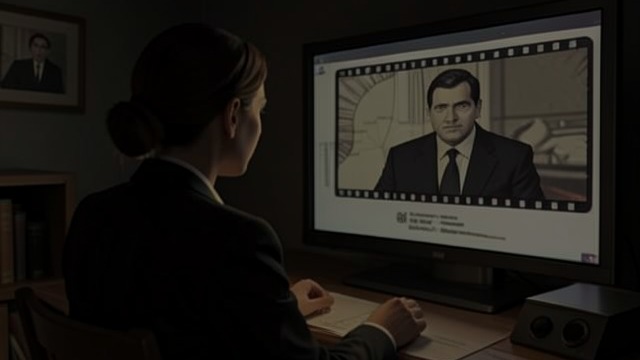
The narrator discovers that her father is a movie star and that her mother concealed the truth. The revelation makes the old explanation seem absurd in retrospect, without making the new one emotionally simple.
She watches many of his films and imagines that he does not know about her, though she is present in the world he made. The search for an identity becomes a one-sided conversation with a public image.
The cost of knowledge
The discovery changes how the narrator experiences her past and threatens her closeness to the mother whose stated aim was her happiness. Truth clarifies facts while disturbing belonging.
The Fracture at Home
Mother and Daughter Apart
Love under suspicion
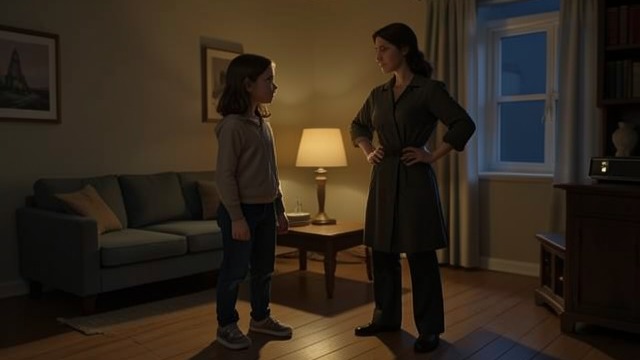
The narrator’s mother has shaped the daughter’s childhood around a false account, and the daughter struggles to reconcile deception with care. A single disclosure reconfigures years of ordinary memories.
The separation is emotional rather than a simple rejection: the narrator knows her mother’s goal was happiness even as she feels the damage of being denied the truth.
A changing self
The revelation alters the fit of the narrator’s adult identity. It becomes one of the private transformations she carries into a mission that will demand still more changes.
The Cradle Memory

A Return to Early Care
In the rocking boat
Wounded and waiting at sea, the narrator feels the boat’s movement as a cradle. The sensation brings back her mother rocking her as a baby and the memory of fierce, complete love.
She recognizes that her mother concealed the paternity because she believed her own love would be enough. The explanation does not erase the lie, but it makes forgiveness possible.
A reason to survive
The narrator wants to tell her mother that she forgives her. That unfinished conversation becomes another reason to remain alive while rescue is uncertain.
Forgiveness Carried Home

An Unfinished Reconciliation
A changed understanding
By the time rescuers reach her, the narrator has privately shifted from injury toward forgiveness. She has not yet spoken with her mother, so reconciliation remains a hope rather than a completed exchange.
The mission has made bodily survival urgent, but family memory supplies a different kind of urgency: the desire to return with something honest to say.
Beyond the cover
The narrator’s identity cannot be reduced to either her famous father or her mother’s protective lie. Her movement toward forgiveness allows a more complex family story to coexist with her changed adult self.
during the narrator’s childhood
in adulthood, before the mission
after the paternity discovery, before the assignment
near the end, while waiting in the boat
at the rescue, near the ending
