Beauty camouflage principle
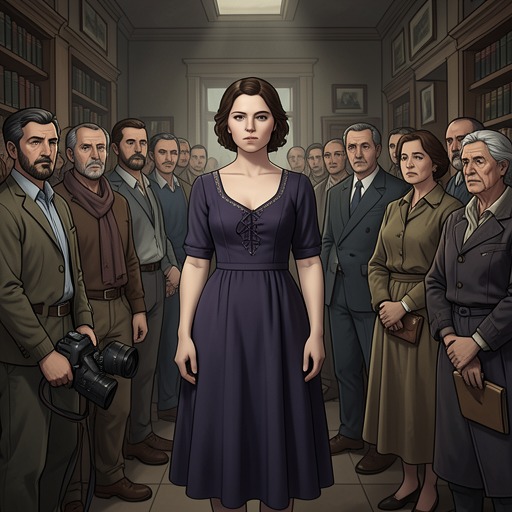
Black Box (Jennifer Egan Edition)The Beauty camouflage principle turns apparent contradiction into a method: a spy must be both compelling and easy to overlook. In Black Box, the principle is delivered as a sequence of practical lessons rather than an abstract maxim. Appearance draws a target close; social adaptation makes her feel familiar; invisibility keeps his attention elsewhere. The result sought is not simply disguise, but access: the target should become comfortable enough to speak freely and leave information within reach.
Perception and Projection
The principle begins by warning that people rarely look as expected, even after their photographs have been studied. Such a discrepancy makes the first thirty seconds in a person’s presence especially important: the agent cannot rely on an image formed in advance and must manage the impression made in the encounter itself. When perceiving and projecting are difficult, the instruction favors projection. The operative priority is to shape what the target sees, not to trust that observation alone will supply a reliable understanding.
That projection is assembled from giggles, bare legs, and shyness. These are presented as ingredients of a successful performance, not as spontaneous signs of the agent’s character. The instruction therefore makes femininity a practical display calibrated to the encounter. It is meant to attract without making the performance seem forceful or overtly strategic. The desired effect is a change in the target’s attention: when the projection succeeds, a certain sharpness goes out of his eyes. The agent’s success can thus be read in the target’s reduced vigilance, rather than in any declaration that he has been deceived.
The principle also depends on managing how the agent herself perceives the target. Photographs cannot guarantee a match between expectation and presence, so projection must remain responsive to the person actually encountered. The lesson does not promise mastery over the target; it emphasizes the limited, immediate work of shaping an impression and watching for a sign that the target’s scrutiny has softened.
Mirroring and Access
Appearance alone does not provide access. The agent is instructed not to contradict her Designated Mate and to mirror his attitudes, interests, desires, and tastes. Even a question that repeats one the man has just asked is identified as mirroring. The technique makes conversational agreement and imitation tools for establishing ease, rather than evidence of genuine shared preferences.
The stated aim is to become part of the target’s atmosphere, a source of comfort and ease. That formulation explains why mirroring matters beyond any single exchange: repeated accommodation is supposed to make the agent seem like a natural presence in his environment. The method is not to force a confidence or demand information, but to become familiar enough that the target no longer treats her presence as a reason to remain guarded.
The instructions connect that familiarity to specific opportunities. Once the target’s guard drops, he may have significant conversations within the agent’s earshot. He may also leave his possessions in a porous and unattended state. These are distinct openings: one makes spoken information available, while the other leaves physical access less protected. Only after establishing herself as a comfortable presence can the agent begin gathering information systematically. Camouflage therefore functions as the social precondition for intelligence work, not as a decorative layer placed on top of it.
The Double Requirement
The goal is to be both irresistible and invisible. The two demands are not alternatives to be balanced once and then forgotten; together they define the desired performance. The agent must register strongly enough to hold a place near the target, yet weakly enough not to invite sustained scrutiny. Being invisible means not being closely watched, while the job is to be forgotten yet still present. The formulation turns absence of attention into a resource: the target can overlook the agent without her having to leave his vicinity.
This logic also clarifies why the instructions stress a lovely, innocuous, evolving surprise. The agent is expected to return to her room and change clothes often, with a fresh appearance at mealtimes treated as essential. A crisp white sundress against tanned skin is offered as attractive, while overbright colors are discouraged because they draw attention and hinder camouflage. Appearance must keep changing enough to remain pleasing, but not become so conspicuous that it defeats the aim of going unnoticed. The carefully chosen detail of the fresh look makes the larger paradox concrete: visibility is cultivated in controlled doses, in service of a more durable social invisibility.
The method is tactical rather than a guarantee of success. A target who fails to acknowledge the agent may indicate that women do not register in his field of vision; yet such a man may still have many beauties in his domain. His inattention can therefore create cover without proving that the agent has gained personal trust or exclusive access. The rule treats invisibility as a condition that can be exploited, but also leaves its limits visible: not being watched may help the work, while not registering at all can complicate the performance.
Form and Narrative Function
The principle’s instructional voice shapes how its logic is encountered. Black Box is built from atomized lessons derived from steps in the action, rather than from straightforward narration alone. In the author’s account, the working title was Lessons Learned, and the intended shape was to emerge through the narrator’s lessons. The camouflage rule belongs to that structure: it reads at once as practical counsel within a spy story and as one unit in a larger pattern of accumulated instruction.
The author also describes the story as a transformation of a character from a naturalistic story into a spy-thriller version. The Beauty camouflage principle gives that transformation a formal mechanism: an agent’s actions are rendered as compressed rules for performing, adapting, and remaining unseen. The author wrote the story by hand in a Japanese notebook laid out with eight rectangles on each page, then spent a year controlling and calibrating the material. That carefully segmented origin resonates with the rule’s own emphasis on small, repeatable tactics. Its significance lies not only in what the agent is told to do, but in how the story converts action into portable lessons about attention, performance, and access.