South of France
Black Box (Jennifer Egan Edition)South of France gives “Black Box” a setting where the Unnamed narrator’s undercover role meets moments of bodily exposure, social performance, and private recollection. Its rocky shore and blue night are not merely a backdrop: they mark contrasting conditions in which the story’s instructions move between the demands of the mission and the narrator’s attention to the world around her.
Shore and Undercover Setting
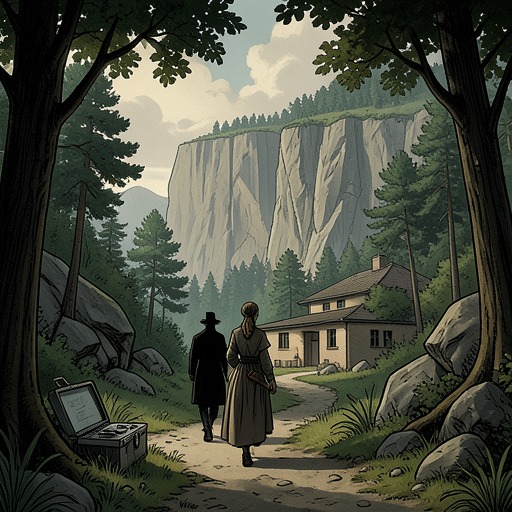
The narrator’s assumed role as a Beauty restricts even ordinary pleasures: on a rocky shore in South of France, she is instructed not to read what she would actually like to read. The detail makes the disguise tangible through a small deprivation, showing how the cover identity reaches into leisure as well as conduct. In another instruction, sunlight on bare skin is described as nourishing as food, giving the coast a bodily presence beyond its function as an espionage setting.
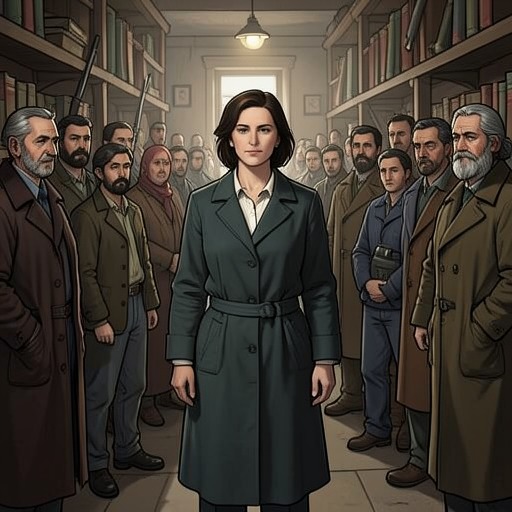
The undercover social world is linked to a house party where beauties gather around a feared Designated Mate. The beauties are especially kind when the man they are meant to meet is widely feared, and that kindness feels good to the narrator even though it rests on a false understanding of her identity and purpose. In this setting, hospitality is both a genuine comfort and a consequence of the disguise.
Night, Moonlight, and Memory
The setting changes after dark. South of France nights are characterized as a strange, piercing blue, while a bright moon can still astonish despite repeated sightings. These details shift attention away from the mission’s social calculations toward the scale and persistence of the natural scene.
Moonlight also opens onto personal memory: for someone who loved the moon as a child, looking at it will forever recall childhood. The instruction therefore lets the same landscape carry more than one meaning. The night belongs to the present operation, but the moon connects that present to an earlier self, a continuity that the Beauty cover does not erase.
Place in the Story’s Form
The author’s note describes “Black Box” as a transformation of a character from a naturalistic story into a spy-thriller version. South of France belongs to that genre shift as an operative landscape, but the story presents its action through atomized lessons rather than straightforward narration. Its specific settings—a shore, a party, and a night beneath the moon—arrive within that sequence of instructions, where practical rules coexist with sensory and remembered experience.
The story was written by hand in a Japanese notebook with eight rectangles on each page, then controlled and calibrated over a year. That process is consistent with the compact, separated form in which the South of France material appears: the place is evoked through sharply distinct details rather than sustained scenic description. The result makes the setting legible at once as a location of undercover work and as a space where the narrator’s attention can return to the body, the moon, and childhood.