Event 1
Sexual Assault on the Shore

[Sexual Assault on the Shore](entity:event-recall-event-a91dd022502e) marks the moment when the narrator’s covert work becomes an immediate threat to her bodily autonomy. The scene moves from danger anticipated in training to an imminent violation, and the [Dissociation Technique](entity:rule-recall-rule-dissociation-technique-454ba6f48a3f) becomes a carefully timed means of enduring the crisis without losing the possibility of returning to action. Its significance lies in that tension: the operation asks its agent to survive a private assault while treating her own body as part of the mission’s record and resources.
## Conditions and Stakes
The encounter takes place with the [Mediterranean Sea](entity:location-recall-location-mediterranean-sea-ebecfd081ad7) between the narrator and the distant shore. The surrounding water makes safety feel remote, while other women remain visible on the beach. The narrator’s thoughts turn to solidarity with them and to the fact that she is unpaid. The juxtaposition makes the language of voluntary service and patriotism difficult to separate from the danger she has been asked to accept.
Her training has prepared her for infiltration among criminals and warned that the work entails constant danger; some agents, it says, will not survive. It also demands a seemingly incompatible combination of scruples and willingness to violate them, patriotic commitment and contact with people hostile to the country, expertise and apparent inexperience. The shore episode gives these abstractions a personal cost. The narrator is not simply observing danger from within a criminal world: she is alone with a violent man, and the immediate problem is how to withstand what is happening while preserving the capacity to function.
## The Approach and the Imminent Threat
The sequence advances through the man’s approach and his movement of the narrator behind a boulder, where he pulls her onto his lap. The account presents this as coercive and as a situation in which physical violation is imminent. It does not turn the assault into a tactical victory or suggest that the narrator has control over the man’s actions. Instead, the narrative focuses on the narrow decision available to her: when to begin the Dissociation Technique.
That timing is presented as consequential. Starting too early could interfere with her ability to act at a crucial moment; starting too late could leave her too deeply caught in the experience to separate from it. The procedure is compared to pulling a parachute cord at the right time, an image that makes dissociation a trained response rather than an effortless escape. The narrator is particularly tempted to begin as the man’s strength briefly recalls her husband. That association brings an intimate relationship into the scene without making the two men equivalent: the resemblance is fleeting, and the immediate context is coercion and danger.
## Dissociation and Return
The instructions specify that the technique begins only when physical violation is imminent. The narrator is to close her eyes, count backward from ten, and imagine moving farther away from her body with each number. In this account, dissociation is neither offered as a cure nor presented as a failure of courage. It is a procedure for enduring an intolerable moment while limiting how completely the moment occupies consciousness.
The instructions also define an ending: the mind will rejoin the body when it is safe. Returning is to be done carefully, like re-entering a home after a hurricane. The image acknowledges that safety does not make the aftermath ordinary or immediate. The procedure therefore has two thresholds, departure and return, and both depend on the circumstances around the narrator rather than on willpower alone. The scene offers no detailed account of a recovery beyond this instruction, so its emphasis remains on the method and the conditions under which it is meant to be used.
## Narrative Form and Institutional Tension
The episode is shaped as guidance addressed to an agent, rather than as a conventional scene narrated from a distance. That form turns a sequence of danger and response into lessons, rules, and conditional instructions. The author's note explains that the story was designed to take shape through lessons derived from successive actions rather than straightforward narration; the shore episode exemplifies how that structure can make a crisis read at once as an experience and as a procedure for the next agent who might face it.
The procedure's language also sits uneasily beside the institution's stated principles. Elsewhere, the guidance says that when self-preservation requires harm to an innocent person, it can offer guidelines but cannot sanction violations of human rights. Here, the narrator's own safety is at stake, and the instructions acknowledge that the method cannot prevent the threat itself. Later, the text calls the agent's physical person the [Black Box](entity:expression-recall-expression-black-box-fc5d15e1e40c): without her, there is no record of what happened on the mission. That formulation makes survival a matter of both personal safety and evidence. Read together, these instructions expose the cost of an assignment that relies on an agent’s body while leaving her to manage a danger the institution cannot remove.
Event 2
Failed Photographing and Abandonment at the Cliff Meeting

[Failed Photographing and Abandonment at the Cliff Meeting](entity:event-recall-event-610535948374) is the point at which a covert operation’s carefully managed performance breaks down: a diversion meant to create an opening instead disrupts the meeting, the attempt to photograph sketches gives away the agent’s position, and the [Designated Mate](entity:concept-recall-concept-designated-mate-fc7d2c38910b) leaves her alone on the cliff. The sequence converts technical failure into a sharp reversal of dependence, as the person guiding her through the operation becomes the person from whom she is separated.
## Operational Context and the Diversion
The attempt takes place amid a meeting where sketches carry a specific warning: once two subjects begin drawing, concrete planning may be under way. The agent’s objective is to record those plans, but the meeting is not simply a matter of getting close and taking a picture. The operation relies on covert devices and on reading the behavior of the people around her. Elsewhere in the instructions, conversations within earshot can be recorded through an [In-ear Microphone](entity:object-recall-object-fe27941a8896) implanted beyond the first turn of the right ear canal, activated by pressing the cartilage across the ear opening. Because a [Beauty](entity:concept-recall-concept-beauty-5706601efafe) carries neither a pocketbook nor a timepiece, such recording equipment cannot plausibly be carried openly. The covert apparatus is built into the body, making the agent herself the instrument of collection.
The cliffside diversion is designed to redirect attention toward the house. The agent springs up with a gasp and looks that way, presenting herself as though she has heard something others missed. Once the Designated Mate presses close and demands to know what she heard, she waits until the group’s curiosity is nearly anger, then says faintly, “I heard screaming.” The claim gives her temporary authority: the new host is expected to be the first to leave for the alleged disturbance. Yet the maneuver also creates a risk. The host’s departure may open a brief chance to photograph the plans, while the Designated Mate’s attention to his handset suggests that the diversion may be running out of control and undermining the transaction the agent meant to capture.
## The Photograph Fails
The agent tries to exploit the glow of a backlit screen, hoping it will distract its user from a flash fired at some distance. She moves close enough for the sketches to fill the field of view and holds still. The camera is implanted in the left eye and operated by pressing the left tear duct; in poor light, a flash can be triggered at the outside tip of the left eyebrow. The procedure’s physical precision contrasts with its fragility: the flash is especially dramatic in total darkness, and it must not be used around other people. Here, the intended photographic opportunity depends on a narrow assumption about the target’s attention, not on a secure opening.
That assumption proves wrong. An epithet in another language and an angry demand about the flash make clear that the Designated Mate was not absorbed enough by his handset to miss it. The flash also blinds the agent because she has failed to cover her non-camera eye. Her cry, “I can’t see!”, is both true and strategically useful: it distances her from responsibility for the flash by presenting the blindness as an immediate accident. But the resulting disability is no longer merely a cover. She cannot safely navigate the cliff at speed, and the Designated Mate forcefully yanks her hand as he leads her away.
## Down the Cliff and Left Behind
A distant buzz signals an approaching speedboat. Cooler air and a downward slope tell the agent that she has been taken below the cliff’s edge, but blindness, high heels, and a crumbling wooded path leave her unable to follow securely. She trips and collapses. The Designated Mate’s footsteps recede downhill, a sound that marks a change in the practical terms of their relationship: she has become more burden than asset to him. Disoriented and sitting in the dirt, she cannot do much to recover her bearings or pursue him.
The abandonment arrives not as a single dramatic declaration but through accumulating signs. Objects gather around the blinded agent with an almost sensual immediacy; then the boat’s departure sends a vibration trembling through the soil. The knowledge that she is alone, without the Designated Mate, settles slowly and coldly. The instructions describe isolation as something that deepens by stages: each new phase reveals that the previous one was less complete than it seemed. Her first response is paralysis, not a successful counteraction. The failed photograph has therefore left her with neither the information she came to collect nor the companion who had been directing her escape.
## Surveillance, Dependence, and Significance
The event sits within a system that promises both communication and constant observation. A [Subcutaneous Pulse System](entity:object-recall-object-subcutaneous-pulse-sys-16f69b838ea5) can send generic pings, and pressing a button behind the inside ligament of the right knee twice tells loved ones that the agent is well and thinking of them without revealing source or intent. The [Field Instructions](entity:object-recall-object-field-instructions-aa7333c0b3e7) are stored in a chip beneath the hairline and serve as both mission log and guide for others undertaking the work; pressing the left thumb against the left middle fingertip begins recording a thought. The agent’s whereabouts, meanwhile, remain visible as a dot on the screens of those watching over her. These mechanisms make the operative continuously legible to a distant network, yet the cliff episode shows that visibility is not the same as immediate physical support: in the moment of collapse, the narrative’s emphasis is on her solitude and helpless disorientation.
The Designated Mate’s glance toward the dock is a further warning that his interests are not fully aligned with the host’s. In retrospect, the attempted diversion and the failed photograph expose the limits of treating him as a dependable guide: he can pull the agent down from the cliff, but once her usefulness is overtaxed, he continues without her. The event’s formal texture reinforces that reversal. Rather than presenting a clean action sequence from an outside viewpoint, the instructions make the crisis legible through sounds, bodily sensations, slopes, footsteps, and vibrations. The camera’s flash, intended to preserve evidence, instead produces blindness; the boat, first announced as a distant buzz, becomes the sound and tremor of departure. The mission’s instruments promise access to information and connection, while the episode ends with the agent unable to see, unable to follow, and newly aware of being alone.
Event 3
Attack in the Remote Villa Bathroom

[Attack in the Remote Villa Bathroom](entity:event-recall-event-45671a6d3d25) turns a seemingly practical interval of care into a moment of danger. The narrator is directed toward a bathing area after being tended to, but the instructions warn that she will not remain alone. A countdown marks the approach of the attack, while the account of its aftermath emphasizes dissociation, missing time, and the signs that the narrator remains under her host’s control.
## Setting and Warning Signs
The scene begins in the home of a violent, wealthy man, where an excellent first-aid cabinet offers a limited form of care. The narrator has scrapes, and someone tends to them before showing her to a bathing area distinguished by a stone-encrusted waterfall. The sequence places care and threat close together: attention to minor injuries does not make the setting safe, and being led to a bath does not mean the narrator will be left alone.
The instructions explicitly reject the assumption that a man who has ignored and insulted the narrator cannot also desire her. That warning makes his prior treatment relevant to what follows, without treating it as protection or reassurance. The scene’s danger grows out of this contradiction: disregard and sexual interest are presented as compatible, and neither gives the narrator control over what happens next.
## Countdown and Attack
The countdown is the scene’s organizing device. It begins as the man lowers himself into the tub, before he seizes the narrator’s arm; by the time that happens, the count should have reached five. The measured instruction gives the approach a sequence and a limited point of orientation, but it does not offer a way to stop the assault. Time is counted while the narrator’s ability to direct events narrows.
The next instruction marks a sharp break in perception. When the narrator’s forehead is forced against rock, she is told to perceive her body vaguely, as if from above. The account stays focused on the change in awareness rather than elaborating the violence. Its spare progression—from entering the bath area, to the count, to a displaced view of the body—makes the attack legible while preserving the narrator’s distance from it.
## Dissociation and Missing Time
The return to the body does not restore a clear record of the intervening period. The narrator is instructed not to dwell on how much time has passed, or on the reasons for soreness and a scraped forehead. She emerges from a warm, churning bath after an indeterminate interval, shaky and weak. These details establish consequences without supplying a complete account of the assault: uncertainty itself is part of how the event is narrated.
The instructions’ repeated direction not to dwell on time or cause does not erase the aftermath. Instead, it distinguishes immediate survival from later explanation. The reader is given signs of physical and mental disorientation, but not a continuous, fully narrated experience. The gap is significant: the account makes the interruption in the narrator’s perception part of the event’s form rather than filling it with imagined detail.
## Aftermath and Continuing Control
A male attendant stationed outside the bathroom is presented as evidence that the narrator has not been forgotten. The detail can suggest attention, but it does not establish that she is free or safe; in the context of the preceding warning, it also shows that someone remains posted beyond the bathing space. The transition out of the bathroom therefore changes the immediate setting without resolving the narrator’s dependence on the household.
The event’s instructions turn ordinary objects and arrangements—the first-aid cabinet, the bath, and the attendant outside—into signs that must be read in the context of danger. The countdown offers a stark measure of approach; the indeterminate time afterward marks what cannot be confidently recovered. Together, these devices present the attack not as an isolated burst of action but as a passage from apparent care through loss of control to guarded survival.
Event 4
Extracting Data from the Secret Target’s Phone
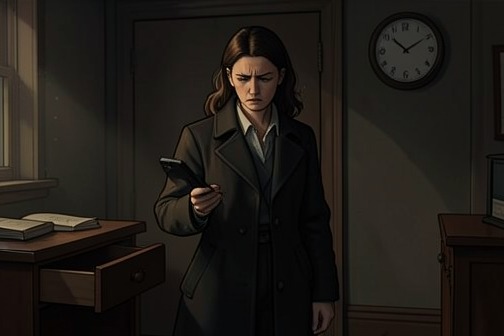
[Extracting Data from the Secret Target’s Phone](entity:event-recall-event-bd5cd9c7e8a4) is a covert intelligence procedure that turns the agent’s access to a target’s private space into a brief, high-risk opportunity to copy his handset. Presented as instruction rather than as a confirmed successful operation, it makes information gathering a bodily and strategic gamble: the possible yield is exceptional, but the transmission can be detected, the agent may be incapacitated, and the extracted information will require substantial analysis.
## Finding the Opportunity
The procedure begins after the agent has entered the target’s personal space. Rather than treating the handset as an object to seize wherever it happens to be, the instructions direct her to locate his “Sweet Spot”: the place where he empties his pockets at the end of the day and leaves the essentials he will need the next morning. For a secretive, catlike man, that place is likely to be a cupboard or drawer. The choice of location matters because it makes the target’s routine legible: a private, habitual storage place may bring the handset within reach without requiring the agent to carry an obvious recording device.
This search follows the book’s broader account of covert access. The agent is expected to observe the target’s personal habits and turn ordinary arrangements into intelligence opportunities. In an earlier instruction, important conversations are expected to take place outdoors, and the agent is told to record them if she is close enough to hear. For that task, a microphone is implanted in her ear canal and activated by pressing the cartilage beside the ear opening. The phone extraction extends the same logic from sound to stored data: surveillance depends on close observation, concealed equipment, and knowing when the target’s routines create an opening.
## The Transfer Procedure
The [Data Surge](entity:object-recall-object-data-surge-a801cfa6434b) is presented as an exceptional measure, not a routine step. The agent is told to use it only when confident that the information yield will justify the risk. The copied material may be so extensive that a large amount of manpower will be needed to sort and interpret it. Its transmission will register on monitoring equipment, and the instructions promise effectiveness only once. The operation therefore has a narrow strategic window: it may produce a wealth of intelligence, but it cannot be treated as a repeatable or invisible method.
The agent removes the [Data Plug](entity:object-recall-object-data-plug-0d9a10815ffb) from its Universal Port and uses its attached cable and connection pin to link the plug to the target’s handset. She sits on the floor, braces her back against a wall, and keeps a red ribbon in one palm before reconnecting the plug, now fused to the handset, to her own port. These concrete preparations frame the transfer as something requiring deliberate positioning and orientation, not a casual touch. The ribbon is specifically meant to help her recover her bearings if she loses consciousness: if she wakes still holding it, she is directed to look toward her foot.
## Costs and Recovery
The instructions describe the incoming data as more than a neutral file transfer. The surge may carry emotional and physical impressions, including memory, longing, pain, or joy; the memories brought forward, however, are the agent’s own rather than the target’s. Childhood recollections associated with her cat and with peppermints kept by her mother illustrate how the operation can dislodge intimate memories while she is processing alien information. The result is a striking separation between the source of the data and the personal recollections through which the agent experiences its arrival.
The procedure may cause unconsciousness or short-term memory loss. When the agent’s body is quiet, she is to unplug the handset and return it to its original location, restoring the scene rather than leaving evidence of the connection. A further warning says that the Data Surge can leave ringing in her ears and obscure the sound of someone approaching. Thus recovery is not simply a matter of ending the transfer: the agent must resume the cover operation while potentially impaired and alert to the possibility that her compromised hearing could conceal a new arrival.
## Narrative and Thematic Role
The extraction condenses the story’s contradictory demands on its agent. The training calls for an impossible pairing of scruples with a willingness to violate them, while the mission places her inside criminals’ lives and in constant danger. Here, that contradiction takes technical form: she must penetrate another person’s private space, manipulate his property, and conceal the act, all while accepting that her own memories and bodily awareness may be affected. The method makes intelligence work neither clean nor detached; the information is acquired through an intimate connection that can unsettle the person collecting it.
The procedure also belongs to the instructional form of *[Black Box](entity:expression-recall-expression-black-box-fc5d15e1e40c)*. Its numbered lessons break action into portable rules and precise gestures, allowing a covert operation to be narrated as a sequence of decisions and warnings rather than as a conventional continuous scene. In the author’s account, the story transforms a character from a naturalistic novel into a spy-thriller version, and its form was developed in a notebook with eight rectangles on each page. The phone extraction exemplifies that transformation: a specific thriller device becomes a compact lesson about access, surveillance, risk, and the cost of turning a person into an instrument of collection.
Event 5
Villa Shootout and Escape

The [Villa Shootout and Escape](entity:event-recall-event-bfecc6af2839) is the point at which the narrator’s beauty cover identity stops protecting her and her covert mission becomes a fight to get out alive. The encounter exposes the danger of being recognized as more than a guest: once the host sees her as a threat, she must defend herself while preserving the chance to escape.
## Causes and the First Reversal
The danger begins when the host lunges at the narrator and demands to know what she is doing there. The [Field Instructions](entity:object-recall-object-field-instructions-aa7333c0b3e7) treat that advance as the decisive sign that she has been perceived as an enemy, requiring her to defend herself rather than depend on the protection her [Beauty](entity:concept-recall-concept-beauty-5706601efafe) status might seem to offer. She drives an elbow upward, knocking him to the floor. This is the first reversal: a woman whom he had taken for merely a beauty demonstrates martial-arts expertise, forcing him to reassess her identity and purpose. The instructions warn that this new recognition may send his attention toward the nearest firearm, making an immediate exit essential.
## The Armed Confrontation
The host’s reassessment turns the room into an armed confrontation. His alpha beauty knows where the firearm is kept and how to use it; she is also holding a struggling baby, which may make aiming with one hand difficult. The instructions acknowledge the conflict between restraint and self-preservation: the narrator may be reluctant to harm someone who resembles her, but a person who has fired at her must be stopped from firing again. The danger is immediate and confusing, since a delay can separate being shot from realizing it has happened. The narrator is wounded in the right shoulder, an injury the instructions identify as preferable to damage involving an artery, though still a serious cost of the encounter.
The gunfire makes time another adversary. In the home of a powerful man, security may arrive within minutes, or seconds, so the narrator cannot remain to recover or secure the room. The Field Instructions frame her body as the mission’s [Black Box](entity:expression-recall-expression-black-box-fc5d15e1e40c): if it falls into enemy possession, there will be no record of what happened. Escape is therefore not simply a way to survive the confrontation; it is necessary to carry its evidence out of the house.
## Escape Beyond the House
With the way out blocked and danger closing in, the Field Instructions reserve the [Primal Roar](entity:rule-recall-rule-primal-roar-ea1737cb7413) for a last resort. The narrator must turn the beauty expected by others into something frightening: a display of screaming, wild movement, and repeated camera flashes. The tactic exploits the shock of the transformation. Women holding newborns are likely to step aside, giving her a brief opening; she is to stop as soon as she clears the immediate danger and use the confusion to flee. Those hurrying to help the powerful man may pass a dishevelled beauty without noticing her. While running, she resumes the cover, smoothing her hair and using her sundress to conceal her bleeding shoulder. The instructions caution that the absence of audible alarms does not mean none have been triggered.
Outside, the night air offers a moment of clarity, but the grounds remain dangerous: residences belonging to violent, wealthy men are expected to have guards at their exits. The narrator is directed to get to the bottom of a hill by whatever means she can and, if a guard is asleep, to pass quietly while appearing to be a carefree beauty. The escape depends not on being unseen in every sense, but on being misread as harmless.
At the rocky, moonlit shore, the irregular movement of the water points to a speedboat hidden beneath brush. The instructions identify it as a likely emergency escape prepared by the host, with its key inside. The narrator slips between branches, boards, unties the boat, and lowers its motor into the water. Her experience piloting motorboats on lakes in [Upstate New York](entity:location-recall-location-upstate-new-york-2ecf22ad2aec) now serves the mission: she starts the engine, accelerates out to sea, and steers in a zigzag to get beyond gunshot range. A broad smile and a wave to the sleepy guard sustain the appearance of a carefree departure even as she escapes. The sequence ends with freedom bringing no immediate relief; the exhilaration is followed almost at once by a crushing onset of pain.
## Narrative Form and Genre Shift
The villa escape also demonstrates the story’s deliberate change of genre. The author describes taking a character from a naturalistic story and recasting her as a spy-thriller version; here, competence under pressure is conveyed not through extended conventional narration but through compact instructions that turn each danger into a tactical lesson. The episode’s shifts—from a beauty cover to an armed threat, then to a monstrous distraction and a renewed performance of harmlessness—make genre transformation part of the character’s means of survival.
That instructional form grew from an atomized design. The author’s working title was “Lessons Learned,” and the intended shape was to emerge from the narrator’s lessons at each step rather than from straightforward narration of events. The fragments also suggested possible serialization on Twitter, where delivery through phones and the constraints of 140 characters could produce an unusual poetic intimacy. The material was written by hand in a Japanese notebook with eight rectangles on each page, then controlled and calibrated over a year. The resulting structure makes the escape feel both procedural and constructed: its abrupt units resemble field advice while exposing the careful formal work behind the apparent immediacy.
Event 6
Agent Rescued at the Hotspot
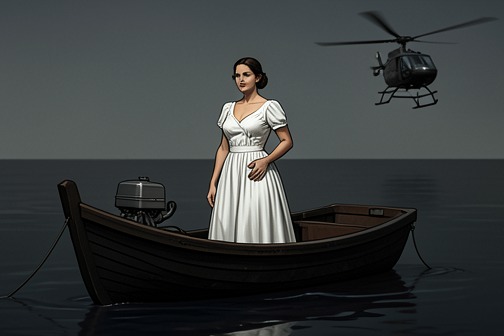
[Agent Rescued at the Hotspot](entity:event-recall-event-780edbf9c301) completes the citizen agent’s escape by turning an injured person’s arrival at a Geographic Hotspot into a final test of navigation, endurance, and recognition. The procedure promises that help can reach her there, but it does not make rescue feel safe: she must remain conscious, wait without knowing where relief will come from, and overcome the impulse to flee the helicopter that has arrived to save her.
## Reaching a Geographic Hotspot
The rescue begins before rescuers are visible. If pain makes thought impossible, the [Field Instructions](entity:object-recall-object-field-instructions-aa7333c0b3e7) narrow the task to navigation. While moving toward a Geographic Hotspot, the agent is to press the button behind her knee for sixty continuous seconds to signal an emergency, and she must remain conscious. The instructions present these as concrete requirements amid the aftermath of gunshots and immediate physical pain: survival first means continuing to move and making herself locatable.
At the approximate location of a Geographic Hotspot, she must cut the engine. The change from travel to waiting is stark: the boat is left in total darkness and silence, and she may lie at its bottom. The directions do not promise instant contact or tell her which way help will come. They insist instead that the feeling of dying is not proof that death is imminent. The pause is therefore part of the rescue, not a sign that it has failed.
The sky offers a limited point of orientation. The agent is told to let the moon and stars direct her, but the instructions do not turn that image into certainty about the rescuers’ approach. She has to wait without knowing the direction from which relief will arrive. The account supplies one measure of reassurance: those giving the instructions say they have never failed to recover a citizen agent, dead or alive, who managed to reach a Geographic Hotspot. The promise is deliberately conditional on reaching the site, and it includes recovery even when survival cannot be guaranteed.
## Reasons to Remain Conscious
The instructions give the agent private attachments to hold against pain and disorientation. She may imagine herself in her husband’s arms or at home in her apartment, where her husband’s grandfather’s hunting knife is displayed inside a Plexiglas box. These details make the imagined return specific: not an abstract wish for safety, but a return to familiar relationships and objects.
Her mother becomes another reason to endure. The agent is told that she will discover she has forgiven her mother and understand that her mother concealed her paternity because she trusted her own inexhaustible love to be enough. Wanting to tell her mother that she forgives her gives the agent a further reason to make it home alive. Yet the instructions acknowledge that she cannot simply wait to feel ready; she will be unable to wait, and nevertheless will have to wait. Emotional purpose helps sustain her, but it does not remove the ordeal’s duration or uncertainty.
## Dissociation and the Helicopter
As she lies in the boat, the agent may look upward and feel suspended, as if floating and looking down at a glittering universe beneath her. Recognition comes when she notices a woman like herself, crumpled and bleeding at the bottom of the boat. The woman is the agent herself: she has deployed the [Dissociation Technique](entity:rule-recall-rule-dissociation-technique-454ba6f48a3f) without intending to. The episode makes the separation between awareness and injured body explicit, while the instructions reassure her that this unchosen response is not harmful in itself.
The helicopter tests that separation from outside. Its noise is described as inherently menacing, and an unlit helicopter can seem like a combination of bat, bird, and monstrous insect. The agent is told to resist fleeing the apparition because it has come to save her. Even so, approaching rescue does not immediately register as safety. To return to her body, she must reach it before the helicopter does; counting backward is offered as a way to guide that return. By eight, she should be close enough to see her bare, dirty feet; by two, she should hear her shallow, bleating breath. Re-entry restores awareness of the body, but also means accepting that physical pain will rack her again.
## Recognition and the Ending
Once back in her body, the agent witnesses the helicopter’s slow, throbbing descent. It may look like an instrument of a purely mechanical realm, or seem to have come to wipe her out; it may be difficult to believe that people are inside. The decisive evidence arrives only when she sees the rescuers crouching above her, their faces taut with hope and ready to jump. Rescue becomes credible through human presence, not through the machine’s appearance alone. The scene ends at this recognition, with the rescuers poised above the injured agent.
The event’s form reflects the story’s method. In the author’s note, the piece is described as a sequence of lessons derived from the steps of the action rather than a straightforward account of events. Its short, atomized units let procedure, bodily crisis, and personal memory repeatedly interrupt and qualify one another. The note also identifies a genre transformation: a character from a naturalistic story is carried into a spy-thriller version. Here that transformation is visible in the precise emergency protocol, but the final measure of rescue is intimate and physical: the agent must return to her own body, and the people above her must become recognizable as people.