Beauty cover identity
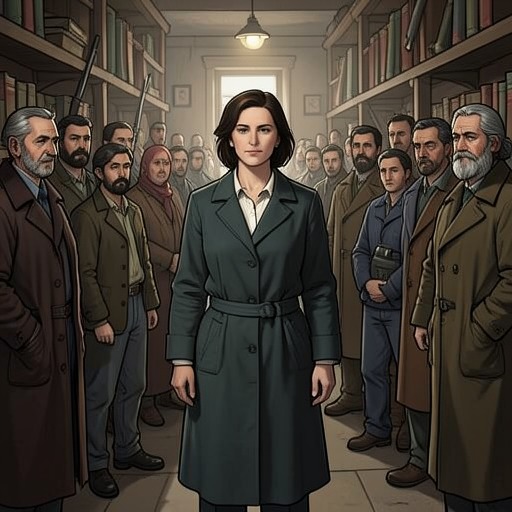
Black Box (Jennifer Egan Edition)Beauty cover identity is a behavioral disguise built from repeated instructions rather than a single costume: the Unnamed narrator must appear alluring, agreeable, and unthreatening while concealing the purpose of her undercover approach to a Designated Mate. Its decisive tension is stated as a double aim—to be irresistible and invisible. The role governs how she presents herself to men, how she behaves among other women, and how the story marks the point at which a woman holding a gun and a baby no longer fits the category at all.
Identity and Performance
The role begins with the first encounter. The first thirty seconds in another person’s presence are treated as especially important, and when perception and projection compete, the instruction is to concentrate on projecting. Giggles, bare legs, and shyness are named as ingredients of a successful projection. The measure of success is not simply that the man looks at the narrator: when the performance works, a certain sharpness goes out of his eyes. Attraction is thus presented as a practical means of changing how she is seen, while the demand for invisibility keeps that attraction from becoming an end in itself.
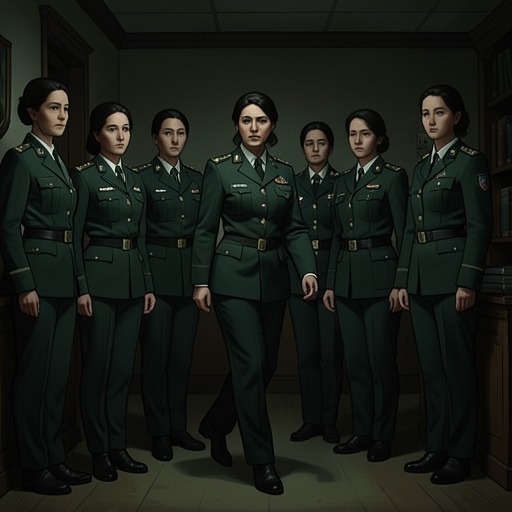
The instructions make the role legible through small, repeatable behaviors. The narrator is to seem friendly without becoming solicitous, and, in conversation with another Beauty, to be perceived as neither above nor below her. She is told to be truthful about every aspect of her life except marriage, if she is married. These rules distinguish the cover from indiscriminate deception: the role requires social ease and much ordinary truth, but preserves a specific concealment. Some powerful men call their Beauties by the role’s name, while the guidance also insists that there is deep camaraderie among women in the role. The narrator is warned that such kindness can feel good even when it rests on a mistaken belief about who she is and why she is there.
Maintenance in Company and on the Move
The disguise requires upkeep. As a Beauty, the narrator is expected to return to her room and change clothes often; looking fresh at mealtimes is part of the work. The desired effect is described as a lovely, innocuous, evolving surprise, and a crisp white sundress against tanned skin is offered as an attractive example. The changes are not incidental decoration: the role depends on a presentation that can be renewed and adjusted while still appearing effortless.
The same discipline applies beyond the house. A Beauty should require no context other than the presence of her Designated Mate and should seem to enjoy any journey he initiates. If he looks up repeatedly, the instructions suggest that he may be using the stars to navigate; the Mediterranean Sea, once imagined as infinite, supplies the scale of that travel. The narrator is advised to simulate enjoyment by putting an affectionate arm around him and nestling her head close. The prescribed gesture makes companionship visible, while the broader rule narrows the Beauty’s apparent world to the man beside her.
Limits and Contradictions
The cover depends on other women as well as on its target. At a house party where the undercover narrator has gone to meet a widely feared Designated Mate, the Beauties are expected to be especially kind. That welcome offers genuine comfort, but its basis is false: they misunderstand the narrator’s identity and purpose. The instructions therefore place the role between connection and instrumental deception. The narrator can participate in the kindness and follow the rules of equal, non-solicitous conversation, even as the operation depends on keeping her actual purpose hidden.
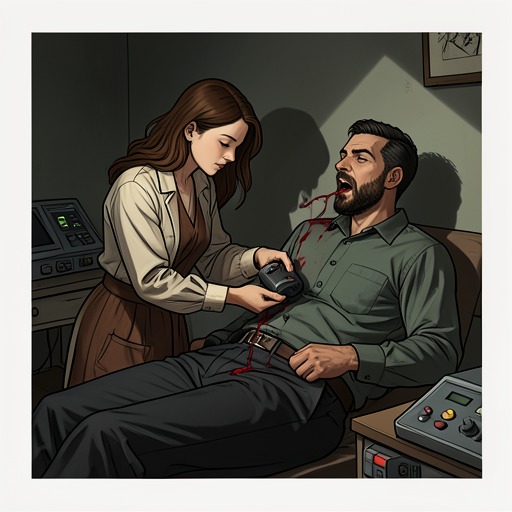
The sharpest boundary appears in the instruction that a woman holding a gun and a baby no longer qualifies as a Beauty. The surrounding guidance makes the contradiction concrete: the alpha Beauty of a violent man is expected to know where his firearm is kept and how to use it, while disabling a gun holder is likely to hurt the baby she is holding as well. The cover is therefore not a stable identity that survives every action. A weapon and a child expose the limits of the role’s harmless, decorative appearance; yet the accompanying maxim that no Beauty is really a Beauty also unsettles any simple distinction between the performed type and the women performing it.
Form and Narrative Significance
The author’s note connects this role to the story’s method. The working title was Lessons Learned, and the intended shape was to emerge from the lessons the narrator derives at each step rather than from straightforward narration of action. That design turns practical rules into the organizing units of the narrative: the reader encounters the cover as a sequence of instructions about projection, social conduct, clothing, travel, and danger. The role is not merely described after the fact; its rules supply the form through which the action is understood.
The note also identifies a deliberate change of genre. The author wanted to take a character from a naturalistic story and carry her into a spy-thriller version. Black Box was drafted by hand in a Japanese notebook with eight rectangles on each page, then controlled and calibrated over a year. That origin reinforces the tension built into Beauty cover identity: a character is reshaped through a tightly measured set of behaviors, while the atomized form lets each lesson retain its own pressure. The disguise promises control over how the narrator is read, but its rules repeatedly expose the effort, concealment, and danger beneath that composed surface.