New heroism
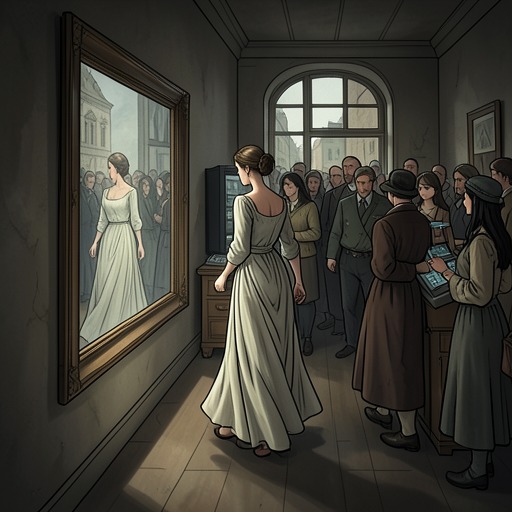
Black Box (Jennifer Egan Edition)New heroism replaces the pursuit of individual distinction with a demanding ideal of self-effacement and collective purpose. Its measure is not whether one person becomes visible or celebrated, but whether that person can merge with something larger, resist the lure of personal glory, and contribute to shared effort. The idea culminates in a cosmic image: former agents become points of light in a crowded heaven, figures for a collective that exceeds individual life.
Definition and Reversal
The concept begins with a reversal of familiar heroic expectations. Credentials and skill are not the necessary measure of distinction; bravery and equilibrium matter more. Nor should being one among hundreds feel diminishing. New heroism makes that apparent lack of singularity part of its purpose: the individual is asked to join a larger undertaking rather than to stand apart from it. The shift is not from weakness to prowess but from self-importance to participation.
That change requires more than modesty. The ideal calls for throwing off generations of self-involvement and digging beneath a polished persona. What lies below is described as a deep space of possibilities, an image that makes inward exploration a condition of outward contribution. The comparison to a familiar home acquiring new wings and rooms gives this change a dreamlike shape: the self is not simply erased, but discovered to be less finished and less confined than its public image suggests. New heroism therefore links self-renunciation to an enlargement of possibility, rather than treating them as opposites.
Visibility, Recognition, and Personal Glory
A central target is the fixation on being seen and recognized in the United States. New heroism treats the desire for recognition not as a harmless reward for achievement but as a distraction that can consume the energy required for common action. Individual magnetism, however powerful it may seem, is set against the greater force of combined selfless effort. The contrast changes the scale on which accomplishment is judged: a personal feat may be astonishing, yet its public ownership is not the point.
The text sharpens this criticism by comparing the need for personal glory to cigarette addiction: a habit that feels necessary for survival even while it causes harm. The comparison gives the craving a double character. It is compelling from within, but its apparent sustenance comes at a cost. Childish attention-seeking is likewise presented as something usually satisfied at the expense of real power. Together, these formulations suggest that visibility can imitate strength while weakening the capacity for action. The warnings are not against every individual achievement; they distinguish achievement from the demand to receive individual credit for it.
Citizen Agents and Shared Effort
Citizen agents embody the distinction between doing something remarkable and claiming its recognition. They may accomplish astonishing personal feats, but they rarely seek individual credit. Their conduct supplies a practical form for the concept: courage and capability remain necessary, while the impulse to make either a private source of glory is restrained. Being one among many is therefore not an insult to the agent’s contribution. It is a condition of the collective work New heroism values.
This ethic also frames personal magnetism as insufficient beside coordinated selflessness. The point is not that individuals have no power, but that their power changes when joined to that of others. The text’s language of merging and combined effort makes heroism relational: its fullest measure lies in participation that cannot be reduced to a single celebrated figure. That standard directly opposes the attention-seeking it criticizes. Where the pursuit of recognition turns achievement back toward the self, the citizen agent’s reluctance to seek credit allows the achievement to remain associated with shared effort.
The Collective Beyond Individual Life
At its most expansive, New heroism asks agents to transcend individual life, including its petty pains and loves, in favor of a dazzling collective. The scale of the ideal changes again here: the collective is not merely a team acting together in the present, but an image that can outlast the lives of its members. Some citizen agents do not return; the text says they have left their bodies behind and now shimmer in the heavens. It invites readers to imagine the pulsing stars as heroic spirits of former agents who served in Beauty, and Heaven as a vast screen crowded with their points of light.
The image gathers the concept’s earlier contrasts into a final transformation. The wish to be individually seen is criticized, yet the former agents appear as lights; what changes is the meaning and setting of visibility. They are not presented as isolated celebrities receiving personal acclaim, but as members of a multitude whose brilliance belongs to the collective. The imagined screen thus makes the ideal visible without restoring the private glory New heroism rejects. Its final promise is transcendence through belonging: individual lives are relinquished to an enduring, shared radiance.