
The Two Models of Rescue
Black BoxThe novel contrasts salvation through ideology with Boaz’s practical model of making life more livable in the present.
increasing Bearing strength in each event
 decreasing
Bearing strength in each eventdecreasingMichel’s Promise of Redemption

Michel’s Promise of Redemption
A sacred future
Michel presents land redemption as a path toward national and religious restoration. He believes devotion and sacrifice can make a meaningful future possible.
The danger of certainty
His vision gives direction but tends to classify dissent as moral failure. The promise of rescue risks turning people into instruments of the cause.
Alexander’s Critique

Alexander’s Critique
Salvation as an escape
Alexander argues that movements promising redemption often reject the present and justify violence in its name. His theory links self-erasure to collective purity.
The critic is implicated
His own history of command and emotional cruelty complicates the argument. He understands the machinery of fanaticism without standing outside it.
Boaz’s Everyday Alternative
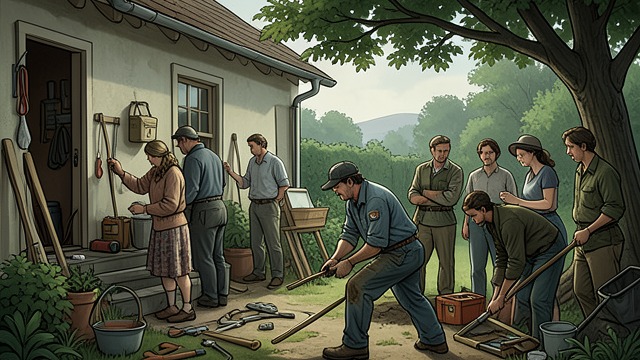
Boaz’s Everyday Alternative
Work rather than salvation
Boaz repairs the estate, plants a garden, and invites others to contribute. He offers no final doctrine, only a place where people can work and live together.
The present matters
His approach rejects the assumption that life must wait for political or religious transformation. It remains modest, but it makes immediate care possible.
The House as Refuge
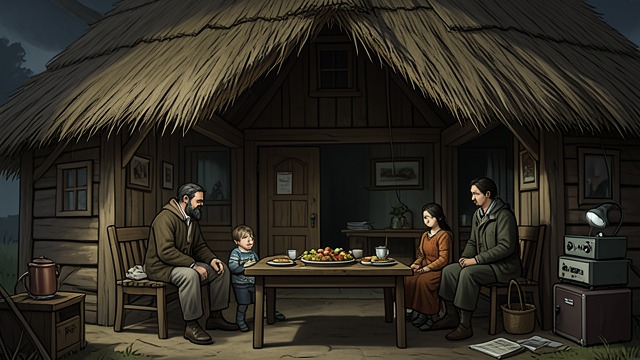
The House as Refuge
Shelter for a divided family
The estate holds Boaz, the ill Alexander, and for a time Ilana and Yifat. Their coexistence is improvised rather than governed by a shared creed.
No promised resolution
The house does not erase conflict or guarantee lasting unity. It offers a temporary place where people can meet the needs immediately before them.
A Final Invitation

A Final Invitation
Michel opens the door
After learning of Alexander’s illness, Michel invites him to stay and receive care. He asks that the family treat one another with mercy.
Rescue without certainty
The invitation does not promise recovery or ideological agreement. It offers human assistance without requiring a final account of who was right.
March 1976
Summer 1976
August 1976
September 1976
4 September 1976
