Advanced kidney cancer
Black BoxAdvanced kidney cancer is the decisive physical and temporal condition of Alexander Gideon’s final return to Israel. As the disease spreads and treatment shifts from radiotherapy to chemotherapy, the once self-possessed Gideon becomes reliant on care from Ilana Brandstetter-Sommo and Boaz Brandstetter; illness also sharpens his wish to remain with his son and changes how he understands his estranged family.
Diagnosis and treatment
Gideon tells Michel Sommo that he contracted kidney cancer a year earlier and had undergone two operations. By the time of his letter, the growth had spread into his abdomen. Doctors in New York saw no point in another operation, and Gideon described his condition as miserable. His prognosis makes the return to Israel more than a visit: he came without advance notice to see Boaz and stay in the house where he grew up, with the sense that his remaining time was limited.
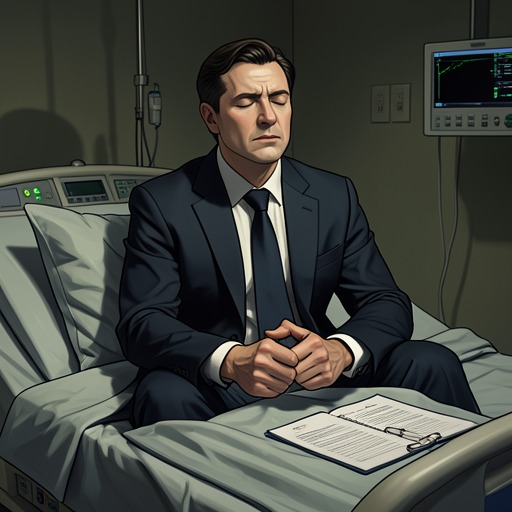
Treatment plans change as his illness progresses. A message to Manfred M. Zakheim says that Gideon is going into Mount Sinai Hospital in New York for a week of radiotherapy and asks for arrangements for a quiet private clinic with chemotherapy facilities. After returning to Israel, he anticipates radiotherapy at Hadassah Hospital, Jerusalem. Later, radiotherapy is stopped and he travels by taxi to a hospital in Haifa every Sunday for chemotherapy. The change in treatment brings an unexpected improvement: he remains weak and tired, but has less pain and can spend longer walking.
Physical decline and daily care
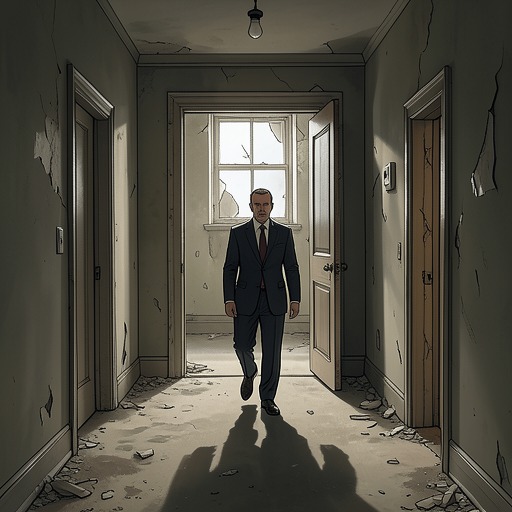
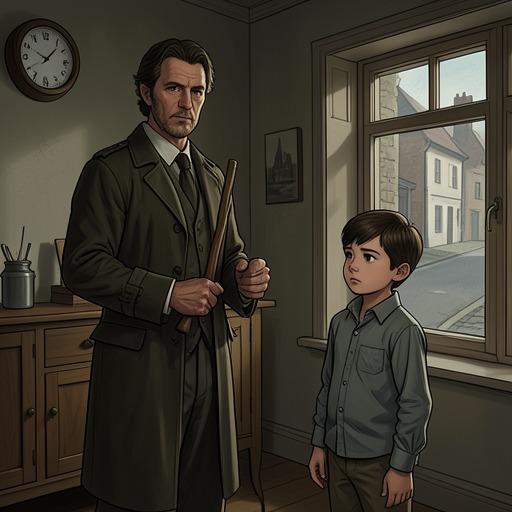
The cancer alters Gideon’s movement and independence. At the house, he rests on a plank bed, uses painkillers, and relies on a walking stick made by Boaz. His possessions remain packed in suitcases; even his pipe is no longer useful for smoking. He can sometimes sort seeds or make his way around the house, but his strength gives out. The account presents these limits as daily realities, not simply as a diagnosis: his routine and the rooms he can reach are increasingly shaped by his body’s capacity.
As his condition worsens, Ilana moves into his room to care for him at night. He often wakes in panic and mumbles orders as if still inside a nightmare; she gives him an herbal drink and pills and stays beside him until he sleeps again. During the day she helps him with toileting, dressing, shaving, and meals, and he is often silent except to ask for help. Their roles have reversed from the earlier marriage’s estrangement: the man who admits that he once looked down on others now depends on the attentiveness of the woman he had left behind.
The illness does not erase Gideon’s personality. He still arranges objects in the room and follows a repeated path with his stick; during games, he delights in winning and protests when he loses. These habits persist alongside confusion, fatigue, and dependence. The contrast makes his decline specific: not a single transformation into helplessness, but a narrowing of what he can do, punctuated by recognizable flashes of will and character.
Family, return, and decisions
Gideon’s cancer becomes part of his response to Michel’s suspicion that Ilana has stayed with him for romantic reasons. In his letter, he explains that she chose to remain and care for him until he went into hospital, and says that their relationship is not a conventional marriage. He presents his grave condition as evidence against Michel’s jealous interpretation and urges him to treat Ilana kindly. The illness thus enters a conflict already shaped by the former marriage, the later marriage, and the family’s unresolved loyalties.
It also influences Gideon’s decisions about property and care. In a message to Zakheim, he says his estate is to be shared among his son, Ilana’s daughter, and his grandchildren, and asks Zakheim not to leave him. He gives Zakheim a free hand in managing his property on the condition that he remain with Gideon. In his letter to Michel, Gideon says that a revised will provides for Boaz and Michel’s family. These arrangements extend his concern beyond his own survival, while his request that Ilana stay with him makes personal care as important as the estate’s future.
Gideon ultimately chooses to remain at the house with Boaz rather than go to Jerusalem for radiotherapy, despite Zakheim’s plan to take him there. He imagines spending his remaining time on modest tasks and staying close to his son. The choice does not reverse the prognosis; it makes explicit where he wants to be as the disease advances.
Illness and the sense of time
The cancer reorganizes the story around a shrinking future. Gideon acknowledges that his time has run out, and the bottle chimes Boaz has hung upstairs give literal form to the bells he associates with impending death. Their sound accompanies a return to childhood surroundings and the ordinary work of the household, so that mortality is set against cultivation, games, and family care rather than separated from them.
His course remains uncertain in its details: chemotherapy brings some relief, but fatigue, confusion, and dependence continue. The account records no recovery or completed ending to his illness. Instead, cancer changes the conditions of his remaining life—where he stays, how he moves, who cares for him, and what he chooses to provide for others—while leaving his final outcome unstated.