Bethlehem
Black BoxBethlehem is presented less as a lived-in setting than as a strategic point in a chain of proposed land transactions. The area west of the city, in the West Bank, attracts the attention of Michel Sommo and his political associates, while imagined exchanges connect it to property elsewhere in Israel and to a French religious order. Through these plans, Bethlehem becomes a place where political aims and financial interests meet, and where claims of purchase and peaceful transfer sit alongside projects for territorial expansion and population removal.
Location and Political Context
Bethlehem enters the narrative through political activity directed toward the surrounding West Bank. Before the Six-Day War, Michel Sommo campaigned against the Eshkol government’s wait-and-see policy and supported taking the military initiative against Egypt and other Arab countries. After the war, he volunteered for an active role in the Greater Israel Movement, working in propaganda and demonstrations. He later left that movement and joined the founders of the Jewish Fellowship Movement, whose activities after the Yom Kippur War included protests against troop disengagements in the Sinai and Golan Heights and attempts to buy land illegally from Arabs around Bethlehem.
The account distinguishes Sommo’s political associations and land-related activity from personally committed violence. He was interviewed by police twice in connection with the Jewish Fellowship Movement, in October 1974 and April 1975, but was not charged; the report says it found no evidence that he had personally taken part in violent lawbreaking. It also records that he published letters advocating the peaceable departure of the Arab population from Israel and the occupied territories through financial inducements. Bethlehem’s significance therefore lies not only in the proposed acquisition of land, but in the political project surrounding that acquisition and the proposed movement of the people living there.
The Proposed Bethlehem Transaction
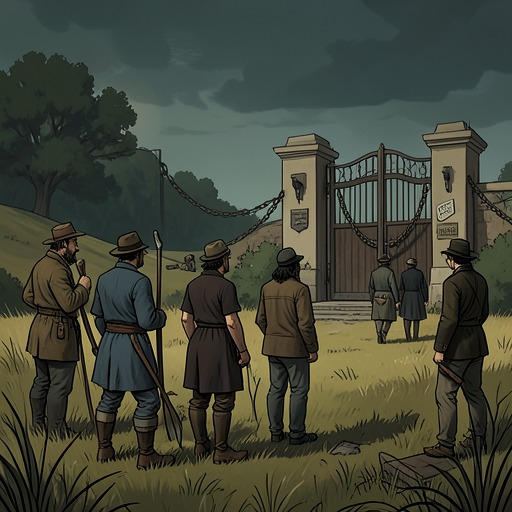
A later account by Manfred Zakheim describes a more specific plan involving land belonging to a Christian religious order headquartered in Toulouse. According to Zakheim, Michel Sommo traveled to Paris to negotiate on behalf of his organization for the order’s property west of Bethlehem. Zakheim further alleges that a Paris-based patron, identified only as Mr. N., financed the trip and arranged for Sommo’s French nationality to be restored, giving him a legal basis for a transaction in which the patron preferred not to appear formally. The earlier intelligence report had noted Sommo’s unusual Paris trip and the rapid restoration of his French nationality without identifying what lay behind them; Zakheim’s letter supplies a proposed explanation, though it remains his account of the episode.
The religious order, Zakheim says, was unwilling to sell its land in the Holy Land but might exchange the Bethlehem fields for a substantial building and attached land in a central location within Israel’s pre-1967 borders. The arrangement is described as a possible exchange, not a completed transaction. Zakheim saw the deal as dependent on connecting the order’s property, the patron’s financing, and Alexander Gideon’s holdings. He hoped to complete what he called a triangle linking Bethlehem, Toulouse, and Zikhron, but Gideon’s changing intentions about selling his Zikhron property made the plan uncertain.
Land, Money, and Political Aims
Bethlehem’s proposed role also appears in an argument about how territorial acquisition should be financed and justified. In a letter to Zakheim, Alexander Gideon challenges the plan to buy Arab land and offer its owners a one-way ticket elsewhere. He questions the financial feasibility of paying twenty thousand dollars to each of two million Arabs, and argues that the cost could require selling the whole State of Israel without covering the expense. He counters the proposal with an ironic suggestion of exchanging the coastal plain for the mountains, exposing the scale of the scheme through its own arithmetic rather than treating it as a simple property deal.
Zakheim’s account places the Bethlehem negotiations within a broader investment strategy. He urged Gideon to exchange his deteriorating property in Zikhron for a foothold in Bethlehem, which he regarded as a more promising location for future development. In another message, Zakheim reported that Gideon had sold Magdiel to Sommo, acting for a Paris millionaire, with the intention of exchanging it for land connected to a French monastery in the West Bank. He also urged Gideon to invest available cash with Sommo and his associates in territorial purchases. These communications show that Bethlehem was part of a proposed network of acquisitions, exchanges, and development, rather than an isolated objective.
Michel’s changing business life gives that network a domestic counterpart. Ilana describes him receiving religious land dealers after the Sabbath and explaining to her matters such as building plots, grants, Jordanian property law, loans, working capital, and infrastructure costs. She reports that he expected Alexander Gideon’s money or property to become available to the family and believed it could be invested in the redemption of the land. Her account presents the political language of a pious mission alongside the practical calculations of development and finance. The Bethlehem project thus belongs to a world in which ideological conviction and commercial opportunity reinforce one another, even as the transactions remain unsettled.
Narrative Significance
Bethlehem gathers several competing forms of speech about land into one projected destination. Sommo’s political circle presents acquisition as a means of extending Jewish settlement and territory; Zakheim frames it as a shrewd exchange and investment; Gideon questions both its cost and its consequences for the state. The descriptions of peaceful payment and formal exchange do not erase the larger aim of encouraging Arab departure or the unequal political setting in which such transactions are proposed.
The novel does not establish that the contemplated exchange for the religious order’s property was completed, or that Gideon ultimately surrendered his Zikhron holding to secure a foothold near Bethlehem. Instead, Bethlehem remains a prospective asset whose value depends on uncertain partners, changing political forecasts, and Gideon’s fluctuating decisions. Its narrative force comes from that incompletion: the place is repeatedly treated as the future, while the characters’ plans expose how private fortunes, religious justification, and territorial ambition are already entangled in the present.