Boaz’s Violent Confrontations and Police Troubles
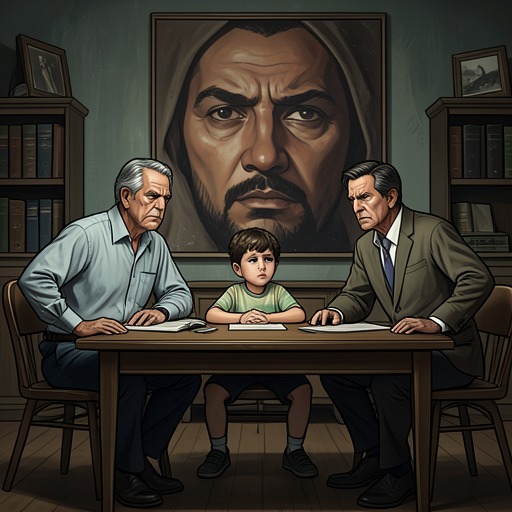
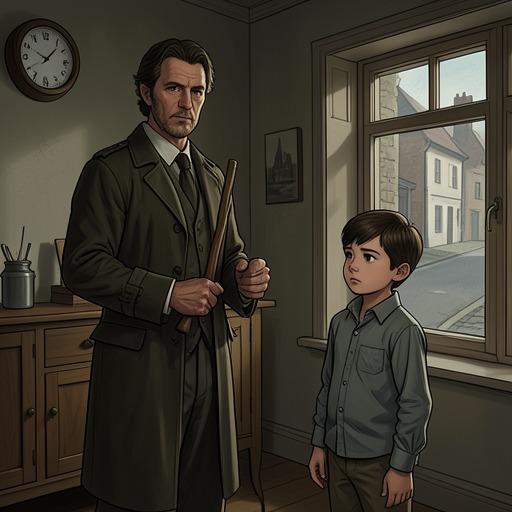
Black BoxBoaz’s confrontations with a teacher, Abraham Abudarham, and police officers are recounted through an exchange of letters that turns his conduct into a dispute over justice, responsibility, and Michel’s authority over him. Boaz insists that he struck only when completely in the right, yet acknowledges that these encounters repeatedly brought trouble and required Michel’s intervention. His request to leave Kiryat Arba makes the pattern consequential: Michel’s attempt to keep him out of reform school has become, in Boaz’s eyes, another way of controlling his life.
Incidents and Boaz’s Account
Writing from Kiryat Arba, Boaz tells Michel and Ilana that he has not got into trouble with anyone there. He nevertheless recalls earlier conflicts: with a teacher at Telamim, with Abraham Abudarham, and with police in Sharm. The letter does not describe the encounters in detail, but Boaz presents them as a recurring pattern in which he believes his position was right and still faces consequences.
Boaz qualifies his defense. He says he does not hit people in every disagreement, and that he often lets matters go; when he does strike, he claims to be completely, not merely almost, right. The distinction is central to his account: he does not understand his conduct as indiscriminate aggression, but as action justified by a certainty that others may not share. At the same time, he recognizes that being convinced of his own rightness has not prevented trouble.
Kiryat Arba and the Dispute with Michel
Boaz connects his present situation to Michel’s earlier intervention, which kept him from reform school on the condition that he go to Kiryat Arba. He notes that the optical workshop there suits him, but objects to the religious studies and to the community’s attitudes toward Arabs. His criticism extends beyond the placement itself: he resents Michel’s attempts to direct his conduct and manage the money he believes belongs to himself and his family.
The letter’s request is practical as well as emotional. Boaz asks Michel for some of his money and for police permission to leave Kiryat Arba, although he admits that he does not yet know where he would go. He presents wandering before settling somewhere as a possibility, and asks for help leaving so that he will not get into further trouble by hitting people. The request thus links his wish for independence to his awareness that another confrontation could bring more consequences.
Michel’s Reply and the Stakes
Michel’s response acknowledges Boaz’s progress in the optical department, his honest earnings, and his work as a night guard two nights each week. But Michel also condemns what he sees as slackness in study and a continuing tendency to seek trouble. He treats Boaz’s letter as poorly written and misguided, framing his criticism as a consequence of his affection for him rather than indifference.
Their disagreement also concerns money and responsibility. Michel says that Boaz’s inheritance is divided equally among Boaz, his mother, and Yifat, but that Boaz will not receive his share until he is twenty-one. He rejects the idea that this arrangement means Boaz is owed immediate control of the funds, while Boaz sees Michel’s management of the money as part of Michel’s wider effort to run his life. Michel nevertheless encloses a postal order for six hundred pounds, explicitly saying it will not be deducted from the inheritance he holds for Boaz.
Michel’s reply offers a route back into family life rather than simply closing the dispute: he invites Boaz to return for Yifat’s birthday and help his mother. He also asks him to treat his letter as though it had never been written. The exchange leaves the underlying conflict unresolved. Boaz’s account emphasizes personal judgment and freedom; Michel’s answer pairs material help with correction and conditions, so that support remains both a safeguard and a source of contention.