Gideon returns to Zikhron and chooses to remain at his childhood home
Black BoxAlexander A. Gideon’s return to his childhood home in Zikhron Yaakov becomes a decision to remain there rather than return to Jerusalem for treatment. Seriously ill and expecting his life to be short, he comes back without warning to see his son, Boaz, and finds Ilana Brandstetter-Sommo in the house. The return reunites a fractured family around a place that is legally still Alexander’s but, in his own account, already belongs to Boaz; his choice to stay makes the house a setting for reconciliation, care, and a deliberately modest final period of life.
Illness and the decision to return
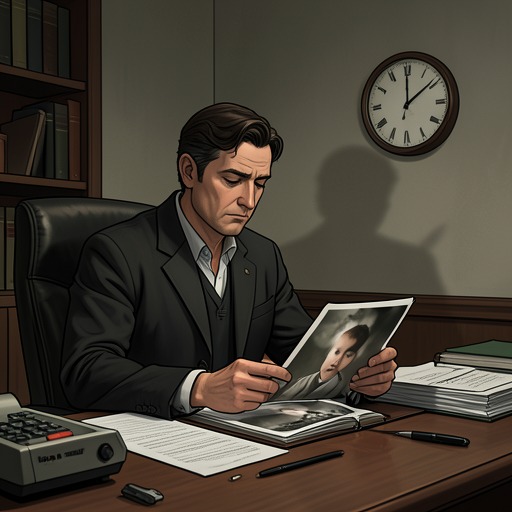
Alexander explains that he has had kidney cancer for about a year and undergone two operations. The growth has spread into his abdomen, and doctors in New York saw no point in attempting another operation. He is in poor condition and has come back to Israel only the previous week, without advance notice. Rather than making the return a journey toward recovery, he frames it as a chance to see Boaz and stay in the house where he grew up.
His return also follows a renewed request for help from Ilana, perhaps from both her and Michel Sommo. Alexander says that, for reasons he cannot fully explain and that may have arisen with the progression of his illness, he agreed to help. The earlier request had set out substantial needs: money to pay the Sommos’ mortgage, enlarge their home, provide for their son and daughter, and contribute toward buying and renovating Alkalai House in Hebron. That practical connection brings Alexander back into the family’s affairs, but his return is not presented as a resumption of ordinary domestic life.
The childhood home and its changed ownership
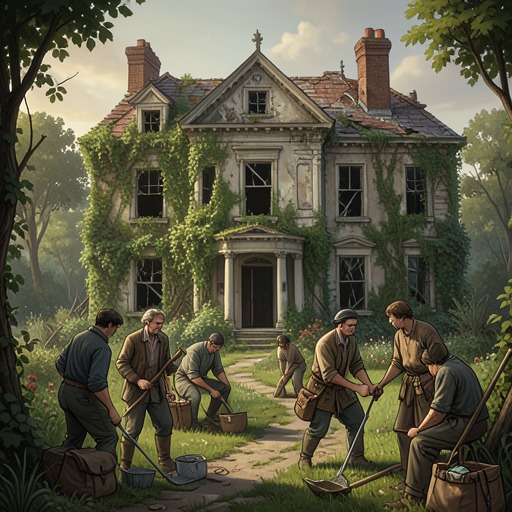
Alexander returns to a house filled with his own childhood memories. As he walks through it, he recalls particular corners and episodes: keeping silkworms, hiding after a conflict with his father, playing with a model train, and mourning the loss of a rhesus monkey. He also remembers finding the remains of his mother’s sandals beneath a loose floorboard. The house is not simply a refuge from the hospital; it is the physical record of a childhood he is revisiting while his strength diminishes.
The home’s present and past ownership do not quite coincide. Alexander tells Michel that the house really belongs to Boaz, although it remains officially registered in Alexander’s name. That distinction gives his return a further consequence: he is not simply reclaiming his childhood property or establishing a new household there. He enters a place whose future he associates with his son, and the decision to stay takes place within a home Boaz and the commune have begun to restore.
Boaz’s invitation to stay
Alexander initially anticipates going into hospital, but Boaz offers a different possibility. When Alexander wonders whether his presence troubles the people living there, Boaz answers that Alexander pays. Asked whether he should try to be useful through classes or lectures, Boaz says that no one there tells anyone else what to do. Alexander then asks what he should do, since he does virtually nothing; Boaz’s answer is that sitting quietly is best for him. Alexander says he will stay and follow that advice.
The exchange is spare, and its terms differ from the forms of care Alexander might have expected. He is not assigned work or given a role as benefactor, teacher, or authority. The commune’s refusal to direct him allows him to remain without having to justify his usefulness. He imagines spending his remaining time quietly: entertaining Michel and Ilana’s daughter, making a shadow theatre with his fingers, and talking with her about fire, water, and lizards. The child, in turn, makes him improvised medicines from household and garden materials. These small exchanges offer a form of companionship distinct from the family’s financial and political negotiations.
Family tensions and the choice of place
Ilana stays with Alexander while he is preparing to go to hospital, and he expects her to return to Michel afterward. Michel has written in a state of suspicion, concerned about his wife’s presence. Alexander tells him that nobody has deceived him: Ilana chose to remain for a few more days and care for Alexander. He urges Michel to treat her kindly, recognizing her suffering rather than answering jealousy with accusation. He also offers, if Michel requires it, to provide an affidavit affirming her innocence.
The strained marriage sits alongside older fractures. Alexander recalls that he and Ilana married in 1959, that she later had Boaz by her own decision, and that their separation was delayed until 1968. He describes the divorce as bitter and acknowledges his own vindictiveness before leaving Israel and severing contact. His unexpected return therefore reopens a history of estrangement, but he makes clear that his relation with Ilana is not a conventional marriage. His request that she stay a little longer is framed as a plea for company and care, not a claim to resume their former relationship.
The choice to remain also pushes against Michel’s political and financial expectations. Michel has been active in the Greater Israel Movement and the Jewish Fellowship Movement, and has pursued plans involving land and property. Alexander has learned of a Paris trip connected to negotiations over land near Bethlehem and of efforts to arrange the restoration of Michel’s French nationality as a basis for a transaction. In the household, Ilana has observed Michel treating Alexander’s money as if it were already available for investment in the redemption of land. Against this background, Alexander’s preference for staying with Boaz rather than going to Jerusalem refuses to make his remaining wealth or his final days instruments of Michel’s plans.
A final stay rather than a return to treatment
Manfred Zakheim expects to take Alexander to Jerusalem for radiotherapy at Hadassah Hospital, even by force if necessary, and to bring Ilana back to Michel. Alexander instead decides to stay with Boaz. He rejects the prospect of returning to Jerusalem, where he expects little that he wants from the surrounding religious and messianic activity. His alternative is intentionally ordinary: folding sacks, sorting radishes, winding old lengths of string, and perhaps inviting his father from Haifa for a family billiards marathon.
The decision does not amount to a claim that the illness can be overcome. Alexander understands that only a short time remains and asks Michel to let Ilana stay a little longer. What changes is where that time will be spent and on whose terms. He accepts Boaz’s quiet, non-directive hospitality, remains in the childhood house that he regards as his son’s, and turns his return from a brief visit into a final stay. The home gathers the conflicts of inheritance, marriage, political purpose, and filial care into one place, but Alexander’s choice narrows the immediate question to companionship: he will stay with his son.