Ilana and Alex’s renewed correspondence
Black BoxIlana Sommo’s renewed correspondence with Alexander Gideon turns letters into both a route back to intimacy and a battleground over who may control that route. As Alexander’s illness makes contact feel urgent, Ilana rejects Manfred Zakheim as intermediary, confronts the consequences of Alexander’s decisions about Boaz Brandstetter, and answers the bleakness she finds in Alexander’s letter with a hard-won defense of happiness. The exchange is not a simple reconciliation: tenderness, anger, mockery, and fear occupy the same pages.
The Correspondence and Its Intermediaries
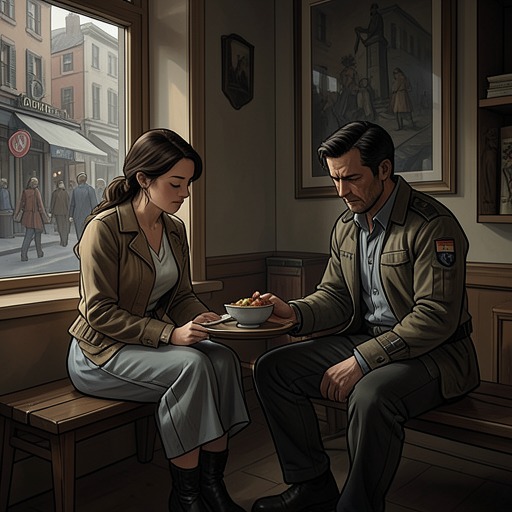
Ilana first makes her refusal of Zakheim unmistakable in a note to him, to be handed over after their meeting at Cafe Savyon. She says she will not meet him again and that Alexander must find another way to send his letters; from now on, she will use the mail. The note makes the problem more than logistical. Ilana says that shaking Zakheim’s hand feels repellent, and identifies his insinuation of a shady deal involving Alexander’s inheritance as the last straw. Although Zakheim once witnessed her misfortune, she says, he neither understood it then nor understands it now. In her account, Alexander, her present husband Michel Sommo, and perhaps her son do understand; Zakheim remains outside that circle.
The note’s anger is paired with a plea. Despite everything, Ilana says she would do what Zakheim wants if he could find a way to bring Alexander back to her, because Alexander’s illness makes the matter urgent. That reversal gives the correspondence its pressure: she repudiates the intermediary while still asking for help in reaching the man whose letters she wants sent directly.
Zakheim, meanwhile, describes Ilana and Alexander’s contact to Michel as an intensive correspondence and treats it as a threat to his own plans. He considers Alexander’s illness likely to prompt unpredictable behavior and says Alexander’s current will is favorable to Michel’s interests, while renewed contact with Ilana could upset prospective collaboration. His warning turns private letters into a matter of inheritance, business, and vigilance. The different accounts expose the correspondence’s divided meanings: for Ilana it is an urgent personal bond; for Zakheim it is a risk to manage.
Boaz and the Cost of Reconnection
A letter dated August 1, 1976, addresses Ilana’s renewed contact through its consequences for the family. It reports that Boaz is leaving Kiryat Arba to live alone in a ruined house in Zikhron Yaakov, in accordance with Alexander’s decree. The writer says Michel has pleaded with Ilana not to interfere and promises that Yoash will visit at the weekend to see what is happening and how help might be given. The letter also accuses Ilana of having made a mistake by getting back in touch with Alexander.
Its appeal is deliberately severe. Ilana is accused of repeating the role of a tragic heroine, while Alexander again takes center stage. The letter imagines her going to America to find him and Michel raising Yifat alone; it presents this as a possible arrangement in which Boaz might also fare better. Yet the writer insists that this is not a recommendation that Ilana leave. Instead, the letter begs her to reconsider and to stop herself, arguing that Boaz needs no one and warning that Yifat may grow up with the same independence. The rebuke makes the cost of Ilana’s attachment explicit, while also revealing how little confidence the family has in dependence or mutual need.
Ilana’s Reply to Alexander
On August 2, Ilana writes directly to Alexander and again rejects communication through Zakheim. Her opening mixes exasperation with invitation: Alexander may write by mail, appear in person, or call for her to visit. She jokes about waiting for an invitation to his wedding, complete with an air ticket, and taunts him about the secretary he had supposedly planned to impress. The mockery works as a test of contact: beneath it lies her demand that Alexander stop acting at a distance and show himself.
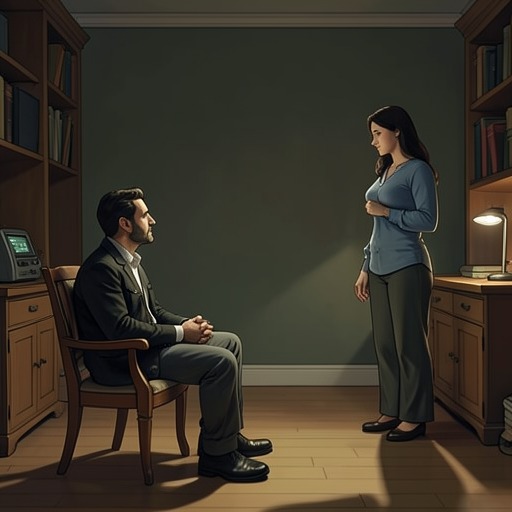
The letter then slows into a domestic scene with Michel. Ilana has delayed reading Alexander’s letter, which has lain hidden in her handbag through the day. In the evening Michel falls asleep before the television; she wakes him for the midnight news. He expresses his political suspicions, then calls her the most beautiful woman in the world and kisses her forehead. She bends to undo his shoelaces, puts him to bed, and listens as he reflects on a psalm about a remote, mute dove, calling Ilana his mute dove before falling asleep. The gestures show a marriage with its own habits of care, even as Ilana’s attention remains divided by Alexander’s letter.
The Letter’s Argument and Emotional Turn
Only after Michel is asleep does Ilana read Alexander’s writing closely. She describes it as a concentrated intellectual assault, crowded with carnivorous plants, Bernanos, Ecclesiastes, and the saying about living by the sword. When she reaches the images of Goliath’s sword and Alexander’s dying dragon, she cannot continue; she hides the letter, makes lemon tea, and returns to it at the window. The night setting sharpens the contrast between the intimate quiet of Michel’s sleeping presence and the pain Alexander’s words produce.
Ilana does not answer Alexander point by point. She says his reasoning leaves no room for reply, but rejects its conclusion: Jesus and Bernanos, in her reading, deserve agreement, while Alexander and Ecclesiastes call for pity. She argues that suffering is not happiness’s opposite but a difficult passage toward it. Thus the correspondence remains unresolved, but it changes the terms of the exchange. Alexander’s letter brings his despair into her home; Ilana’s answer refuses to let that despair define the only possible truth between them.