Rahel
Black BoxRahel is Ilana’s sister, a member of Kibbutz Beit Avraham, and one of the few people able to view the Sommo family’s troubles both from within and at a distance. She offers shelter when Ilana and Boaz have nowhere else to go, keeps contact with Boaz during his years at the kibbutz, and later writes to Ilana and Michel-Henri Sommo when Boaz disappears. Her importance lies less in control over events than in the steadiness of her testimony: she sees the family’s crises clearly, but cannot make its members accept what she sees.
Identity and family role
After Alexander Gideon forced Ilana and Boaz out, Ilana took Boaz to stay with Rahel and her husband at their kibbutz. The household provided refuge at a moment when Ilana says she had neither another place to go nor money. Ilana stayed for six months before returning to Jerusalem, where she worked in a bookshop; Boaz remained at the kibbutz for another five years, until he was thirteen. Ilana visited him every three weeks, making Rahel’s home the setting for a substantial part of Boaz’s childhood and for the fragile connection between mother and son.
Rahel’s family life also appears in the practical details of her letters. She refers to her husband Yoash and their children, and reports that the kibbutz executive committee had decided to send her to a course in cooking for special diets. These details locate her within a communal household and working life, in contrast to the intense private dramas that dominate Ilana’s attention. They also show that Rahel’s own obligations do not prevent her from making room for her sister and nephew.
Boaz’s estrangement and return
The kibbutz years do not prevent Boaz from becoming estranged from Ilana. After she married Michel-Henri, Boaz called her a whore, refused to visit the family in Jerusalem, and slammed down the telephone when told that Yifat had been born. Rahel is not presented as the cause of this rupture; her role is to have witnessed its long development from the place where Boaz lived and where Ilana continued to visit him.
When Boaz was thirteen and a half, he arrived at Ilana and Michel-Henri’s home on a winter night at one in the morning. He announced that he was leaving the kibbutz and demanded either an agricultural high school or the prospect of living on the streets. Rahel’s later advice to Ilana reflects the distance that had opened between mother and son: she believes another maternal effort to reach him would increase his loneliness and widen that distance. Rather than treating closeness as automatically healing, she urges Ilana to leave Boaz in peace and let Michel-Henri handle any necessary intervention.
Counsel to Ilana
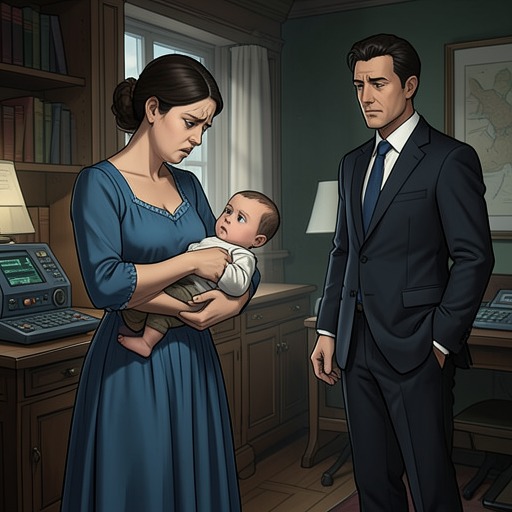
In a letter dated 20 March, Rahel returns to a conversation with Ilana in the kitchen. The scene is built from ordinary household actions: Michel-Henri makes instant coffee and bread with margarine and cheese, later puts Yifat to bed, watches the news, and returns to his marking; Ilana peels vegetables for the next day’s lunch, and Rahel helps. Against this domestic routine, Ilana speaks about Alexander Gideon, the letters she has sent him, the payments he has made, and Michel-Henri’s demand that Gideon repay what he owes. Rahel sees a contradiction between Ilana’s claim that she has tried to forget Gideon for seven years and the attention she continues to give him.
Rahel does not conceal her judgment, but neither does she turn the exchange into a simple condemnation. She recalls warning Ilana to be careful and not to play with fire, while recognizing that her sister hears even caution as an attack. Later that night, Rahel finds Ilana crying alone in the kitchen and offers either to sit with her or to let her go to bed. When Ilana makes clear that she wants to be left alone, Rahel withdraws. The episode shows the limits of her care: she can offer company, shelter, and advice, but cannot compel Ilana to accept comfort or change course.
Her written advice is direct. She regards Michel-Henri and Yifat as the secure center of Ilana’s life, warns her not to gamble that security away, and describes Alexander Gideon’s money as carrying a curse. Her objection is not merely to a particular payment. In her view, the money is inseparable from Ilana’s continuing involvement with Gideon and from the risks that involvement poses to the family she has made with Michel-Henri.
The search for Boaz
On 8 May 1976, Rahel writes from Jerusalem after Michel-Henri has called to ask whether Boaz has appeared at the kibbutz. The call had caught her unprepared, and a poor telephone connection had left her unclear about the incident in Tel Aviv. She promises to notify them immediately if Boaz turns up, but does not expect him to do so. Her letter balances a hopeful assessment with a practical insistence that the search continue.
Rahel interprets Boaz’s disappearance not as a reaction only to the latest trouble, but as part of a wider urge to break contact with his family. Even so, her memories of his years at the kibbutz lead her to trust that he will be all right and eventually find a place for himself. She acknowledges that he may repeatedly become involved in minor troubles, while insisting that she has also seen a decent and logically minded side in him. Her confidence is measured rather than complacent: she encourages Ilana and Michel-Henri, but explicitly says they must keep looking and offers to come to Jerusalem with Yoash, alone or together, if needed.
Narrative role
Rahel’s letters create a counterpoint to the urgent, self-involving language of the family crisis. She notices small acts of care—Michel-Henri putting Yifat to bed, quietly returning to his work, or stroking the sisters’ heads—and sets them beside Ilana’s fixation on Alexander Gideon and the pain surrounding Boaz. Her perspective does not make her an all-knowing judge: she distinguishes what she observed from what she only feels or intuits, especially when predicting Boaz’s safety.
That restraint gives her warnings their force. Rahel neither promises reconciliation nor claims that family affection can repair every breach. She offers concrete help, keeps watch for Boaz, and tells Ilana that further pursuit may deepen his isolation. Across the letters, she remains an ally whose loyalty includes disagreement: she stands ready to help, while refusing to confuse help with approval.