The Chinese vase
Black BoxThe Chinese vase is Ilana Sommo’s image for happiness that is both precious and made rather than found. In her letter to Alexander A. Gideon, it opposes conventional, repeatable misery with a fragile fulfillment shaped by particular people, their suffering, and the daily life they build together. The image later becomes a measure of what money and power have damaged in her household.
Meaning and Image
Ilana turns around the familiar contrast associated with Tolstoy’s Anna Karenina: unhappiness, she argues, tends to repeat a small stock of conventional miseries, while happiness is individual. Like a fine vessel formed gradually, it takes shape over years, in the likeness of those who make it. No two people’s happiness is identical, because each bears the imprint of their own character and experience.
The vase’s delicacy does not mean that happiness is untouched by pain. Ilana describes suffering and humiliation as part of its making, comparing the process to refining gold from ore. Happiness is rare and may not last, but its transience does not make it unreal. The image holds vulnerability and value together: what is painstakingly formed can still be broken.
Intimacy and Ordinary Life
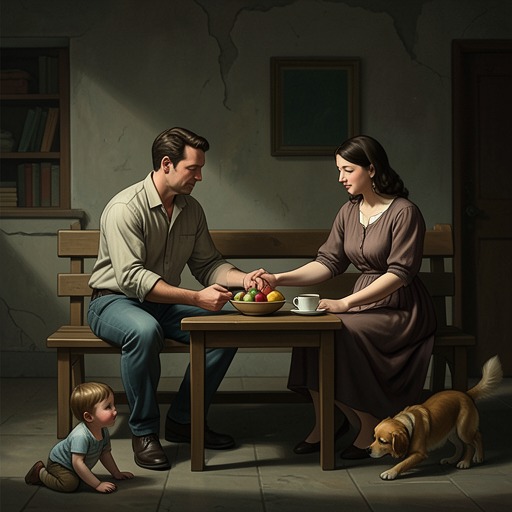
For Ilana, the happiness contained in the vase is not praise, advancement, conquest, or submission. It is intimate fusion: two people becoming deeply joined without that bond being reducible to social success or control. Her account gives this abstract idea a domestic history. At the end of the Sabbath, the family would sit on the veranda, eat peanuts, and watch the sunset. Michel Sommo told stories of Paris, entertained Yifat with animal tales, and shared family songs with Ilana and her daughter in the dark.
The evenings continued indoors with pillow fights and a bedtime fairy tale for Yifat. Later, Ilana and Michel sat holding hands while he discussed politics and shared visions he sometimes waved away as jokes. Their happiness, in her telling, accumulated evening by evening, like a modest reserve slowly saved. Its substance lay in these repeated acts of companionship, not in wealth or public recognition.
Rupture and Recurrence
Ilana links the vase’s breaking to Alexander A. Gideon’s money entering Michel’s life. She portrays the financial intervention as overwhelming the modest household they had made together: Michel’s circumstances changed, and the shared happiness she had patiently described began to wither. The metaphor therefore carries an accusation as well as a definition. To Ilana, money does not simply improve material conditions; in this instance it alters the balance of a relationship and unsettles the life in which their happiness had taken form.
The image returns when Ilana describes the wider consequences of Alexander’s actions. She says he has demolished their cottage and smashed their Chinese vase, while Manfred Zakheim has been cast aside and Boaz Brandstetter moved to Zikhron Yaakov according to Alexander’s plans. These claims belong to Ilana’s charged account of events, but the recurrence makes the vase more than a private emblem of married life: it becomes her way of connecting the loss of domestic intimacy to a larger pattern of money, influence, and decisions imposed from a distance.
Narrative Significance
The vase gives Ilana a counterargument to Alexander’s bleak account of life. Where his outlook, as she presents it, leaves happiness beyond reach, she insists that people can fashion it through years of particular shared experience. Her metaphor also clarifies what she believes has been lost: not merely comfort, but a fragile form of closeness whose worth depended on the ordinary life that sustained it. The broken vase marks the distance between happiness as a cultivated bond and power exercised without regard for that bond.