Vladimir Gudonski
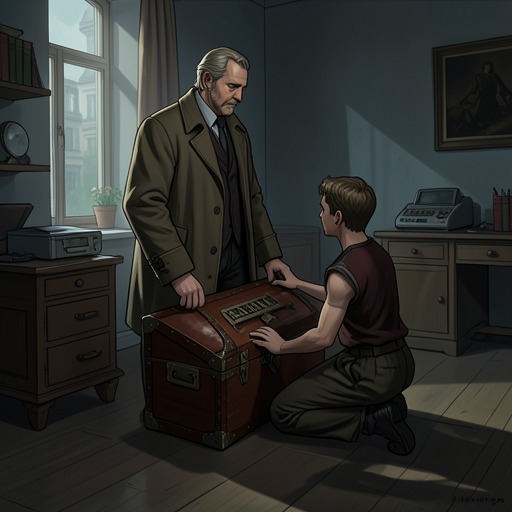
Black BoxVladimir Gudonski, also called Volodya and Zeev-Benjamin Gudonski, is Alexander Gideon’s father and a powerful land dealer whose wealth shapes the family’s fortunes long after he withdraws from it. His story is one of extravagant command followed by self-imposed isolation: he can arrange an apartment and a wedding in a single night, yet ends in a sanatorium, no longer recognizing his son. The estate he abandons becomes a physical record of that retreat, while the will he eventually makes leaves Alexander and Ilana Sommo with both a fortune and a complicated inheritance of guilt, obligation, and uncertainty.
Identity and Public Reputation
Gudonski is introduced through stories of his forceful character and success. He is described as a major dealer in land and an importer of iron. Before entering the import business, he had worked as a pioneer in charge of stone quarries; later, dealings with the British Army helped him make a small fortune. Tales circulating about him claim that he killed three Arab brigands with a sledgehammer in 1929 and that he had relationships with two Egyptian princesses. These anecdotes establish his reputation, but they are presented as stories told about him rather than as independently confirmed events.
His temper and pride appear more directly in the account of a reception where the British High Commissioner called him a clever Jew. Gudonski reportedly challenged the official to a fistfight after taking offense, then insulted him when he declined. The episode compresses the public persona surrounding Gudonski: a man accustomed to treating an affront as a contest in which he must answer at once. He is not only a wealthy landowner but a figure whose authority depends on making others respond to his terms.
Alexander and Ilana’s First Visit
Alexander recalls Gudonski’s first meeting with his intended in 1959. The young woman, later identified as Ilana Sommo, had come to Israel from Lodz as a child. Her parents had died, leaving her with a sister in a kibbutz as her remaining close family. She worked as a copy editor for a popular weekly and hoped to publish poetry. Knowing Gudonski’s reputation for rage, she approached the meeting as a consequential test. Alexander, then a major in the regular army, was tense as well.
At the estate between Binyamina and Zikhron Yaakov, Gudonski turned the visit into an extended display of hospitality and control. He took the couple on a tour of the property, whose fields were worked by Circassian laborers from Galilee, and showed Ilana the ornamental pool, its fountain and goldfish, and a rose garden stocked with varieties from Japan and Burma. He singled her out with flowers, compliments, and expansive gestures. The attentiveness could seem playful, but it also left little room for Alexander to take part in the meeting on equal terms.
The visit continued through a formal meal and an evening in which Gudonski kept directing the conversation and setting challenges for Ilana, including asking her to play piano, recite poetry, and discuss literature, politics, and art history. When the couple tried to leave after he fell asleep, he woke, kissed Ilana, and struck Alexander on the back of the neck. He then telephoned Manfred Zakheim at half past two in the morning with instructions to buy the young couple an apartment in Jerusalem and organize a wedding. Alexander and Ilana had not yet settled the question of marriage; their wedding nevertheless took place three months later. Gudonski did not attend, having gone away with a new companion.
The episode shows how Gudonski’s generosity and domination operate together. He could provide the apartment and mobilize his business associate to prepare a public celebration, but his decisions displaced the couple’s own pace and wishes. On a later visit to Ilana in Jerusalem, he tried to persuade her to spend time alone with him. When she refused, he insulted her and left. Alexander’s recollection also places that encounter within the couple’s early marital tensions, but it does not establish that Gudonski’s conduct determined their later relationship.
Wealth, Withdrawal, and the Estate
After Boaz was born, Gudonski sent a check from northern Portugal to an Italian firm, which supplied a certificate declaring that a peak in the Himalayas would bear the name Boaz Gideon Peak. The gesture joins extravagant expenditure to an unusual form of paternal recognition: rather than a conventional gift, the child was given a name on a map, at least according to the certificate. Alexander later wonders whether the document still exists and imagines that Boaz might establish a settlement there.
Around 1963, Gudonski withdrew from family life and refused even brief visits from Alexander, Ilana, and Boaz. He dismissed his mistresses, turned away doctors arranged by Zakheim, and retreated behind the walls of the estate with armed guards. He spent his days studying Persian, astrology, and the Feldenkrais Method. He also dismissed his workers, then the domestic staff and guards, until only an elderly Armenian remained with him. The two men slept on camp beds in the kitchen, ate canned food and drank beer, while a crossbeam and nails secured the kitchen door against the rest of the house.
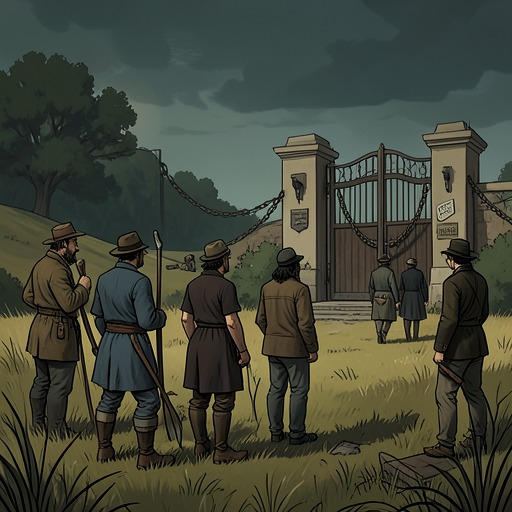
As Gudonski secluded himself, the estate deteriorated. The orchard became overgrown; branches entered through broken upstairs windows, plants spread through the ground-floor rooms, and creepers climbed the staircases and pushed through the roof. Pigeons occupied the house, while rats, snakes, and night birds settled in its corridors. This slow transformation matters because it gives material form to Gudonski’s retreat: a property once presented to visitors as a carefully tended display of wealth becomes a structure increasingly reclaimed by vegetation and animals. Inside it, however, he continued speaking Persian with his companion and pursued his private studies.
Family Encounters and Inheritance
When Alexander, Ilana, and Boaz eventually risked visiting, Gudonski received them warmly. He addressed Alexander with a word meaning foundling and used the same expression for Boaz. He repeatedly took the boy down to the cellar, and Boaz returned with a coin from the period of Turkish rule. Gudonski addressed Ilana by a name associated with her mother, who had died when Ilana was five. He also recalled her pneumonia, blamed the doctors and himself, and accused her of having harmed herself to torment him. His reaction mixes tenderness, self-reproach, and accusation rather than resolving the old family conflicts.
Gudonski said that he would leave his fortune to establish a home for starving poets. He then began giving money in many directions, attracting people Alexander describes as rogues and charlatans who sought donations for various causes. This outflow alarmed Zakheim, who worked discreetly to transfer the property into Alexander’s name. Gudonski twice dismissed him, and Alexander rehired him. Gudonski also assembled a panel of lawyers and paid three professors from Italy to attest that he was sane. For nearly two years the property continued to leak away before Zakheim arranged for Gudonski to be taken for observation and eventually committed.
Gudonski later changed course again. He wrote and signed a detailed will in Alexander and Ilana’s favor, accompanied by a melancholy letter that asked forgiveness, warned them against each other, and urged them to pity the child. The reversal does not erase the earlier dispersal of wealth; it makes the fortune a source of responsibility as well as security. Years afterward, Zakheim would remind Alexander how hard he had worked for five or six years to make him sole trustee of his father’s property and preserve it from heavy losses. Alexander’s later intention to give a substantial portion of his own assets to the Sommo family therefore reopens the old dispute over what Gudonski’s accumulated wealth is for and who has a claim on it.
Final Years and Narrative Significance
Since 1966, Gudonski has lived in a private room in a sanatorium on Mount Carmel, silently looking toward the sea. Alexander says he visited twice and was not recognized. Zakheim reports that Ilana still visits him occasionally, although Alexander questions the purpose of those visits. Gudonski’s withdrawal thus outlasts the period of active conflict: contact continues, but recognition and mutual understanding have largely disappeared.
The estate remains registered in Ilana’s name, while the villa in Yefe Nof was built with Gudonski’s money. Its value, according to Zakheim, has reached a point at which it may be prudent to sell. Alexander considers several possible uses for his property, including giving it to Boaz or to the Sommo family, before imagining that he might return to Gudonski’s crumbling house and restore it. In that imagined return, the work begins with removing the barrier between the kitchen and the rest of the house, then repairing the fountain and restoring the goldfish to the pool. The plans are Alexander’s, not Gudonski’s, but they make the father’s abandoned estate a possible setting for a different kind of life.
Gudonski’s narrative role is therefore larger than that of a wealthy, difficult parent. His estate, business ties, gifts, withdrawals, and will connect private family relations to the management of property across generations. His overwhelming generosity can support others, but it can also override their choices or expose them to new obligations. By the time Alexander considers returning to the ruined house, Gudonski himself is absent from it; what remains is the problem his life leaves behind, expressed in land, money, damaged relationships, and the possibility—still only imagined—of rebuilding.