
The Hospitals Absorb the Battle
Black Hawk DownThis flow follows the rising civilian casualty burden through the work of a surgeon and an overwhelmed city hospital.
increasing Bearing strength in each event
 decreasing
Bearing strength in each eventdecreasingA Trickle of Casualties
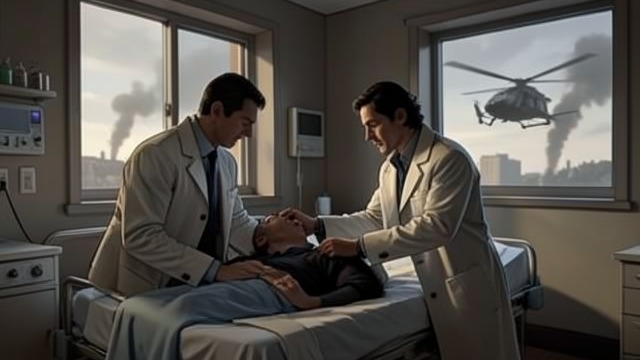
Patients Begin to Arrive
A Hospital Near the Base
Volunteer Hospital initially received only a small flow of wounded people. Burning roadblocks and fear of the helicopters kept many residents away.
Danger Delays Treatment
The distance between injury and medical care mattered. People with serious wounds could not always travel safely through streets under fire.
The Operating Rooms Fill
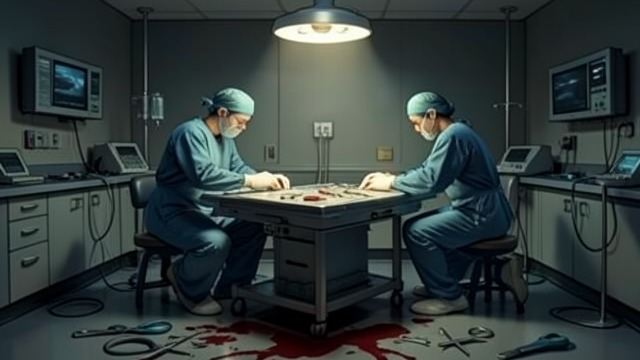
Surgery Without Rest
A Surge of Patients
Abdi Mohamed Elmi and the other surgeons worked through the night as casualties arrived. The hospital's small operating theater became a continuous emergency workspace.
Limited Resources
The number and severity of wounds overwhelmed the available staff and supplies. Delayed treatment meant that some injuries became harder to manage.
A City’s Medical Crisis
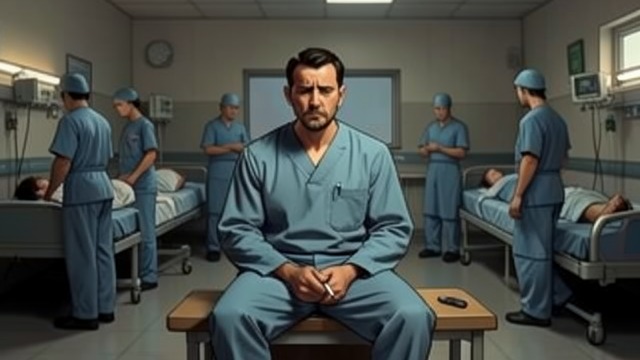
Exhaustion and Return
An Interrupted Rest
After assisting in numerous major surgeries, Elmi sat down briefly. A relief worker challenged him for resting, but he returned to work after finishing his cigarette.
Beyond the Battlefield
Hospitals faced hundreds of wounded people and a continuing shortage of care. The battle's human cost extended far beyond the soldiers shown in American accounts.
October 3, 1993, evening
October 4, 1993, before sunrise
October 4, 1993, morning
