
Home Defense and Resistance
Black Hawk DownThis flow explores how Somali residents and fighters understand the battle as an intrusion into their homes and community.
increasing Bearing strength in each event
 decreasing
Bearing strength in each eventdecreasingA History of Intrusion
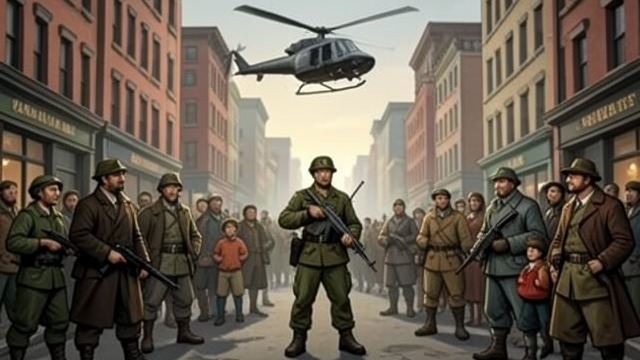
Resentment Accumulates
Raids and Arrests
American helicopters had repeatedly crossed the city and targeted Habr Gidir leaders. Residents experienced these operations as intrusions into neighborhoods and homes.
Different Meanings
The international mission viewed its actions through security and political aims. Many Somalis saw a mounting toll of local dead and injured, shaping the anger that met the October raid.
Defending the Neighborhood
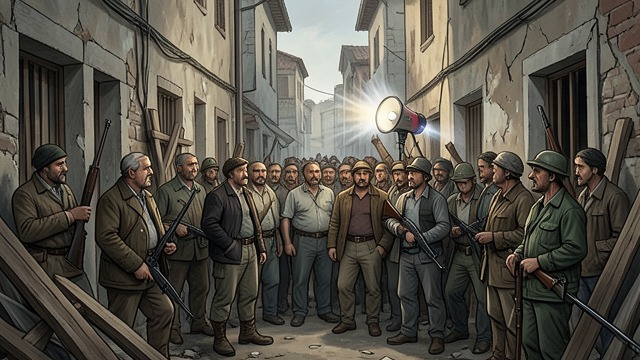
The Call to Resist
A Local Mobilization
Megaphones urged residents to defend their homes, while neighborhood fighters took up weapons and built roadblocks. Some participants had little combat experience but knew the streets intimately.
Home as a Battlefield
Families, shops, and alleys became part of the fighting. The conflict was not experienced by residents as an abstract military operation but as a threat arriving at their doorways.
Victory and Devastation
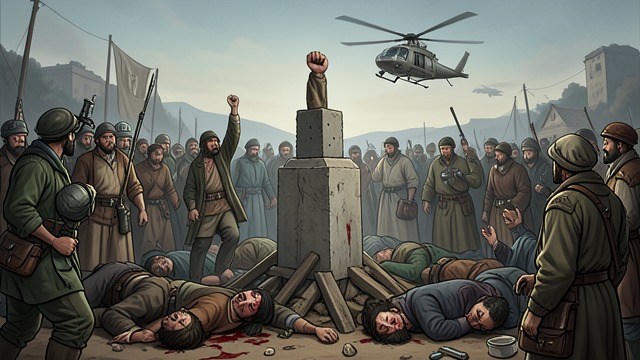
Conflicting Commemorations
The Day of the Rangers
Some residents came to regard October 3 as Ma-alinti Rangers, a national victory over foreign forces. That memory coexisted with extensive deaths, injuries, and destruction.
A Pyrrhic Outcome
The American mission ended after the battle, but Somali society had absorbed severe losses. Neither side's account erased the human cost borne by the people in the streets.
The months before October 3, 1993
October 3, 1993, afternoon
After October 3, 1993
