
Civilian and Combatant
Black Hawk DownThis flow examines the unstable boundary between armed resistance and civilian presence in Mogadishu’s crowded streets.
increasing Bearing strength in each event
 decreasing
Bearing strength in each eventdecreasingCrowds Gather to Watch
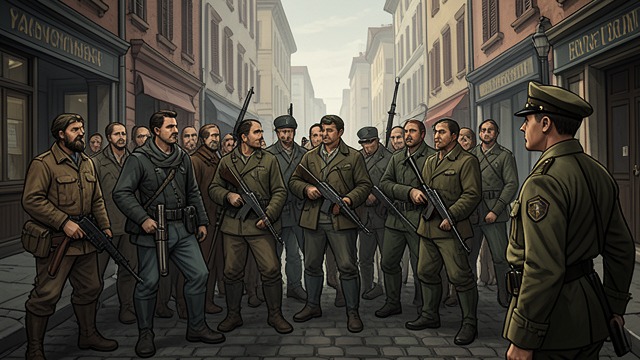
Witnesses in the Streets
A Social Response
Residents moved toward disturbances rather than away from them, joining crowds that included families, onlookers, and armed men. This behavior made the battle visually and morally complicated.
The Soldiers’ Problem
Rangers tried to identify who posed an immediate threat while gunmen moved among civilians. The city's ordinary public spaces offered little separation between combat and observation.
Weapons among Families
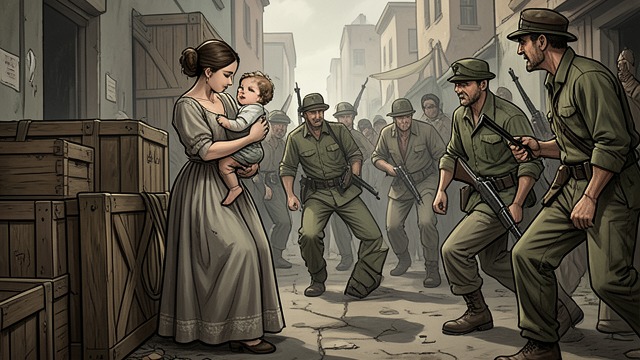
Ambiguous Threats
Armed Men Use Cover
Soldiers saw gunmen among women and children, and some fighters used people or crowded spaces to shield their positions. The distinction between protection and participation became difficult to assess from a street corner.
Decisions in Seconds
A flash-bang or burst of fire could scatter a crowd, but it could also harm people who were not fighting. The soldiers' split-second choices carried consequences beyond their intended targets.
Violence Reaches Homes
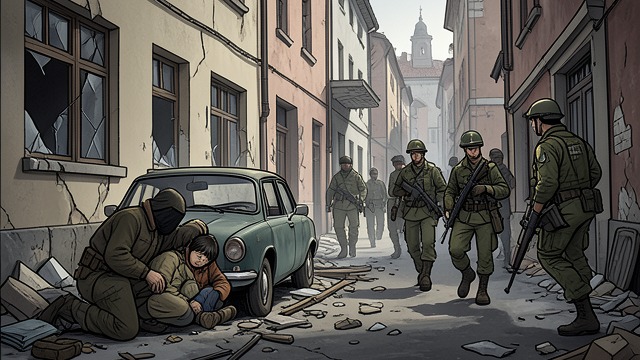
No Safe Civilian Space
Wreckage in the Neighborhood
Helicopters crashed among homes, while gunfire and explosions reached streets, courtyards, and shops. Families hid behind walls or beneath vehicles as armed forces moved nearby.
A Lasting Divide
Accounts of the same battle differed sharply between soldiers pursuing survival and residents defending a threatened community. The divide over who counted as a combatant remained unresolved after the shooting stopped.
October 3, 1993, soon after the raid starts
October 3, 1993, afternoon
October 3, 1993, evening
