
The Meaning of No One Left Behind
Black Hawk DownThis flow traces the ideal of recovering every comrade and the compromises imposed by the battlefield.
increasing Bearing strength in each event
 decreasing
Bearing strength in each eventdecreasingThe Rescue Ethic
A Shared Military Principle
Training for Recovery
The rescue force existed to retrieve downed pilots, and its members had trained to act quickly under fire. Their mission gave organized form to an expectation that no comrade would be abandoned.
Confidence in Support
The original plan assumed a short operation and a prompt convoy. It did not adequately prepare for two aircraft losses and multiple isolated groups needing assistance at once.
A Body Trapped in the Wreck

Recovery Meets Physical Limits
Wolcott Cannot Be Freed
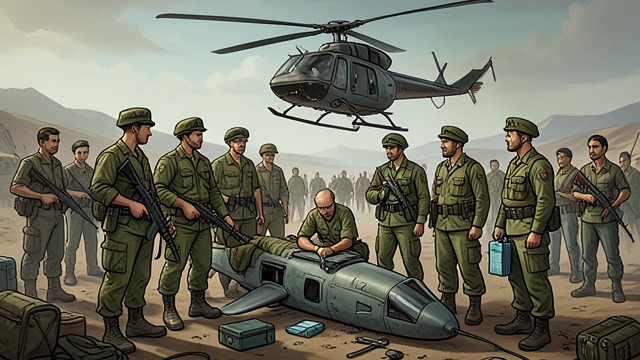
Rescuers worked to reach Cliff Wolcott in the crushed cockpit but found no easy way to lift or pull him out. The wreck's position made the recovery difficult even for trained personnel.
Commitment Without a Guarantee
The team insisted it would not leave him, but the effort consumed time amid continuing fire. The principle demanded action without promising success or safety.
Every Casualty Matters
Recovery at a Price
The Convoy Reaches the Site
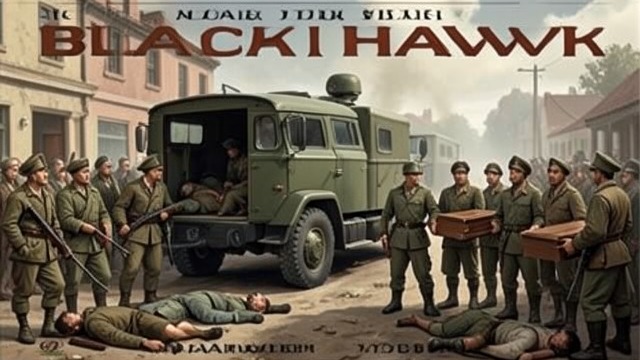
The armored force helped evacuate wounded soldiers and recover the dead. The process was slow, dangerous, and emotionally difficult for men who had fought through the night.
An Ideal Tested
Some survivors had to run out without a ride, while the rescuers prioritized casualties and bodies. The practice of leaving no one behind endured as an aspiration strained by limited space and continuing danger.
Before the crash-site operations
October 3, 1993, late afternoon
October 4, 1993, before dawn
