
A Mission Loses Its Political Ground
Black Hawk DownThis flow examines how the battle undermines the policy assumptions supporting the American operation in Somalia.
increasing Bearing strength in each event
 decreasing
Bearing strength in each eventdecreasingHumanitarian Promise

An International Commitment
Relief and Order
The United Nations mission followed a humanitarian emergency and carried hopes for stabilization and nation-building. American involvement was presented as part of a broader international effort.
A Shifting Purpose
The pursuit of Mohamed Farrah Aidid drew the force into a political conflict that residents increasingly understood as an assault on their community. The humanitarian promise became harder to separate from armed intervention.
The Raid’s High Cost
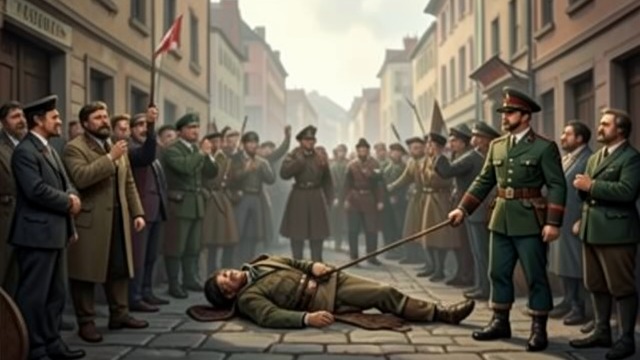
A Tactical Action Becomes a National Crisis
Casualties and Images
American deaths and injuries, Somali casualties, and images of a dead soldier dragged through the streets reached a shocked public. Michael Durant's capture added a hostage crisis to the battlefield losses.
Questions of Purpose
Officials and citizens asked why American soldiers were dying in Somalia. The tactical result of capturing clan leaders could not answer the larger question of what the mission was meant to accomplish.
Withdrawal Becomes Policy
Strategic Retreat
Ending the Pursuit
The administration stopped efforts to capture Aidid and set a timetable for withdrawal. The political cost of continuing had become unacceptable.
An Unfinished Legacy
Task Force Ranger left Somalia, while the battle remained a symbol of both military endurance and policy failure. The intervention's original aspirations did not survive the confrontation in Mogadishu.
December 1992 to early 1993
October 3–4, 1993
October 6, 1993, through March 1994
