
The Promise and Failure of Technology
Black Hawk DownThis flow examines how helicopters, surveillance, night vision, and armored vehicles both aid the force and fail to deliver certainty.
increasing Bearing strength in each event
 decreasing
Bearing strength in each eventdecreasingAir Power as Reassurance
The Aircraft Advantage
Aerial Mobility
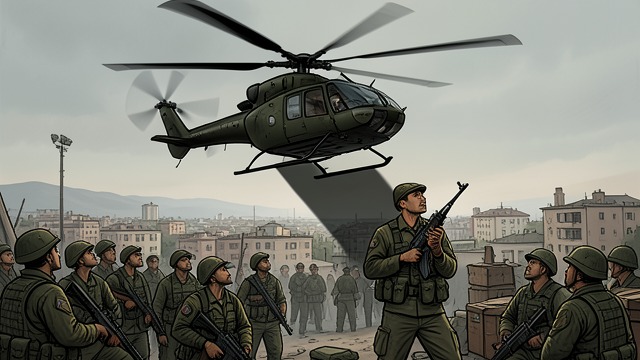
Blackhawks and Little Birds inserted troops, watched streets, and provided fire support. Their presence gave soldiers on the ground a sense of protection.
Confidence in the System
The plan assumed aircraft could make a daylight raid fast and controlled. When the first Blackhawk fell, the force lost not only a vehicle but also part of its psychological and tactical advantage.
Surveillance Cannot Guide Everything
Data from Above
Aerial Observation
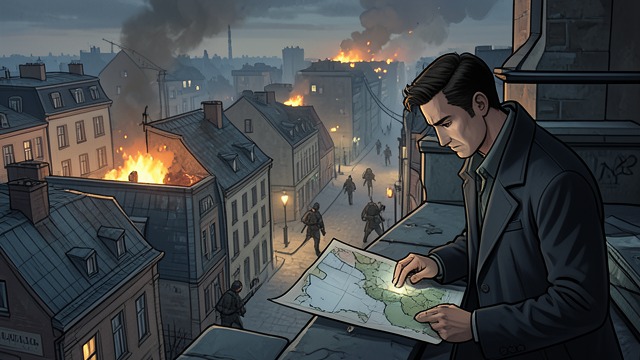
Cameras gave commanders close views of the battle and the convoy's route. Yet they could not fully communicate what soldiers heard, felt, or understood at street level.
Technical Limits
The convoy received some guidance through delayed relays and sometimes followed it too late. More information did not automatically produce better decisions when communications and judgment lagged behind events.
Armor Changes the Odds
A Different Kind of Rescue
Vehicles for the Night
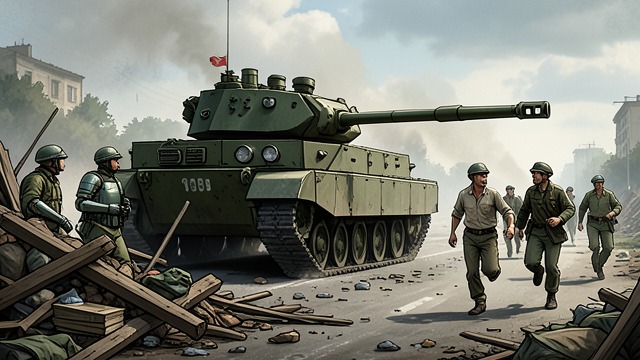
The armored relief force used APCs and tanks to move through roads that had stopped the earlier humvee convoy. Its protection and scale changed what the rescue force could attempt.
Technology Is Not an Escape
Armor helped reach the trapped soldiers but did not prevent wrong turns, ambushes, or delay. The vehicles carried the survivors out; they could not undo the earlier losses or eliminate risk.
October 3, 1993, opening phase
October 3, 1993, late afternoon
October 4, 1993, night
