Bill Clinton
Black Hawk DownBill Clinton's role in Black Hawk Down is that of a president confronted with the political consequences of a raid he had not been told was about to happen. The images and casualty reports from Mogadishu made the operation a national crisis; Clinton's response was to demand an account, end the effort to capture Mohamed Farrah Aidid, and order a withdrawal from Somalia. His decisions mark the point at which the mission's battlefield costs became a change in American policy.
The crisis reaches Washington
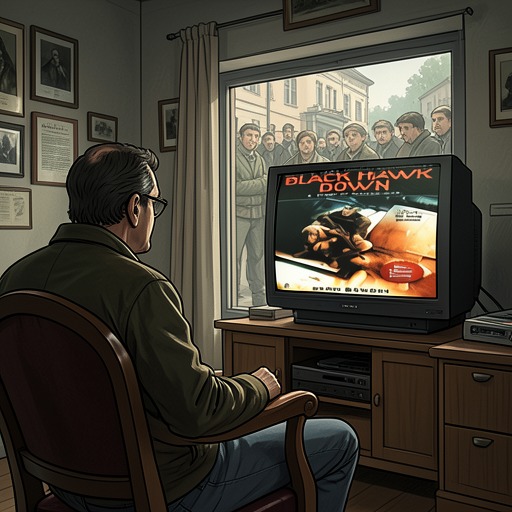
On October 4, the day after the battle, the United States awoke to news of eighteen dead American soldiers, more than seventy wounded, and hundreds of Somali dead. Television also showed an American soldier's body being dragged through the dusty streets of Mogadishu by an angry crowd. Clinton was in a hotel room in San Francisco when he saw the pictures. The account describes him as horrified and angry, and says he wanted to know who had decided to undertake the mission and why he had not been informed.
That absence of warning was central to his reaction. Clinton had previously been briefed in advance about missions, but this raid had been mounted so quickly that he had not been told beforehand. He felt blindsided and sought answers about both policy and military tactics. The book presents his questions not as a claim that he had directed the operation, but as an urgent demand to understand how an action with such consequences had proceeded beyond the usual process of presidential notification.
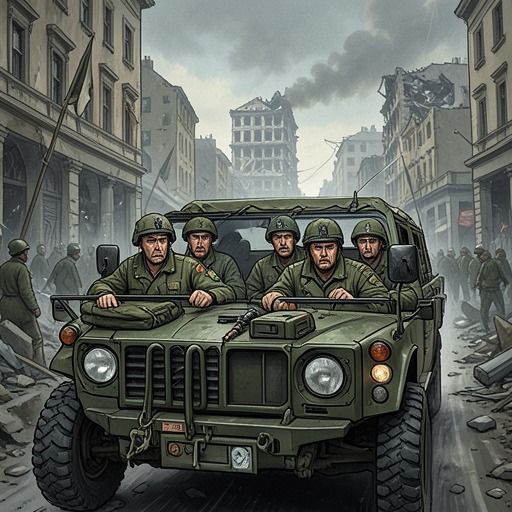
The raid had begun as an attempt to capture two senior lieutenants of Aidid during a gathering in Mogadishu. U.S. forces went in during daylight into the Bakara Market area, a stronghold of Aidid's supporters. The attack became a prolonged urban battle, with armed Somalis and civilians mixed in the streets and American forces under fire. The rules of engagement restricted soldiers to shooting at people who pointed weapons at them, but the distinction was increasingly difficult to maintain amid the fighting. That context helps explain why the images of the aftermath carried political force: they presented not only American losses, but also the civilian and Somali suffering that the raid's course had made difficult to separate from combat.
From questions to a policy decision
On October 6, Clinton met with senior national security, diplomatic, and military officials. The meeting began after breakfast in the White House East Wing and continued in the Oval Office; it lasted six hours. The immediate problem was stark: eighteen American soldiers had died, seventy-three were wounded, hundreds of Somalis were dead, and Michael Durant was being held captive. The public was outraged, and Congress was demanding withdrawal.
The discussion took place against competing assessments of what remained militarily possible. Robert Oakley, who had served as U.S. ambassador to Somalia, and the commander of Task Force Ranger believed Aidid had been dealt a serious blow and might be defeated with further effort. Intelligence reports indicated that Aidid's supporters were leaving the city and had expended their rocket-propelled grenades; some were also making overtures about abandoning him. Yet those possibilities did not restore political support for continuing the pursuit. The account emphasizes that America had lost its appetite for further action in Somalia.
Clinton's decision was to pull out. Task Force Ranger would remain temporarily, reinforced to demonstrate military resolve, but its withdrawal was to be completed by March 1994. All efforts to capture Aidid were called off. The choice separated the question of whether the adversary might still be weakened from the question of whether the United States would continue paying the costs of trying to defeat him. In the book's account, the battle's tactical and intelligence assessments did not outweigh the public anger and political pressure produced by the losses.
Durant and the terms of withdrawal
The decision did not end the immediate crisis. Durant remained a captive, so Clinton dispatched Oakley to Mogadishu both to deliver the withdrawal message and to secure the pilot's release. Oakley was instructed not to negotiate with Aidid, but to convey the president's demand that Durant be released. The distinction mattered: withdrawal from the pursuit of Aidid did not mean that the administration had ceased pressing for the return of an American serviceman.
Several weeks later, Clinton accepted Oakley's appeal on behalf of Somali leaders and ordered the release of every Somali captured by Task Force Ranger. This outcome extended the consequences of the presidential decision beyond the American withdrawal: it also determined what would happen to the Somali prisoners held by the task force. The account does not present the release as an exchange for Durant, but as a later decision made after Oakley pleaded on behalf of the Somali leaders.
Political consequence and narrative role
Clinton's response closes the gap between the raid's immediate military events and their national political aftermath. The operation had pursued the capture of Aidid's lieutenants; after the battle, the administration faced American casualties, Somali deaths, images of a desecrated body, a captive pilot, and demands from Congress and the public. Clinton's anger at having been left uninformed led first to questions about how the mission had been authorized and then to a decision that ended the campaign to capture Aidid.
The final account places the decision within the scale of the battle's cost: eighteen Americans were dead, seventy-three wounded, and more than five hundred Somalis dead, with at least a thousand injured. It says the price effectively ended the American mission in Somalia, and that every man who fought was home within a month. Clinton therefore appears not as a battlefield participant, but as the political authority who had to respond when the operation's human consequences became impossible to contain within its original objective.