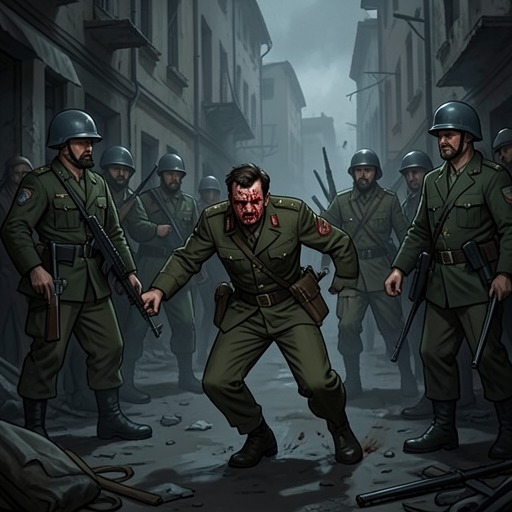
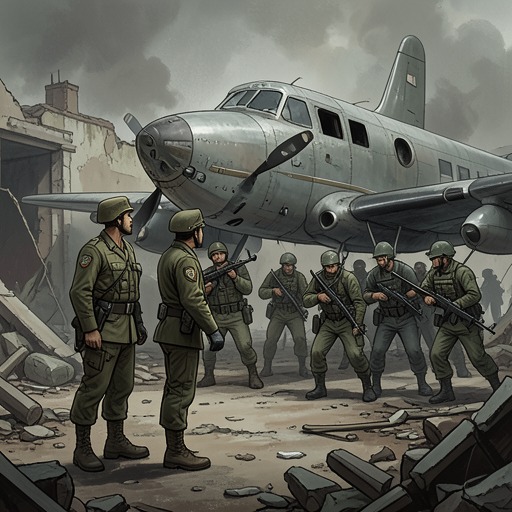
Gary Gordon and Randy Shughart defend the crash site
Black Hawk DownGary Gordon and Randy Shughart defended the crash site of Michael Durant’s helicopter in Mogadishu after it went down and Somali fighters overwhelmed the crew. Their stand ended in both men’s deaths, while Durant survived as a captive without knowing what had happened to the others. The defense became one of the battle’s defining acts of sacrifice and was later recognized with the Medal of Honor.
The crash and the decision to defend the crew
The account places Gordon and Shughart at the downed helicopter on the evening before October 4. By morning, Durant lay injured and bound in captivity, unaware that the two Commando sergeants who had fought to protect the crew were dead. His broken right femur had pierced his flesh, and his captors had bound his hands with a metal dog chain. In that small room, the gap between his survival and his ignorance of the others’ fate made the defense’s cost immediate, even before he could know its full extent.
The wider battle had already made the distinction between armed fighters and civilians perilously difficult. Rangers had been instructed to fire only at people pointing weapons at them, but armed men were mixed among women and children, and crowds gathered around the fighting. On a convoy route, Eric Spalding first warned a driver not to shoot at a woman carrying a baby; when she turned and raised a pistol, he shot her, then could not tell whether the infant had also been hit. Such encounters show the conditions surrounding the crash-site fighting without resolving the uncertainty and human cost that those conditions created.
A battle beyond the crash site
The defense took place amid a city-wide fight in which fear, casualties, and confusion shaped the choices of soldiers well beyond the helicopter wreck. Dale Sizemore, unable to join the initial mission because his arm was in a cast, was eager to go out when the rescue effort formed. His friend Steve Anderson, wounded by shrapnel on an earlier mission, instead felt dread at the radio traffic and gunfire, though he hid it from the others. Their contrasting reactions reveal how the same battle could intensify one man’s desire to rejoin his friends while making another question whether he could face another exposure to danger.
Brad Thomas, who had ridden back with Dominick Pilla’s blood on him after Pilla was killed, told Struecker that he could not go back out. Struecker spoke to him privately, acknowledged that he too was afraid, and urged him to go because it was their job. Thomas eventually climbed aboard. The exchange does not describe Gordon and Shughart’s decision directly, but it places their defense within a unit culture where fear was openly present and action under fear carried exceptional weight.
Death, uncertainty, and recognition
In the days after the battle, the men’s fates emerged unevenly. Gordon’s body was recovered, while Shughart remained missing after the other missing soldiers had been accounted for. Shughart’s wife, Stephanie, drew hope from the news that Durant was alive and captive, imagining that her husband might also have survived. She attended the funerals of other soldiers while waiting for news; when a car carrying a priest arrived at her home, she understood what the visit meant. The prolonged uncertainty was part of the event’s aftermath, not a reprieve from it.
Gordon and Shughart were awarded the Medal of Honor. The recognition gave public form to a defense whose immediate consequence had been their deaths and whose full meaning was initially unknown even to the surviving captive they had protected. Their action stands at the intersection of comradeship and loss: Durant lived, but the two men who fought for the crew did not return.