Mohamed Farrah Aidid
Black Hawk DownMohamed Farrah Aidid was a Somali warlord and leader of the Habr Gidir clan, whose challenge to the United States formed the political center of the October 3, 1993 raid in Mogadishu. The operation was designed to capture two of his senior lieutenants, but its collapse into a prolonged battle brought civilian danger, American casualties, and a decision to end the pursuit of Aidid. He survived the raid, remained in hiding during the first negotiations over the captured pilot Michael Durant, and was killed in factional fighting three years later.
Identity and Political Context
Aidid appears in the account chiefly through his position in the conflict: he led a clan that had challenged the United States, and American forces treated the capture of his senior associates as a central operational objective. On October 3, U.S. forces set out to seize two top lieutenants at a gathering of Habr Gidir leaders in Mogadishu. The assault was part of an effort against Aidid’s power, not an encounter with Aidid himself; he was not among the targets inside the building.
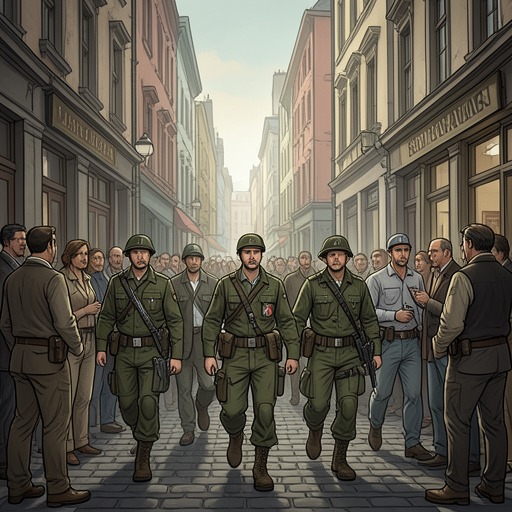
The raid took place in the Bakara Market area, where the American commander regarded a daylight entry as a calculated risk. The wider setting was a city devastated by five years of civil war, and the previous Ranger missions had stirred widespread hatred. Once gunfire drew crowds into the streets, armed men and civilians were intermingled, making the Rangers’ strict rule to shoot only at people pointing weapons increasingly difficult to apply. The resulting scenes expose the human stakes of the confrontation without making every act of violence in the streets a direct order or action by Aidid.
The Raid and Its Consequences
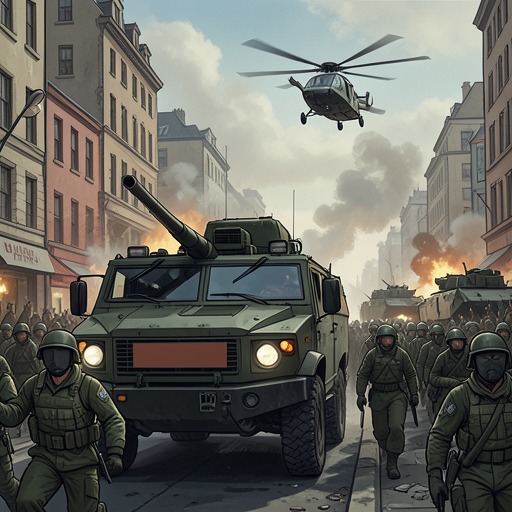
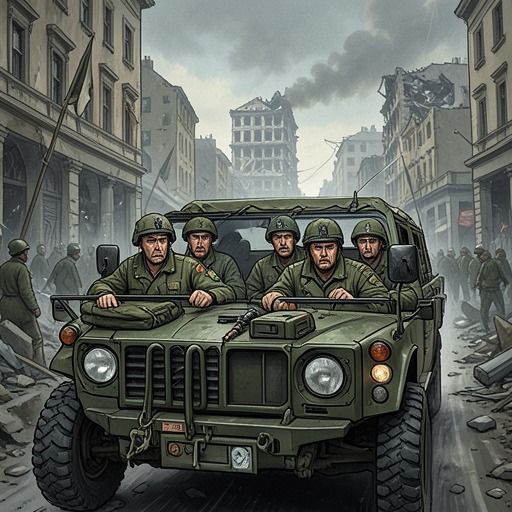
The operation brought about 75 Rangers and 40 commando troops into the city in 17 helicopters, with a 12-vehicle convoy waiting to transport the assault team and prisoners back to base. The intended sequence was swift: commandos would storm the target house, capture the two lieutenants, and Rangers would rope down around the block to prevent anyone entering or leaving. Instead, the volume of gunfire and the rapid mobilization of armed Somalis overwhelmed the plan. Crowds erected barricades and lit tires to summon help, while fighting spread through the streets.
Aidid’s supporters became a formidable force during the crisis. By the time the U.S. command considered another rescue attempt, his forces had mobilized, dug trenches, and erected burning barricades on every road leading to the crash site of Michael Durant’s helicopter. Rescue convoys had failed, and the other helicopter crash site had been overrun. Intelligence reports suggested that Aidid’s supporters were fleeing the city and had expended their rocket-propelled grenades; some were also sending peace feelers and offering to abandon him. Senior American commanders believed he had been dealt a potentially mortal blow. But these reports did not restore political support for continuing the campaign.
The battle’s consequences extended far beyond the intended arrests. At a White House meeting on October 6, officials confronted the deaths of 18 American soldiers, 73 wounded, hundreds of Somali dead, and Durant’s captivity. The meeting ended with a decision to withdraw from Somalia: Task Force Ranger would remain temporarily with reinforcements, then leave by March 1994, and efforts to capture Aidid would stop. The raid had damaged his position, but it had also made further pursuit politically unacceptable to the United States.
Negotiations and Michael Durant’s Release
When Robert Oakley arrived in Mogadishu on October 8, Aidid was still in hiding. Oakley met with Habr Gidir leaders and told them that the military operation against Aidid was over and that Task Force Ranger’s original mission had ended. The clan leaders were skeptical. Their distrust was sharpened by the fact that American forces had detained 60 or 70 members of their leadership, including Omar Salad and Mohammed Hassan Awale, the two most important men captured on October 3. The leaders said Durant’s release would have to be part of an exchange.
The book also shows how little control Aidid’s title alone guaranteed over events around the captive pilot. After his helicopter crashed, Durant had first been protected by neighborhood militia leader Yousuf Dahir Mo'Alim, whose men intended to carry him to their village and contact Habr Gidir leaders. Freelance street fighters, described as bandits aligned with no clan, intercepted them with a vehicle-mounted gun and took Durant as a hostage they expected someone to pay to recover. Mo'Alim’s outnumbered men had to hand him over. The account describes this as a contest in which the group with the larger guns prevailed; if Aidid wanted the pilot back, he would have to pay.
The United States, however, would neither pay nor exchange prisoners for Durant. Oakley warned the clan leaders that if the pilot was not released, the United States might attempt a rescue, bringing renewed fighting and potentially devastating consequences for the city. The Somalis conveyed the warning to Aidid, who was still in hiding. He offered to hand Durant over. Oakley asked for a few hours to leave the country, instructed the Somalis to deliver the pilot to Jonathan Howe, and flew back to Washington. Durant’s eventual release thus came through pressure communicated to Aidid’s clan, rather than a negotiated prisoner exchange.
Decline and Death
The decision to withdraw ended the immediate American campaign to capture Aidid, even as Task Force Ranger stayed on temporarily to make a show of military resolve. The contrast is central to his trajectory: his forces were under pressure and his supporters were reportedly dispersing, yet the United States concluded that it would not continue the pursuit. The account does not depict Aidid’s personal response to that strategic reversal; it records instead the diplomatic message delivered to his clan and the eventual transfer of Durant.
Aidid was killed in factional fighting in 1996. His death came on the same day that General William F. Garrison retired from the Army, a coincidence Garrison was said to note with a wink. The ending places Aidid’s fate within the continuing fragmentation of Somali politics: the figure around whom the American campaign had been organized did not fall to that campaign, but died later in conflict among factions.