New World Order and nation-building
Black Hawk DownNew World Order and nation-building is the political vision set against the events in Mogadishu: an ambitious international project that the book shows colliding with the realities of combat, flawed communication, and public scrutiny. The loss of Super 61 becomes more than a helicopter’s destruction. In the command center’s view, it marks a crippling blow to a ten-month American mission and to the nation-building hopes invested in Somalia.
The promise and the rupture
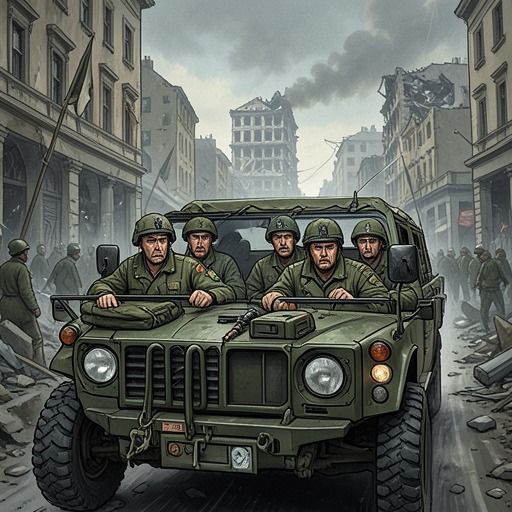
America’s mission in Somalia had passed from one president to another and served as a symbol of national commitment to a New World Order. The scale of that ambition becomes starkly visible when Super 61 crashes into an alley in northern Mogadishu. The book renders the contrast through the wreckage itself: hopes for nation-building, associated with United Nations bureaucrats, seem to lie amid twisted metal, plastic, and flesh. The crash is thus presented both as an immediate military emergency and as an image of political aspiration brought into violent contact with events on the ground.
That symbolic rupture does not mean the book treats the mission’s collapse as a simple consequence of one crash. Its account connects the broader ambition to decisions and conditions that proved difficult to manage: a raid mounted quickly, a crowded city, armed resistance, and a command system whose information did not reliably reach the people who needed it.
A mission filtered through the battlefield
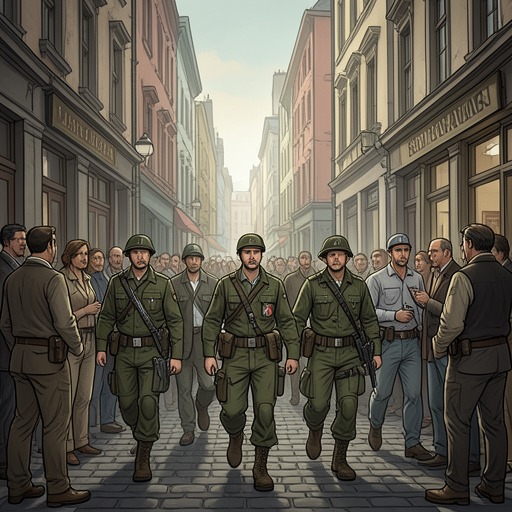
The book’s account of the fighting emphasizes the distance between a stated plan and the conditions in which it had to operate. Rangers were instructed to fire only at people pointing weapons at them, but armed Somalis were mixed among women and children, and crowds gathered at disturbances across Mogadishu. The narrative also notes that summer missions had stirred widespread hatred. The result is a sharp tension between rules intended to distinguish threats from civilians and a street-level situation in which that distinction was difficult to apply.
The strain extended from judgment to perception. Matt Eversmann experienced time as both accelerated and prolonged: events seemed to move at twice their normal speed, while each second in his immediate awareness felt like a minute. Far from the ground, commanders watched images on screens. During the convoy’s attempt to reach the crash sites, Navy aviators could not direct the vehicles directly; their instructions passed through the Joint Operations Center, delaying turns until the convoy sometimes passed the intended street. The screens also failed to convey the impact of gunfire and grenades, making the convoy’s progress appear more orderly than it was.
The chain of command compounded those delays. Danny McKnight, leading the convoy, relied on directions from the air and had not told the drivers where they were headed, despite the usual practice of briefing each vehicle so the column could continue if the lead vehicle was hit. On the ground, vehicles stopped at intersections and exposed those behind them to crossfire; repeated turns left the convoy lost and no closer to Wolcott’s crash site. The gap between the mission’s organized purpose and its disordered execution is made concrete in these failures of shared information, not merely described as confusion.
Images, casualties, and public judgment
The consequences entered American public life through television. Early on October 5, tired and wounded Rangers and Commando soldiers at the base watched CNN show jubilant Somalis on the rotor blades of Super 64, followed by footage of a dead American being dragged through the street. The images made the battle’s human cost visible to those who had not experienced it directly; for the soldiers watching, they provoked disgust and anger, and they returned to the hangar to clean their weapons and wait for orders.
By October 4, the scale of the tragedy was being described in stark numbers: eighteen American soldiers dead, more than seventy wounded, and hundreds of Somalis dead. The televised image of the body being dragged did not simply report those losses; it became a defining frame through which the disaster reached the wider public. The book places that image alongside the soldiers’ response, showing how the same broadcast could function as political spectacle at home and as a personal wound to men who feared the dead might be their crew members or fellow commandos.
Questions at the White House
The battle also exposed a break in the flow of information between military action and presidential oversight. Bill Clinton saw the images while in a hotel room in San Francisco and was horrified and angry. He wanted to know who had decided to undertake the mission and why he had not been informed. The raid had been mounted so quickly that, unlike earlier missions for which he had received advance briefings, he had not been briefed beforehand.
The questions widened beyond the White House. The day after the October 3 battle, members of Congress grilled the secretaries of defense and state about how the disaster had happened and why American soldiers were dying in Somalia. At a White House breakfast on October 6, the discussion brought together Clinton, senior administration officials, and Robert Oakley, who had watched events in Mogadishu unfold without being consulted by the White House or State Department. The episode therefore links nation-building’s international promise to domestic accountability: the ambition carried by the mission could not insulate its execution from scrutiny over tactics, policy, and the decisions that had left the president uninformed.