October 3, 1993
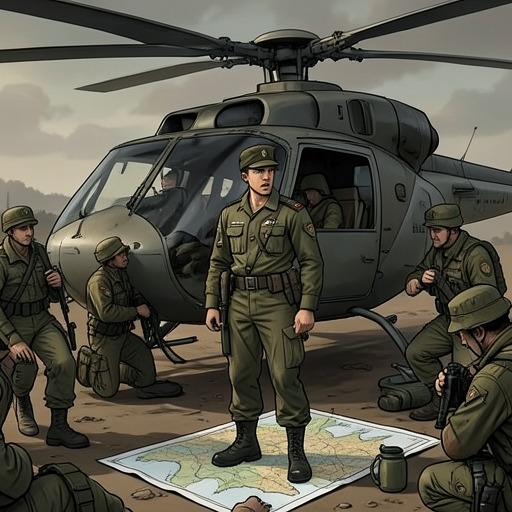
Black Hawk DownOctober 3, 1993, was the day a planned raid in Mogadishu became a prolonged, costly battle and, in later remembrance, a national victory for Somalis. The operation began with a clear objective: seize two men connected to Mohamed Farrah Aidid. Its course instead exposed how quickly a mission could be transformed by setbacks, crowded streets, delayed communication, and the struggle to recover those caught in the fighting. The date is remembered both for the scale of the American losses and as Ma-alinti Rangers, or The Day of the Rangers, in Mogadishu.
The raid and its opening setbacks
The operation began in midafternoon, with a company of United States Army Rangers supporting a commando squadron preparing to descend on a gathering of Habr Gidir clan leaders in the heart of Mogadishu. The clan, led by Mohamed Farrah Aidid, had challenged the United States. For Eversmann, a five-year veteran from Natural Bridge, Virginia, leading men into combat for the first time, the raid became the beginning of the longest day of his life. The account emphasizes that trouble appeared almost as soon as the operation began: the initial mishap was the first in a series that would put the mission at risk.
At 3:32 p.m., the lead Black Hawk helicopter pilot, Chief Warrant Officer Michael Durant, made a radio announcement. The raid was still unfolding, but the day’s circumstances would soon make the air operation, the ground force, and the effort to move through the city inseparable. The surveillance record gives the later loss of Super 61 a particularly immediate dimension: at the Joint Operations Center beside the airport, Maj. Gen. William F. Garrison and his staff watched footage from three surveillance helicopters as Super 61 came down. The cameras had captured the crash live and in color. What command staff saw in real time was not a report assembled after the fact but a developing emergency unfolding on their screens.
A battle shaped by streets and rules
The Rangers had been ordered to fire only at someone pointing a weapon at them. In the streets, applying that rule was difficult: people carrying guns were mixed among women and children, while disturbances drew crowds that included men, women, children, and elderly or infirm people. The account links the difficulty not only to the density of the crowd but also to the atmosphere created by earlier Ranger missions, which had stirred widespread hatred over the summer. The force entered a setting where it could not easily distinguish armed opponents from the surrounding population, even as crowds gathered around the fighting.
The convoy’s movements were further complicated by a communications arrangement that routed aerial guidance through the Joint Operations Center. Navy aviators in an Orion aircraft and the helicopters tried to steer the vehicles away from gunfire, but the Orion pilots could not speak directly to the convoy. A direction such as turning left first went to the center and then onward to the ground force. The resulting delay mattered in the city’s maze of streets: the convoy could pass the intended turn before the instruction arrived, then turn left onto the wrong street. The scene makes the gap between seeing a route from above and controlling movement on the ground a concrete part of the day’s worsening difficulties.
Fear, duty, and the effort to keep moving
The account sets different responses to danger beside each other. Dale Sizemore, a Ranger from Illinois known among the Rangers as Adonis, was eager to go; he had the word Ranger tattooed twice on his left shoulder. His friend Steve Anderson, also from Illinois, felt sick as he heard distant gunfire and radio traffic. Anderson was quiet and slender, had asthma, and still carried shrapnel from a night mission several weeks earlier. Although his wounds were described as minor, the experience had shaken the enthusiasm he had previously shared with his fellow Rangers. Their contrast presents fear and readiness as conditions shaped by experience, not as simple measures of character.
When Thomas told Struecker he could not return outside, Struecker acknowledged both his fear and his own inexperience, then urged him to go because it was their job. His point was that courage lay in what a person did while afraid, not in being untouched by fear. The exchange gives the day’s demands a personal scale: the need to continue the mission reached individuals who were frightened, had families, or had already seen combat. Elsewhere, Sean Watson, a highly respected sergeant first class, bluntly challenged his captain after being told to prepare to move. The response was not simply automatic obedience; the account notes that Watson had the standing and confidence to confront a commanding officer in battle. At another point, the presence of wounded men meant the force could not move. These moments show how orders, physical limits, and the obligation to those already hurt constrained what the unit could do.
The D-boys had been flown back to the hangar early. There they cleaned their weapons, checked their gear, and restocked ammunition, ready to return to the city. That preparation stands in contrast to the immediate limits on movement elsewhere: willingness to re-enter the fight did not remove the burden of casualties or the difficulty of getting forces where they needed to go.
Casualties, remembrance, and disputed victory
By Monday, October 4, the United States had awakened to news of a tragedy in Mogadishu. Eighteen American soldiers were dead and more than 70 were wounded; hundreds of Somalis had also died. Images of a dead American soldier being dragged through the streets appeared on television, giving the battle a public afterlife beyond the military account of its objectives and movements. A later tally put American losses at 18 dead and 73 wounded, with more than 500 Somalis dead and at least 1,000 injured. The figures clarify the scale of the event and the radically different communities that bore its cost.
The political response continued after the fighting. On October 6, officials including Samuel R. Berger and U.S. Ambassador to the United Nations Madeleine K. Albright met with President Bill Clinton and senior members of his administration in the Oval Office. The account also records former Joint Chiefs of Staff Chairman Colin L. Powell’s later assessment that the force had suffered a disastrous afternoon without having made a military error. That view sits uneasily beside the outcome: the battle had become the largest firefight involving American troops since the Vietnam War, and the two men sought in the raid, Omar Salad and Mohammed Hassan Awale, remained little known after the fighting, as they had been before it.
In Mogadishu, October 3 is still honored as Ma-alinti Rangers, The Day of the Rangers, and regarded as a national victory. The account calls that victory Pyrrhic. The name preserves a local interpretation of the day, while the casualty totals and the raid’s limited result refuse any simple celebration. October 3 endures, therefore, not as a single agreed judgment but as a date carrying the opposed memories of military loss, Somali resistance, and a victory purchased at terrible cost.