Volunteer Hospital
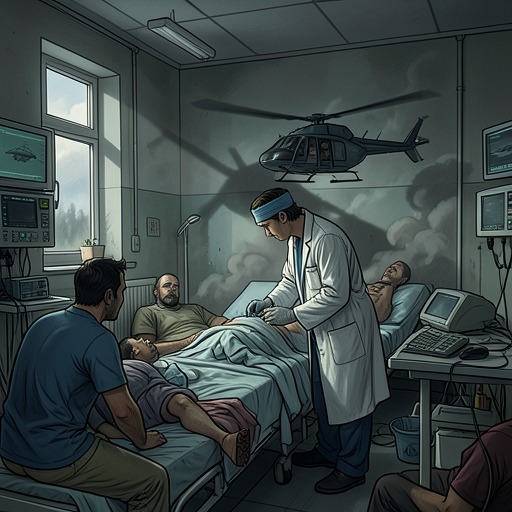
Black Hawk DownVolunteer Hospital was a medical refuge near the American base by Mogadishu airport that became overwhelmed as the fighting sent wounded people across the city. Almost empty before the trouble began, it was filled by October 4, with all 500 beds occupied and at least 200 more wounded people in the hallways. The hospital’s sudden transformation makes the battle’s civilian cost visible not as an abstraction but as a mounting demand for beds, surgery, and care that its exhausted staff could barely meet.
Location and changing role
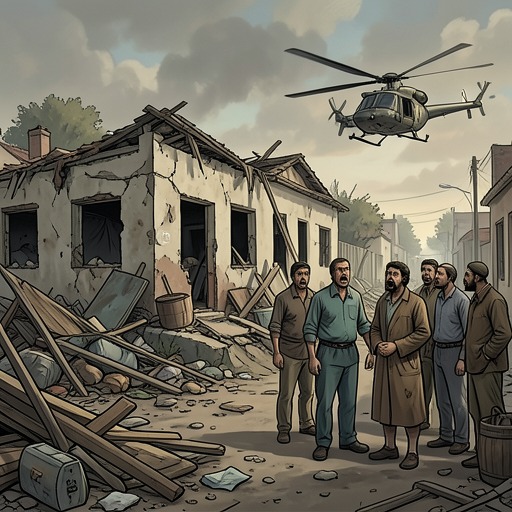
Volunteer Hospital stood near the Americans’ base by the airport, a position that did not make it an easy destination for Somali patients. Before the fighting, the hospital was almost empty. After trouble started with the Americans, many Somalis were afraid to come there. Burning roadblocks cut across the city, while American helicopters flew low and fired; fear of venturing out kept the first flow of wounded people small despite the volume of gunfire.
That hesitant beginning changed as people made their way to treatment. Wounded patients began arriving early in the evening before October 4, at first only in a trickle. The hospital’s proximity to the base thus stood alongside a practical and psychological barrier: the place was available, but getting there through a city under fire was dangerous, and many people initially stayed away. The later surge registered not a sudden end to those dangers but the arrival of people who had been unable, or too afraid, to come earlier.
Overcrowding and delayed treatment
By the end of October 4, every one of the hospital’s 500 beds was full. At least 200 additional wounded people were lying in the hallways. Volunteer Hospital was not even the city’s largest hospital; the numbers at Digfer Hospital were greater. The figures describe a crisis that exceeded the capacity of a single institution and extended across Mogadishu’s medical system.
The delay in bringing patients to hospital had consequences beyond the initial wounds. Many more people arrived on October 4 than on the previous day, and infections had time to set in. For many patients with gut wounds, the account says, death was likely; infections that might have been treatable could no longer be successfully treated with the antibiotics the hospital had available. The accumulating injuries therefore met not only a shortage of space but also the limits of time and medical supplies. A bed filled late could represent a wound made more dangerous by the journey and delay before care.
Surgery through the night
Volunteer’s operating theater contained only three beds, but it remained full and busy through the night. Abdi Mohamed Elmi worked as one of a team of seven surgeons who continued without a break. By sunrise, he had assisted in 18 major surgeries. Outside the theater, the hallways were filling rapidly with more wounded people—dozens, then hundreds—while the surgical team continued to work within a small, crowded space.
The narration conveys the scale of the influx through the contrast between the theater’s fixed capacity and the steadily expanding demand beyond its doors. Elmi’s tally of 18 operations by sunrise gives the overnight work a precise measure, while the hospital’s swelling hallways show that even sustained surgery could not keep pace with the arrivals. The description of the scene as a wave of blood captures the pressure on the staff without suggesting that their labor could resolve the wider crisis.
Exhaustion and return to work
At 8 a.m., after working through the night, Elmi finally left the operating room and sat down to rest. The hospital around him remained filled with the screams and moans of people who were dismembered, bleeding, or dying in pain; doctors and nurses hurried through the hallways trying to keep up. A French relief worker, seeing Elmi seated, angrily challenged him for not helping the patients. He answered that he could not. He remained on the bench until he had finished his cigarette, then stood and returned to work.
Elmi’s pause is brief, but the scene makes exhaustion part of the hospital’s story rather than a detail outside it. His return did not follow a completed shift or a quieting of the wards: the wounded were still arriving, and the corridors still demanded attention. He would not sleep for another 24 hours. Volunteer Hospital’s significance lies in this collision between overwhelming need and finite human capacity: the staff continued caring for patients, but neither the crowded building nor its workers could escape the effects of delayed treatment, scarce resources, and continuous work.