Artie Kelleher
Black Water (Joyce Carol Oates Edition)Artie Kelleher, also called Arthur Kelleher and Mr. Kelleher, is Kelly Kelleher’s father: an affectionate, materially successful man whose fear for his daughter’s childhood eye condition becomes entangled with a strong insistence on physical normality. His later political commitments put him at odds with Kelly, while her desperate thoughts in the sinking car show how powerfully she still imagines protecting him, even when she is fighting for her own life.
Identity and Family Life
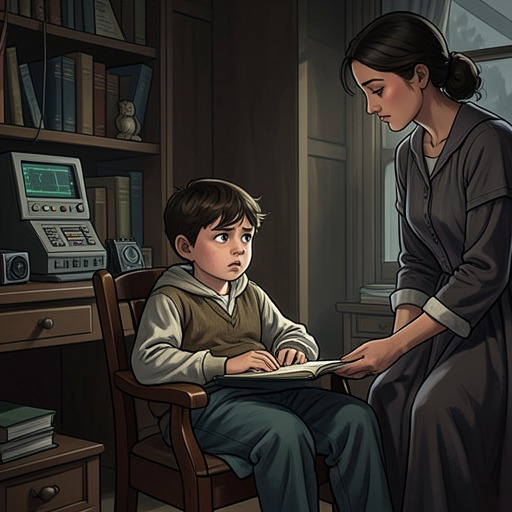
Artie and his wife, Madelyn, are introduced through their anxious attention to their infant daughter’s eyes. Kelly was born with strabismus: the muscles controlling her left eye were weaker than those controlling her right. For her first two years, the two images she saw overlapped unpredictably; she compensated by relying on her stronger right eye, while the left wandered. Her parents repeatedly watched her gaze, waggled their fingers before her nose, and tried to draw her attention, caught between alarm and impatience.
The family’s distress was not only about Kelly’s sight. Her father was especially troubled by what he called abnormalities, and the narration connects that unease to a family emphasis on physical health, well-being, attractiveness, and normality. Artie loved Kelly and wanted to spare her hurt, but the signs of bodily difference were difficult for him to bear. His care thus arrives with an insistence that her body be made to conform to what others will recognize as ordinary.
The Decision to Correct Kelly’s Eye
The doctors disagreed about how to treat Kelly. One recommended exercises; another urged an operation as soon as possible, warning that the weaker eye might become permanently atrophied if it did not improve. Madelyn and Grandma Ross initially wanted to give exercises a chance, working with a young therapist who was optimistic about correcting the problem. Artie, however, could scarcely bear to look at his daughter’s wandering eye and feared what would happen when she started school.
He argued for looking ahead: if the exercises failed, he believed other children would tease Kelly and treat her as a freak. As he tried to make that case calmly, Kelly was sometimes within earshot. Madelyn attempted to answer in the same measured manner, but her trembling voice and hands gave way to tears. Their dispute reveals two forms of parental fear—Madelyn’s reluctance to rush into surgery and Artie’s dread of the social injury he believes her difference will bring.
Artie eventually took a weekday morning off, and he and Madelyn drove Kelly from Gowanda Heights, a forty-minute trip, to Beth Israel Hospital on East End Avenue. Surgery corrected the eye. Recovery was quick, though not painless as promised; afterward, the visible signs of the condition were gone, and Kelly appeared normal. The operation resolves the immediate family crisis, but the episode also shows how thoroughly the prospect of public judgment shaped the decision.
Politics and Conflict with Kelly
Artie’s political life is rooted in a long friendship with Hamlin Hunt, the Republican congressman, whom he had known since school and with whom he played golf. Even when business was not going well after the stock-market debacle, Artie continued contributing to Hunt’s campaigns and helped host large fundraising dinners at the Gowanda Heights Country Club. He took a childlike pride in being included in Republican Party events at local and state levels.
Kelly, who studied American history and politics at Brown, regarded Hunt’s public conservatism and national profile with anger. When she learned what she understood of his beliefs, she shouted at her father, accusing Hunt of fascism, Nazism, and support for genocide. Artie stared at her as though she had slapped him. Her mother’s response to Kelly’s subsequent question about how she could support Hunt was gentler but evasive: she took Kelly’s hand and asked how Kelly presumed to know how she voted. The family exchange makes political allegiance a source of intimate conflict, not merely a difference of opinion; Kelly’s moral denunciation meets her father’s stunned silence and her mother’s refusal to disclose her vote.
Kelly’s Crisis and Her Concern for Him
Years later, on the drive that ends with the Toyota plunging into Indian Creek, Kelly’s immediate circumstances are radically different from the childhood crisis her parents once tried to control. After the car enters the water, she is trapped as black water rises around her. The Senator has kicked her in his panicked attempt to escape; Kelly understands that he acted blindly, and she continues to have faith in him even as she fights to stay alive.
Her thoughts turn to Artie as she bargains with the imagined rescue team. She offers her right leg, or both legs, if amputation is necessary, promises to sign the release, and says she will not sue. She thinks of her father as the one who is litigious, recalling that the family teases him about it, and imagines explaining the circumstances and taking the blame herself. The thought is a stark reversal of his earlier effort to protect her from harm: now Kelly imagines sacrificing her own body and accepting responsibility to protect him from legal trouble. Even in the car, where breath and movement are failing, her family bond shapes the terms of her imagined rescue.
Character and Significance
Artie is presented through a tension between tenderness and control. His love for Kelly is explicit in his wish to spare her pain, yet his response to her eye condition reflects a household in which physical difference is experienced as a distressing abnormality and corrected partly against the anticipated judgment of other children. His choice to pursue surgery is therefore both an act of parental care and an expression of the family’s powerful investment in normal appearance.
His relationship with Kelly also places private attachment beside public politics. Artie’s loyalty to Hamlin Hunt is sustained by friendship, campaign work, and pride in political inclusion; Kelly’s response is shaped by her conviction that Hunt’s politics are morally intolerable. Later, Kelly’s imagined willingness to take the blame for the crash recalls a different side of their bond: whatever their conflicts, she remains deeply oriented toward her father’s protection. The novel gives no scene of Artie learning what happened to her in the supplied episodes, leaving that final imbalance—his past efforts to guard her, and her last thoughts of shielding him—unresolved.