Boston
Black Water (Joyce Carol Oates Edition)Boston is both a place of attempted recovery and a measure of the distance between Kelly Kelleher’s ideals and her lived experience. She works in the city for Michael Dukakis’s losing presidential campaign, struggles through a period of political despair, and later drives from her home behind Beacon Hill to teach adult literacy in Roxbury. Her Boston life is not a simple story of political commitment: it includes the fear and self-doubt that accompany her volunteer work, and the effort to rebuild a routine after emotional upheaval.
Political Life and the 1988 Election
During the 1988 presidential election, Kelly volunteers for Dukakis’s campaign at its Cambridge headquarters. She assumes that George Bush’s public appearances will make voters reject him, reading his appeals as hypocritical, venal, crass, uninformed, and evil. The national polls, however, indicate that the Democratic campaign is in trouble even while Kelly and her coworkers have not fully accepted that outcome. The contrast between her certainty and the campaign’s eventual defeat makes Boston’s political work a setting where conviction meets an unfolding national result.
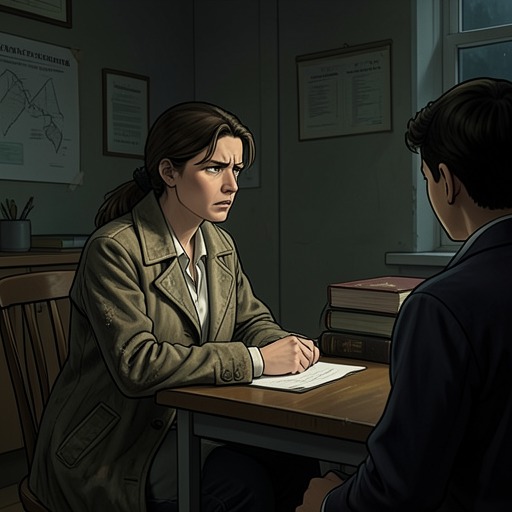
Kelly’s commitment also runs into conflict at home. She has argued with her father over his political choices, and he angrily condemns her for spending her time and energy on the Dukakis campaign. These quarrels are political in subject but are also described as struggles over her father’s authority. Her mother responds differently: when Kelly challenges her about how she votes, she gently questions Kelly’s assumption that she knows. The exchanges show that political division reaches into the Kellehers’ family life, while also exposing the limits of Kelly’s confidence about other people’s beliefs.
When the election results establish Bush’s landslide, the defeat becomes a personal crisis. Kelly nearly stops eating and goes several nights without sleep. In Boston Common, disheveled, hungry, and nauseated, she moves through the streets in a dazed state, seeing human figures as misshapen, animal-like forms. She eventually breaks down crying and calls her mother to come get her, pleading that she does not know where she is. The city’s public space registers the collapse of the political certainty that had organized her campaign work, and her appeal to her mother marks a moment when she can no longer manage her distress alone.
Work in Roxbury
In the months after that crisis, Kelly volunteers with the National Literacy Foundation of America. Twice each week, on Tuesdays and Thursdays, she drives her secondhand Mazda from her condominium behind Beacon Hill to a community services center in Roxbury. Her evening classes begin at seven and may run, or trail off ambiguously, until half past eight. She tries to teach Black adults to read using primer texts; when asked about the students’ progress, she answers with a smile, “Some!” The modest reply captures both the work’s small, uncertain increments and her effort to remain enthusiastic about it.
Kelly feels genuine zeal for the program, but that commitment is mixed with unease. She recognizes a priggish self-righteousness in herself and a condescension tied to being white; at the same time, she fears physical harm in the streets surrounding the center and along the debris-strewn expressway. The center itself is not described as dangerous, but the surrounding journey makes her vulnerability feel immediate. Her experience therefore resists an uncomplicated account of volunteer service: good intentions coexist with racial assumptions and with fear of the neighborhood in which she is working.
By midsummer, she has not told her parents about the work and rarely mentions it to friends. She also keeps it from The Senator during their conversations at Buffy’s gathering. The omission is deliberate enough to be linked to how she wants to appear: she may be trying not to seem like the zealous volunteer type that a successful politician would regard with contempt, and instead to present herself as someone different. Boston’s civic work thus remains partly hidden even as Kelly makes the recurring drive to do it.
Home, Recovery, and Social Distance
Kelly’s recovery from her relationship with G----- is tied to habits she formed while living in Boston and to her attempts to change them. Since freshman year at Brown, she has starved herself to maintain strict control and lighten her menstrual periods; after the relationship ended, she also used food restriction to punish herself for loving someone who seemed not to love her as much. In the year before the events at the island, she resolves to become healthy and normal. She eats regularly, regains eleven of the twenty pounds she had lost, and sleeps without sleeping pills or the glass of red wine that had become a bedtime ritual during the three months G----- lived with her.
That improvement does not mean her relationships or surroundings have become uncomplicated. Kelly avoids the family house in Gowanda Heights, feeling guilty for worrying her mother and provoking arguments with her father, though relations with him are now all right. She also keeps a discreet distance from some former friends, including embittered idealists and angry abortion-rights activists. These choices place her recovery between renewed routine and withdrawal: she is functioning more steadily, but still manages discomfort by limiting contact with people and settings associated with strain.
Her professional surroundings carry their own history. At a storefront office on Brimmer Street, Kelly encounters Carl Spader, once a media personality and an eloquent young white associate of Martin Luther King and John F. Kennedy. By the time she sees him, he has gone through his third divorce, and the account depicts him as aged and diminished. His publication, Citizens' Inquiry, now circulates between 35,000 and 40,000 copies, compared with 95,000 to 100,000 at its 1969 peak, when it rivaled The New Republic. Kelly understands the loss as part of a wider conservative ascendancy and the dismantling of the Kennedy-Johnson vision, but she does not exploit Spader’s decline in conversation. She believes that one should not say anything about another person that one would not say in that person’s presence.
The Senator asks repeatedly about Spader and says he has not seen his old friend in years. Kelly answers discreetly, while The Senator’s tone carries both regret and mild censure. He says he reads Citizens' Inquiry. Their exchange brings the political history of Boston’s liberal circles into Kelly’s present: the fading publication, Spader’s changed circumstances, and the conservative turn are not abstract topics, but matters she encounters through people she knows and chooses not to gossip about.
The City in the Novel’s Wider Geography
Boston provides a significant counterpoint to the island and marsh where Kelly’s story ends. From the city she undertakes the scheduled drive to Roxbury for her classes; elsewhere, after the Fourth of July gathering, she is a passenger in The Senator’s rented Toyota on the unsafe Old Ferry Road. That road leads into marshland near Brockden's Landing, far from the Boston routines of her home, political work, and volunteer teaching. The contrast separates the familiar civic geography of the city from the isolated landscape of the fatal accident without making them unrelated: Kelly’s city life establishes the commitments and recovery she is trying to sustain before the journey away from it.
The novel’s treatment of Boston also connects individual experience to public history. The election campaign and its defeat, the declining circulation of Citizens' Inquiry, and Kelly’s work in Roxbury place private distress alongside political change and unequal social conditions. Boston is not simply a backdrop for these events. It is where Kelly tries to participate, where her assumptions are tested, and where signs of both personal recovery and broader political loss become visible.