Fourth of July
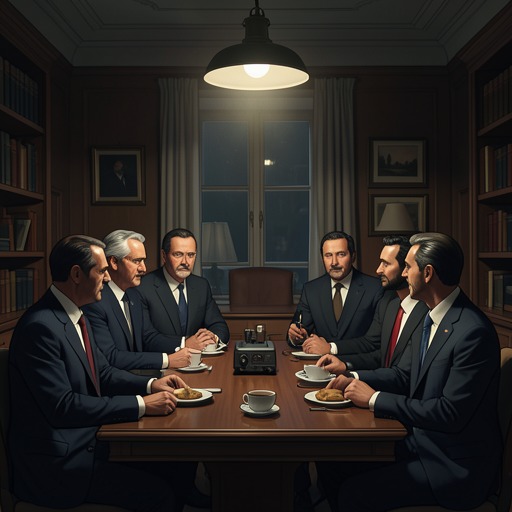
Black Water (Joyce Carol Oates Edition)The Fourth of July is both the setting for Kelly Kelleher and The Senator’s encounter on Grayling Island and the sharp contrast that gives the night its political and emotional force. While neighbors celebrate with flags, parties, and fireworks, the two leave for Brockden’s Landing, take a disused road, and plunge into Indian Creek. Kelly drowns; The Senator escapes and calls Ray Annick. The holiday’s bright performance of national belonging continues alongside a private emergency in which Kelly is isolated and cannot be saved.
The Holiday and Its Public Rituals
The evening is marked by the Fourth of July. Elsewhere on Grayling Island, especially along the northern shore, cars line the narrow sandy roads leading to beach parties. Once night falls, the celebrations are expected to culminate in fireworks, some of them lavish and explosive, their brilliant colors compared to television images of the war in the Persian Gulf. The holiday appears first as a broad, communal scene of anticipation, not as an occasion set apart from ordinary life.
At the St. John gathering, celebration takes concrete form in food, conversation, photographs, and the flag on Edgar St. John’s property. The American flag flaps at the top of his flagpole, described as the tallest on Derry Road and perhaps on the island. Buffy St. John arranges guests for Polaroid pictures, while firecrackers crackle at a neighbor’s. Later, as The Senator staggers toward a telephone booth after the crash, rockets shoot red, white, and blue into the night; their spectacle is accompanied by children’s admiring cries and a dog’s yapping. The public festival does not stop for the accident, and its noise offers no sign that Kelly is fighting for her life nearby.
A Celebration Turning into an Emergency
The holiday’s convivial mood shapes Kelly’s expectations. At the party, she and The Senator have met only that afternoon, through a chance encounter at the oceanfront cottage on Derry Road. Kelly is Buffy’s close friend, and the two young women had roomed together at Brown. Their new acquaintance with The Senator unfolds amid laughter and animated conversation, with the immediate and distant future seeming connected and full of promise. Kelly’s attraction grows during a walk through the dunes, where the wind, gulls, and surf accompany a kiss and her sense that events are moving toward something she cannot stop.
The pair leave the party at approximately 7:55 p.m., with about twenty-five minutes to reach the ferry. The Senator drives the rented Toyota impatiently and exuberantly. He takes an unmarked turn onto Old Ferry Road, a badly rutted sandy track that locals no longer use because a new paved road serves the route. The old road is no longer maintained by Grayling Township and should have been officially closed. Though the turn is an understandable mistake at dusk, their choice of route places the car on a dangerous, neglected stretch.
The Fourth of July’s expected brightness gives way abruptly to a crash. The Toyota skids on a sandy rut, breaks through the guardrail, and overturns into black water. The creek is Indian Creek, a fast-running stream through a marshy, insect-filled landscape; it reaches depths of eleven feet in places and runs toward a tidal pool and the Atlantic at Brockden’s Landing, about two miles away. Investigators might speculate that, had the car remained on the road, it could have hit a narrow bridge ahead and reached the water in much the same way. The specific cause of the crash is not presented as a settled legal finding; the road’s condition and the driver’s loss of control frame the danger, while later The Senator gives Ray a self-protective account blaming Kelly.
The Flag, the Nation, and Political Fear
The flag binds the party’s domestic celebration to The Senator’s public identity. Buffy’s father’s patriotism is part of the family setting, and she says he served in the CIA for twenty years. The flag above the cottage is not merely background decoration: its red, white, and blue appearance recurs beside the party and the accident, so that national display persists even as the characters’ private circumstances collapse. The novel places the flag’s reassuring visibility against the abandoned road, the submerged car, and Kelly’s inability to escape.
The Senator’s political ambitions become explicit in the aftermath. Having swum free of the sinking Toyota and reached shore, he is exhausted, vomiting, and covered in filthy water. He limps back toward the highway with one shoe on and one off, fearing discovery by a passing motorist, recognition, or a photograph that could end his prospects. Fireworks continue overhead as he imagines the possibility that his party will never nominate him and that he will never become president. The celebration’s national colors illuminate not a confident public leader but a man terrified that disgrace will undo the future he expects to claim.
The contrast grows harsher when The Senator reaches an outdoor telephone booth and calls the St. John residence. He initially identifies himself as Gerald Ferguson, a legal associate, then tells Ray that it is he, that there has been an accident, and that the girl is dead. Ray reacts with shock and tells him not to explain over the phone, offering instead to come get him. The Senator immediately frames the event as a political and legal threat: he says Kelly was drunk, became emotional, and grabbed the wheel, and fears that he will be charged with manslaughter. This is his account, not an independent determination of what caused the crash. In the same sequence, the narration invokes the idea that politics is the systematic organization of hatreds, tying his fear of enemies and public derision to the holiday’s patriotic spectacle.
Celebration and Death in the Novel’s Structure
The narrative repeatedly places the crash beside memories of the day as it was experienced before the outcome was known. Kelly’s perceptions move between the car sinking and the party’s earlier ease: Buffy photographs the guests beneath the flag; the gathering is still full of food, flirtation, and anticipation. The shift makes the holiday’s apparent continuity unsettling. What is already fatal in the water is recalled alongside a celebration that, in memory, has not yet been interrupted.
The final contrast is between the public feast and Kelly’s private death. The Senator’s call takes place at 9:55 p.m., while the party’s food and convivial noise remain part of the surrounding night. Fireworks burst above the island as Kelly’s lungs fill with black water. She does not know that The Senator has escaped, reached a telephone, or told Ray she is dead; from her disoriented perspective, the accident seems not yet to have happened, and the Toyota is only just turning off the highway under the moon. The Fourth of July therefore becomes a frame of temporal disjunction as well as national ritual: the island proceeds through its familiar celebration while the account returns to the doomed instant and to Kelly’s limited, failing experience.
The holiday’s meaning rests in that unresolved juxtaposition. Flags and fireworks make national unity visible and audible, and The Senator’s aspirations draw force from the political world those symbols represent. Yet the story sets them beside a failed guardrail, a road that should have been closed, a woman trapped in a sinking car, and a survivor already calculating the consequences for his career. The public celebration does not cause the tragedy, but its spectacle makes the divide between collective patriotic reassurance and individual vulnerability impossible to ignore.