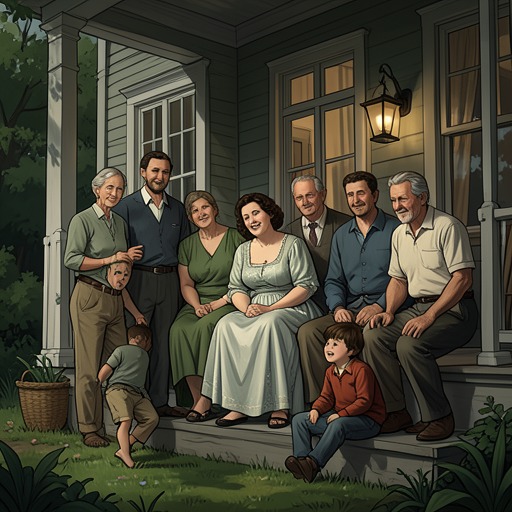
Grandpa Ross
Black Water (Joyce Carol Oates Edition)Grandpa Ross is Kelly Kelleher’s loving grandfather, whose tenderness survives in her memory as both intimate family history and a source of steadiness during mortal danger. His defining legacy is not a formal religious doctrine but the belief that a life made with love is itself a form of faith; when Kelly is trapped in a sinking car, remembering him gives her a point of connection even as she fears she may die.
Identity and Family
Grandpa Ross is Kelly’s grandfather and, in her recollection, the person who helped bring several of his grandchildren into the world. His bond with her is distinctively close: he knew her not as Kelly but as “Lizzie,” and she was his dearest grandchild among the several he had welcomed. The childhood name marks a private intimacy that remains vivid to her long after the family scenes themselves have passed.
His affection appears in physical play as well as in words. Kelly remembers running in white ankle socks across her grandmother’s prickly carpet after kicking off her new patent-leather shoes. Her grandfather swooped her up and lifted her above his head, calling her a little angel-bee. The suddenness and strength of his hands startled her, while his arms trembled with the effort of holding her aloft. Her mother and grandmother scolded him afterward, warning him about his blood pressure and asking what he was doing when he might have dropped her. The memory joins exuberant affection with the adults’ concern for his health.
Faith and the Meaning of a Life
When Grandpa Ross was dying, Kelly saw his body wasting while his eyes remained alert and kindly. In that moment he confided a thought as if it were a troubling secret: “The way you make your life, the love you put into it—that’s God.” The statement locates the sacred not in a doctrine Kelly has accepted, but in the way a person lives and loves. It is the clearest expression of his outlook preserved in the evidence, and it gives his remembered presence a practical, intimate meaning.
That understanding contrasts with Kelly’s uncertainty about conventional belief. She does not trust horoscopes or their breathless warnings and pep talks, and she questions the Anglican God in whom she had been confirmed. Her grandfather’s words do not erase that skepticism; instead, they offer a way to think about faith through lived care. The belief matters because it comes from a person she loved and trusted, not from a system she has chosen to follow.
Memory During the Accident
After the car plunges into water, Kelly is left trapped and initially hopes that the Senator has gone to get help. As the danger becomes clear, her thoughts move between immediate fear and memories of those who love her. Grandpa Ross returns first as a remembered presence: she thinks of him as dying, his flesh shrunk back from the bone but his eyes still alert, and recalls the loving confidence with which he had spoken to her. Memory makes him present, but it also confirms the painful fact that he is gone.
Kelly fears that if she dies, the news will devastate her parents and grandparents. Then she realizes that Grandpa Ross is already dead and will be spared the knowledge of her fate. That recognition brings a small, specific relief amid her terror. She even wonders whether her grandmother need be told, framing the thought as a concern for the family rather than as a resolution about her own survival. Her grandfather’s absence thus changes the emotional shape of the crisis: he cannot come to her aid, but neither can he be made to suffer the news she fears.
Narrative Significance
Grandpa Ross is characterized through a few concentrated recollections rather than through an extended account of his life. The dying man’s counsel, the childhood scene of being lifted overhead, and Kelly’s recognition that he is already dead establish different dimensions of the same bond: belief, play, care, and loss. These memories surface within Kelly’s immediate struggle to survive, so the past is not a separate family portrait; it is part of the consciousness through which she faces the possibility of death.
His significance rests in the connection between love and the effort to go on living. In the emergency, Kelly’s fear for her family and her relief that Grandpa Ross cannot be told of her possible death make clear how deeply she remains attached to him. His remembered words do not promise rescue or explain away suffering. They offer instead a measure of meaning grounded in affection—a legacy that endures even when he is absent and Kelly is alone.