Grayling Island
Black Water (Joyce Carol Oates Edition)Grayling Island is the Maine setting that joins a Fourth of July party to a fatal accident in its marshes. A twenty-minute ferry ride northwest from Boothbay Harbor, it first appears as a place of beaches, guests, cars, flags, and fireworks; after dark, its disused roads lead Kelly Kelleher and The Senator away from that public festivity and into a remote stretch where their rented Toyota plunges into black water. The island’s decisive narrative force lies in that contrast: a celebratory, populated shore and a hazardous, unobserved interior occupy the same small geography.
Setting and Access
Grayling Island lies across the water from Boothbay Harbor, Maine, and is reached by ferry. The party attended by Kelly and The Senator takes place at an oceanfront cottage on Derry Road, the property of Mr. and Mrs. Edgar St. John, who are absent. The gathering is hosted by Buffy St. John, Kelly’s close friend and former roommate at Brown University. The cottage is a social point of departure: on the evening of the Fourth of July, cars line narrow sandy roads leading toward the northern beaches, where parties are underway and fireworks are expected after nightfall.
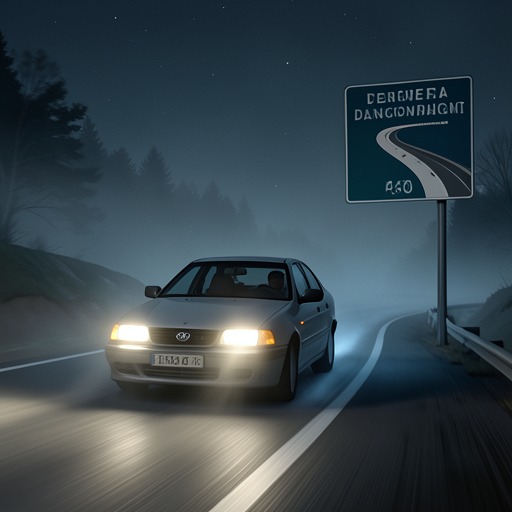
The island’s routes are not interchangeable. Kelly and The Senator leave the cottage at about 7:55 p.m., aiming for the 8:20 ferry to Boothbay Harbor at Brockden’s Landing. The drive should take roughly twenty-five minutes if they travel quickly and take the right road. Instead, The Senator turns onto Old Ferry Road, an unpaved, badly rutted track that no longer has a sign. A new paved Ferry Road had superseded it, and the turn to the old route came three-quarters of a mile beyond the turn to the current one. The mistake is described as understandable at dusk, but the road’s disuse and lack of maintenance make the choice consequential.
Party Shore and Public Celebration
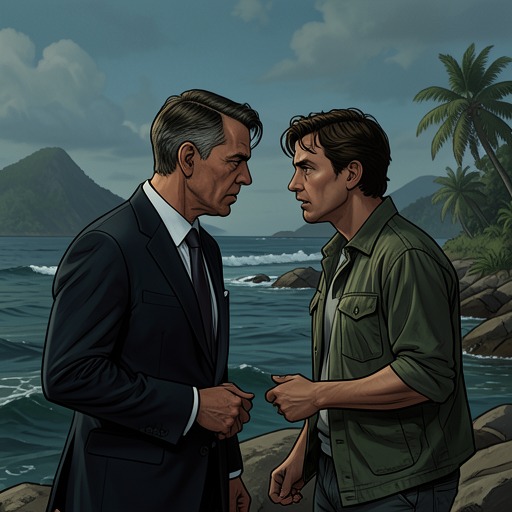
The island’s inhabited, social face is gathered around the Fourth of July party. Kelly and The Senator meet there by chance at approximately two in the afternoon; they are new acquaintances, not prior lovers or established companions. Kelly works for Citizens' Inquiry, while Buffy works for Boston After Hours. The party puts them in company with older guests, including The Senator and Ray Annick, as the afternoon develops into an evening meal and preparations for the holiday’s displays.
Patriotism is made conspicuous in the cottage’s surroundings. A tall American flag flies from Edgar St. John’s flagpole, described as the tallest on Derry Road and possibly on the island. Buffy identifies her father as a patriot and says that he served in the CIA for twenty years. Nearby firecrackers sound as the flag ripples overhead; elsewhere, the island’s expected fireworks are likened to brilliant, explosive images on television. The flag and holiday spectacle give the gathering a shared public language of national celebration, but the later crisis unfolds without witnesses in a place that celebration does not reach.
The Marsh Roads and the Accident
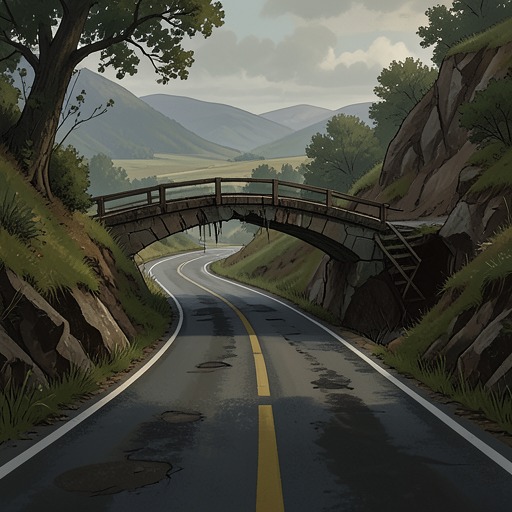
The island changes character as the car leaves the party. Kelly and The Senator have been talking and laughing easily; she tries discreetly to steady his vodka-and-tonic as he drives. They are hurrying for the ferry, and he has been drinking more heavily as the day progresses. At first, Old Ferry Road is taken at speed, the Toyota skidding through sandy ruts while The Senator remains in control. The car then hits a rut, begins to skid, breaks through a guardrail, and enters water at a hairpin curve. The accident occurs at about 8:15 p.m., roughly thirty feet before a narrow wooden bridge made of badly weathered planks. Neither the bridge nor the dangerous curve is marked by a warning sign.
This stretch of road is remote and difficult to identify. The water is variously apprehended as a creek, stream, or river, and neither occupant knew it was there at the curve’s apex. The Toyota overturns and lists toward the passenger side as it sinks. Water spreads over the hood, cracked windshield, and roof; the passenger door buckles inward. The radio stops, taking with it music neither had been listening to. Kelly has no natural name to call out to the driver as the car fills, a small but telling measure of how recent their acquaintance is.
The surrounding marsh makes isolation palpable. Brackish odors of damp, decay, and black earth replace the Atlantic’s salt air; there is no sound of waves, only nocturnal insects and wind in stunted, vine-laden trees. Mosquitoes and fireflies gather in the area, broom-headed rushes sway in the dark, and some trees appear dead, stripped of leaves, limbs, and bark. Kelly wonders whether pollution is killing them. The landscape is not simply a backdrop to the crash: its darkness, vegetation, and unmarked route close around the occupants while the island’s party continues elsewhere.
A Geography of Unequal Risk
Old Ferry Road’s condition links the crash to more than a momentary loss of control. The local route has not been maintained by Grayling Township and should have been officially closed. Its missing sign, dangerous curve, and absent warning before the weathered bridge combine with the broken guardrail to make a failed journey possible. The party’s timetable adds pressure: the two leave with only twenty-five minutes to reach the ferry, and The Senator’s impatient driving turns that haste into physical risk. The evidence does not reduce the accident to any single cause; it places driver behavior within an infrastructure already made unsafe by neglect.
The island’s distances also shape what follows. The car goes into the water unobserved. The Senator eventually escapes and reaches the highway on foot, limping with one shoe on and one off, but Kelly remains trapped. He calls Ray from an outdoor telephone booth at Post Beer & Wine and tells him that there has been an accident and that the girl is dead. While the Senator’s political fears gather around discovery, shame, and the possible end of his ambitions, Kelly’s final experience is bodily and immediate: she bargains to have her legs amputated if that would save her. The island’s remote interior leaves her in the sinking car while the holiday’s lights and voices remain elsewhere.
Narrative Significance
Grayling Island is organized by a sharp division between visibility and concealment. The party offers witnesses, social recognition, a flagpole, and a shared national ritual; the road to Brockden’s Landing offers darkness, obscured geography, and no one to see the car leave the road. Fireworks and holiday noise continue in the distance as the crash produces a private emergency. This juxtaposition sets public celebration against an individual’s unobserved vulnerability without making the island itself a single, uniform space.
The island also turns a short-lived meeting into an irreversible consequence. Kelly and The Senator have known each other only since that afternoon, yet the route away from the party places them together in a car whose driver has been drinking and whose destination is a ferry they may miss. The island’s old road, easy to mistake for a way onward, becomes a passage out of social time and into the sinking car. Its geography therefore carries the story’s central contrast: the familiar signs of American summer and public life stand only a short drive from an abandoned road where no sign warns of what is ahead.