Kelly Kelleher's post-breakup distress and recovery
Black Water (Joyce Carol Oates Edition)Kelly Kelleher's post-breakup distress and recovery describe an uneven effort to regain health, trust, and a sense of agency after her relationship with G-----. The breakup leaves her withdrawn and physically depleted, and its effects persist into her encounter with The Senator: she has avoided intimacy, feels exposed in social settings, and struggles to separate her own desire from the expectations of men. Yet she also deliberately restores her health and holds fast to the belief that life is precious, a belief that later informs her determination to survive the sinking Toyota.
The Breakup and Its Aftermath
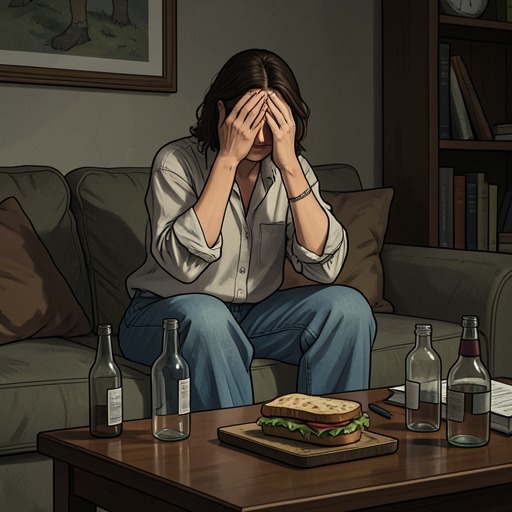
Since graduating from Brown, Kelly had had one serious lover, G-----, whom she did not discuss. Her friends Buffy St. John, Jane, and Stacey worried about her silence, reading it as heartbreak or depression. They were also concerned by her refusal to answer their calls and her tendency to isolate herself, and privately feared that she might be suicidal. Their concern marks the breakup as a private wound whose extent Kelly does not readily disclose.
The relationship had ended the previous June. Afterward Kelly felt she had wanted to die, but she did not take her life; instead, she withdrew from desire and intimacy. By the Fourth of July gathering at Buffy St. John's, the breakup had left her feeling as though her skin had been peeled away. Attention from men made her stiffen with dread, but being overlooked could feel worse, confirming in her mind a failure not only as a woman but as a person. The party thus exposes the double bind of her recovery: attention unsettles her, while its absence seems to validate her worst judgments of herself.
Rebuilding Health and Control
Kelly's effort to recover takes concrete form in her eating, sleeping, and weight. Since her freshman year at Brown, she had starved herself to impose discipline, reduce her menstrual periods, and, after G-----, punish herself for having loved him more than he appeared to love her. In the year before the events on Grayling Island, she resolved to become healthy. She forced herself to eat regularly and regained eleven of the twenty pounds she had lost.
Her change in habits also loosened the routines that had attached her to G-----. During the three months he had lived with her, she and G----- had made a single glass of red wine before bed a ritual; after the breakup, she slept without sleeping pills and no longer needed even that glass. The change does not mean that the relationship's effects have vanished. Rather, the former rituals have ceased to govern her daily life, while the emotional vulnerability remains.
The narrative connects this recovery to Kelly's wish to look and feel normal. She takes care with her appearance: the evening before the island excursion, she files and polishes her nails in subdued pink-coral-bronze to match her lipstick. Later she recognizes that her hair has stopped coming out in alarming handfuls and is glossy again, and that she has regained much of her lost weight. Her mother, she thinks, will be relieved. Such details give recovery a bodily and domestic scale, distinct from the public confidence she can perform at a party.
Desire, Attention, and Vulnerability
Kelly's unease around men persists even as her health improves. At the gathering, she is grateful for the presence of Lucius, a research fellow in plasma physics who is attracted to her, because his interest makes her feel less exposed to the party's sexual appraisal. The relief is precarious: she has become uncomfortable in settings marked by drinking, repartee, gaiety, and open assessment of women, and interprets both scrutiny and indifference as threats to her sense of worth.
The encounter with The Senator brings the conflict between desire and obligation into sharper focus. On the beach, his attention produces a sudden jolt of desire, but Kelly experiences it as his desire rather than her own. She recognizes this as a familiar pattern dating from girlhood: being kissed has often made her feel the other person's wanting more strongly than her own. Anxiety and guilt follow, with the fear that having made a man desire her means she can no longer refuse him. This response shows that restored health has not yet given her ease in asserting her boundaries.
The same uncertainty shapes Kelly's response when The Senator asks her to leave the gathering with him. Buffy, her friend, would prefer her to stay, and Kelly is embarrassed by the departure and by what Buffy may later think of her. Nevertheless, Kelly believes that if she refuses his request there will be no later opportunity. The decision is not evidence that her hesitation has disappeared; it shows how the expectation of a man's desire can constrain her choices even while she understands the social cost.
Recovery Tested by Crisis
On the drive, Kelly has not made love with a man since G-----, nor touched one in desire or even in its pretense. Her question to herself about whether she is ready underscores the distance between physical recovery and emotional readiness. The Senator's turn onto Old Ferry Road and the resulting crash abruptly place that unresolved question inside a survival emergency.
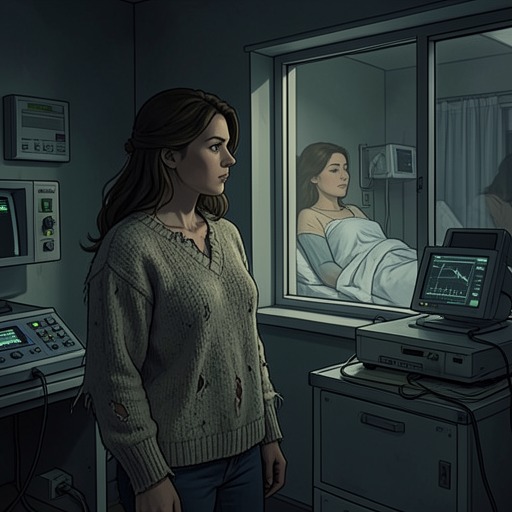
When the car sinks, Kelly initially tries to understand The Senator's actions as panic. She recognizes that he has kicked her while escaping and attributes it to blind terror rather than deliberate cruelty; she still has faith in him. That interpretation sits uneasily beside the fact that she is trapped and he has got out, making the crisis a severe test of the trust and assumptions she brought into the encounter.
Kelly's determination to live draws on a conviction formed after G-----. Remembering a school friend's suicide attempt, she distinguishes herself from that girl and recalls that after the breakup she vowed never to take her own life because all life is precious. In the car, survival becomes a matter of concentrated will and practical effort: she tries to keep her head above the rising water and reasons through what her body can still do.
Her thoughts turn to negotiation rather than surrender. Kelly is willing to give up her right leg, or both legs, if that is what rescue requires, and imagines signing a release and taking responsibility herself. The offer invokes her father, Artie Kelleher, whom the family teases as litigious, but Kelly thinks she can explain the circumstances and take the blame. The thought is both a measure of how urgently she wants to live and a return to a familiar impulse to manage consequences by accepting responsibility.
Meaning and Limits of Recovery
Kelly's recovery is neither a simple return to her former self nor a completed cure for heartbreak. She has resumed eating, regained weight, restored her hair, and left behind the sleeping aids and bedtime ritual associated with G-----. At the same time, she continues to experience desire through the pressure of male attention, to fear rejection, and to conceal the depth of her post-breakup distress from friends. The contrast between outward signs of health and continuing inward vulnerability gives her recovery its uneven character.
The crisis in the Toyota makes the distinction between wanting intimacy and wanting life especially stark. Kelly's earlier suffering had brought her close to despair, but she came to regard life as precious; during the accident, that belief becomes active determination to survive, even at the cost of her legs. Her post-breakup history therefore informs not only how she approaches relationships, but also the resolve with which she faces the immediate danger.