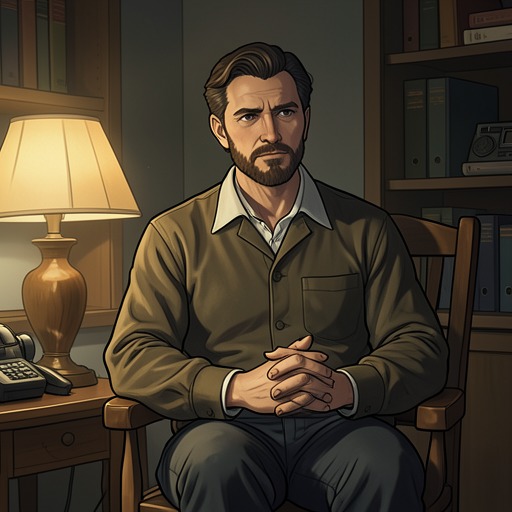
The way you make your life, the love you put into it—that’s God
Black Water (Joyce Carol Oates Edition)“The way you make your life, the love you put into it—that’s God” is a saying Grandpa Ross shares with Kelly Kelleher as he is dying. It makes faith a practice of living rather than a proposition about religion: meaning lies in how a life is made and what love is put into it. The saying’s force is tested when Kelly’s encounter with The Senator turns suddenly into a fight for survival.
The Saying and Its Source
Grandpa Ross speaks while his flesh is shrinking back from the bone, but his eyes remain alert and kindly. He addresses Kelly by the childhood name Lizzie, not by the name her friends use, and entrusts the thought to her as though it were a troubling secret. The intimacy of that moment gives the saying its personal authority: it comes from a beloved elder who knows her across the span of her life, not from an abstract religious instruction.
The words also emerge against Kelly’s uncertainty about formal belief. She does not believe in astrology or the magazine horoscopes’ breathless admonitions, and she questions the Anglican God in whom she was confirmed. Grandpa Ross’s formulation offers neither a prediction nor a creed to accept. It locates the sacred in the acts by which a person shapes a life and loves within it.
Return Under Pressure
The saying becomes newly charged after the Toyota leaves the road and sinks into black water. In the car, Kelly is injured, disoriented, and unable to draw enough breath to scream. At first she does not know where she is or what has happened; she thinks The Senator has gone to get help and tries to hold on to that belief. As the water rises, her memory returns: she understands that he kicked her in panic while escaping, but also believes that he did not know what he was doing. The remembered counsel that love gives life meaning sits beside this painful effort to understand the person who has left her trapped.
Kelly’s response is not passive resignation. She insists inwardly that she has faith, and the saying’s emphasis on making a life resonates with her determination to continue living. Earlier that same day, jogging among the dunes, she had felt her heart swell with the wish to live forever. Now she bargains with the imagined rescue team, offering even one or both legs for a chance to survive and promising that she will not sue. The movement from expansive desire to desperate bargaining gives the saying a physical, immediate context: the life to be made is the life she is trying to keep.
Love, Agency, and Meaning
The saying’s definition of faith is placed against a relationship in which Kelly has repeatedly experienced male desire as something that precedes and governs her own response. On the beach, The Senator kisses and gropes her while they are fully clothed and not far from other people. Kelly feels the jolt of desire as his rather than hers, followed by anxiety and guilt: she fears that having made him want her means she cannot refuse him. The distinction between another person’s desire and her own makes the saying’s emphasis on how a life is made especially pointed: love cannot simply be equated with being wanted.
A related memory complicates the intimacy of touch. When The Senator first grips Kelly’s hand, he squeezes it just hard enough to cause a small, startled pain; the narration connects this gesture to the unconscious hurt G----- sometimes caused her while making love. In the car, touch becomes still more stark: The Senator kicks her as he tries to escape, and she interprets the act as blind panic. The saying does not erase harm or make the abandonment harmless. Instead, its account of meaning through love remains in tension with Kelly’s effort to understand another person while fighting for her own life.
Narrative Significance
The saying recurs as an inner measure at the point where religious certainty, bodily safety, and trust are all in doubt. Kelly has questioned conventional belief, yet in the darkness she can still affirm faith; the remembered words make that faith inseparable from the struggle to live and from the love that has shaped her. Their return does not resolve the contradiction between love and injury. It holds open the harder possibility that meaning is made through a life’s acts of care even when fear and abandonment threaten to end that life.