“American girl”
Black Water (Joyce Carol Oates Edition)The “American girl” is a self-image Kelly Kelleher repeatedly invokes to connect personal choice with survival. It begins as an affirmation that she deserves to express her wishes and have her own way, but the phrase gathers force as her circumstances narrow: against the pressure of male desire, through the aftermath of a painful relationship, and finally inside the sinking Toyota. Its central tension is that Kelly believes she has chosen her life even when other people’s expectations and immediate physical danger limit her choices.
The Promise of Choice
The phrase first appears as direct reassurance: Kelly is an American girl who deserves to make her wishes known and have her own way once in a while. The emphasis on her wishes makes the identity more than a national label. It offers a modest claim to agency—to speak, decide, and not simply accommodate someone else. That claim becomes sharply relevant during the Fourth of July weekend on Grayling Island, when accepting Buffy St. John’s invitation has brought Kelly into a situation whose direction she is no longer sure she controls.
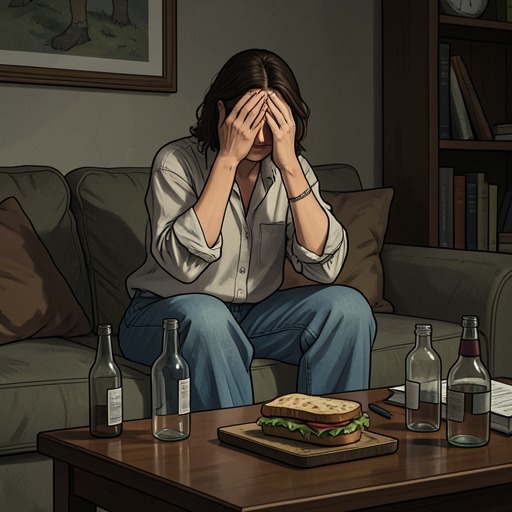
The idea also frames Kelly’s recovery as an effort to reclaim a life she can inhabit. Since her freshman year at Brown, she had used starvation to impose control on her body, to reduce her menstrual periods, and, after G-----, to punish herself for having loved him more than he seemed to love her. Over the past year she has tried to become healthy and normal: eating regularly, regaining eleven of the twenty pounds she had lost, and sleeping without sleeping pills or the glass of red wine that had become a bedtime ritual when G----- lived with her. The narration calls this regained health and normality, then joins it to the American-girl image: she wants to look her best and give her all. The language presents recovery both as self-care and as an ideal of determined self-presentation.
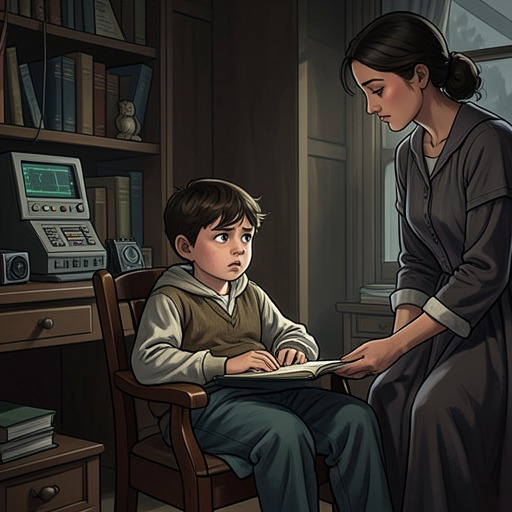
That recovery is not a clean break from earlier vulnerability. Kelly still avoids the house in Gowanda Heights, feels guilty about worrying her mother and provoking arguments with her father, and discreetly keeps away from some old friends. Yet she regards relations with her father as all right now and herself as fine. The American-girl affirmation belongs to this provisional repair: it helps her describe a life she is trying to choose, not proof that every difficulty has disappeared.
Desire and Unequal Agency
The motif is complicated by Kelly’s experience of intimacy. On the dunes, with wind in her hair and surf beating nearby, the Senator grips her bare shoulders; Kelly feels shy and eager while also thinking that something is about to happen that cannot be stopped. The scene puts anticipation beside foreboding. Her sense of agency is present, but it is already shadowed by the feeling that events are acquiring their own momentum.
The pattern becomes more explicit when the Senator kisses her on the beach. Kelly feels a jolt of desire, but she identifies it as the man’s desire rather than her own, a sensation she says she has experienced since girlhood. The shock galvanizes her, then gives way to anxiety and guilt: she feels that by making him want her she has made refusal difficult. The American-girl ideal of making her wishes known stands in tension with this learned sense of responsibility for male desire. The passage does not treat wanting, being wanted, and choosing as interchangeable experiences.
The Senator’s manner offers a related contrast between apparent conversation and actual control. He makes queries that are really statements, moves on to the next subject, and abruptly turns the Toyota onto Old Ferry Road without signaling. Kelly has noticed his conversational habit, but she is also a passenger on a journey whose route he controls. The road choice is a mistake rather than evidence that he is deliberately lost: he is heading toward Brockden's Landing, but takes an abandoned route after missing the turn for the newer paved Ferry Road. The scene makes the gap between Kelly’s ideal of choice and her practical position concrete.
The Crash and the Test of Survival
The crash turns the motif from an affirmation of self-direction into a test of whether Kelly can preserve life under conditions she did not choose. Old Ferry Road is badly rutted, unmarked, no longer maintained by Grayling Township, and should have been officially closed. As the Toyota skids off the road, Kelly notices a sewage smell and sees that she is gripping the shoulder strap so tightly that her knuckles have gone white. The detailed bodily signs register danger before she can master it through thought or speech.
The car strikes the guardrail, breaks through it, and enters Indian Creek. Black water rushes over the damaged vehicle; the passenger door buckles, trapping Kelly inside. She cannot draw enough breath to scream or even find a name to call out. Later, as the water rises, she feels it in her lungs and imagines leeches before recognizing that the sensation is water. Her fear is registered through the body—shivering, breathlessness, the smell of sewage, gasoline, oil, and her own urine—rather than through any abstract account of peril.
In this confinement, the American-girl refrain becomes a practical insistence that life belongs to her. Kelly tells herself that she loves her life and believes she has chosen it; she is drowning, but tells herself she will not drown and means to put up a fight. The assertion does not erase the violence of her circumstances or turn the crash into a freely chosen ordeal. Instead, it is the language she can use to sustain an intention to live when movement, breath, and escape are all being taken from her.
Memory, Rescue, and the Limits of the Claim
Kelly’s memories help explain what the insistence on life contains. Earlier that morning she had jogged along the beach, watched sandpipers pecking in the surf, and felt her heart swell with the wish to live forever. In the sinking car, that memory recurs as she bargains with an imagined rescue team: she would give up one leg, even both legs, and sign the release later if only they would save her. She thinks that her father, Artie Kelleher, would be the one to object on litigious grounds, but promises she would explain and take the blame. Her fantasy makes the urgency of survival precise: she is willing to surrender bodily integrity and accept responsibility for the cost if she can live.
The narrative sets this effort against the Senator’s escape. In his recollection of the aftermath, he has kicked free of the car in blind panic, reached shore, and fled the marsh on foot, one shoe on and one shoe off. He later calls Ray Annick from a telephone booth and says that the girl is dead; Ray tells him not to explain over the phone and offers to come get him. These details establish the unequal aftermath without making Kelly privy to it: she does not know what the Senator has done or said. Her own thought is that he kicked her in terror and did not know what he was doing; she understands and has faith. The American-girl ideal can sustain compassion, but it cannot give her access to the facts or control over the rescue.
At the story’s edge, the image of a chosen life becomes both powerful and painfully limited. Kelly sees the Senator return to the water and imagines him wrenching open the door, hauling her free, and bringing her to the surface. In that vision she slips from his hands and swims by herself, reaching air and the restored night sky; she sees her parents waiting among the grasses, their faces old and stricken. The imagined rescue gives her a moment of self-propelled freedom, but the surrounding scene keeps the outcome uncertain. The motif’s final force lies in that tension: Kelly’s conviction that she has chosen and loves her life remains active even when the narrative places her body, survival, and future beyond her control.