G-----
Black Water (Joyce Carol Oates Edition)G----- is the unnamed man with whom Kelly Kelleher has her one serious relationship after graduating from Brown. Their intimacy is also described as friendship, but it includes physical hurt and a mismatch between the desire Kelly feels and the desire she perceives in men. After the relationship ends, Kelly withdraws from friends and from sexual intimacy; during the later car wreck, memories of that breakup and of her decision to keep living accompany her struggle to survive. Because his name remains withheld, G----- is present chiefly through Kelly’s recollections of what she endured, what she could not say, and what she resolved afterward.
Identity and Background
After graduating from Brown, Kelly has several lovers, but only one serious lover, whom she never discusses: G-----. Her silence is so marked that Buffy and other friends ask why she will not talk about him. They read her withdrawal and cynicism about men as signs of heartbreak or depression, and even worry among themselves that she may be suicidal. Their concern identifies the visible aftermath of the relationship, but it does not give them access to its private details.
The narrative supplies no fuller biography for G----- and does not explain the origin or duration of the relationship. It establishes him instead through scenes Kelly remembers: sex in which she is hurt, the end of the relationship in a winter room, and the affectionate habits that make parting difficult to name as a simple break between strangers. His anonymity in the story contrasts with the lasting specificity of Kelly’s bodily and emotional memories.
Intimacy and Unequal Desire
Kelly remembers that G----- sometimes hurt her while they were making love, though she describes this as unconscious. In one recollection, she cries out and tells him she loves him, while he asks whether she knows she is somebody’s little girl. The scene places tenderness and vulnerability beside a sexual dynamic in which Kelly’s response is not simply an expression of pleasure: she is trembling beneath his weight, and she sees his drawn-back lips as a grimace of triumph that excludes her.
The memory does not reduce their relationship to that single image. Near its end, G----- quietly tells Kelly that he does not want to hurt her and hopes she knows it. She answers that she knows, smiling as if they were having one of their casual, easy conversations; she kisses him, and he puts an arm around her and buries his face in her neck. Yet inwardly she asks whether she can hurt him in return, and recognizes that she no longer has that power. Affection remains, but her thought registers a changed balance: the capacity to wound is not shared equally, and the relationship’s intimacy does not erase that asymmetry.
Kelly’s memories also place this relationship within a wider pattern in how she experiences desire. At the beach with The Senator, she feels the man’s desire as a sudden galvanizing shock and recognizes a familiar anxiety that she has made him want her and therefore cannot refuse him. This is not evidence that G----- causes every later difficulty, but it clarifies why the earlier relationship matters to her: her own desire and her assessment of a man’s desire do not always coincide, and her sense of what she may safely refuse is entangled with the other person’s expectations.
Breakup and Aftermath
By the winter afternoon when G-----’s relationship with Kelly is ending, he tells her that he knew she understood but wanted to make sure. The exchange follows his assurance that he does not want to hurt her. Kelly’s composed answer conceals a private reckoning: she understands that she no longer has the power to hurt him. The breakup is therefore represented not just as a separation but as the recognition of an emotional imbalance she cannot openly resolve with him.
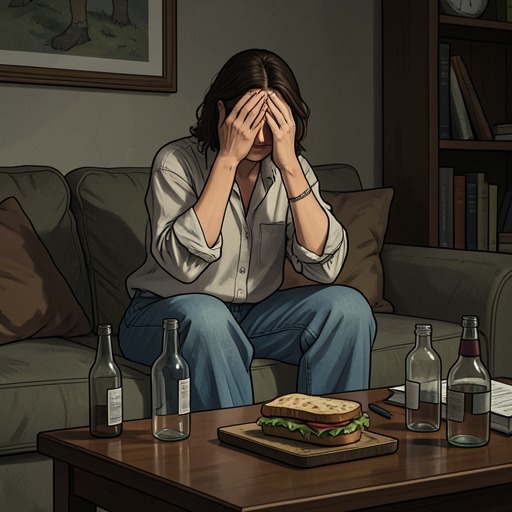
Since the previous June, when the relationship finally ended, Kelly has not made love with any man. She has not touched anyone in desire, or even under the pretense of desire. Her friends see a change without knowing its cause: she keeps to herself at certain times, refuses or angrily avoids their telephone calls, and will not explain G----- to them. They worry that she is despondent or might be suicidal, but Kelly does not share that fear with them.
Her silence is not itself proof that she intends to die. After G-----, Kelly vows never to take her own life because all life is precious. During the car emergency, when she remembers a girl named Lisa who attempted suicide by swallowing thirty-eight barbiturate tablets, she insists to herself that Lisa is not Kelly. She frames survival as a test of strength, will, and concentration: she must keep from giving in or weakening. The vow made after the breakup thus becomes an active resource when the danger is immediate.
Memory During the Car Wreck
The wreck brings G----- into the present through recollection rather than through any action by him. As the Toyota fills with water, Kelly remembers that one minute she and The Senator were speeding along a rough road beneath the bright moon, and the next they were fighting for their lives. She understands that he kicked her in blind panic as he tried to escape, while also recognizing that he may not have known what he was doing. In that moment of fear and physical confinement, the narrative moves between the sinking car and the history that has shaped her capacity to interpret hurt without simply denying it.
Her thoughts return to the period after G-----, when she had wanted to die, and to the conviction that she must not surrender now. The memory therefore connects romantic loss to a distinct later crisis without making the two events equivalent: the breakup left her withdrawn and distressed, but it also preceded a promise that she could draw on while trapped. The narrative presents that promise as something Kelly must enact through bodily effort, not as a guarantee that survival will be easy.
Narrative Role and Significance
G----- is defined less by an independent plotline than by the space his absence occupies in Kelly’s life. Her friends can observe her silence and changed behavior, but they cannot make her disclose the relationship. The reader encounters its history in fragments that disclose different pressures: pain during sex, the tenderness of familiar gestures, her recognition of unequal power at the breakup, and the months of abstention that follow. Together, these memories resist a simple division between a loving relationship and a harmful one; Kelly remembers affection alongside injury and speaks of his hurt as unconscious without erasing its effect on her.
The name G----- keeps the former lover partially inaccessible, while Kelly’s remembered body and private thoughts make the consequences legible. His importance lies in the way the relationship becomes a measure of what Kelly has lost, what she cannot tell her friends, and what she chooses to preserve. The connection between breakup and survival is especially consequential: after a period in which she wanted to die, she commits herself to life, and when the car begins to drown her, that commitment becomes part of her resistance.