Kelly Kelleher and G-----'s romantic relationship
Black Water (Joyce Carol Oates Edition)Kelly Kelleher’s relationship with G----- is the defining serious romance of her life after Brown: a relationship of love and friendship that also exposes the gap between the two lovers’ power to hurt one another. It ends in the winter, but its effects persist in Kelly’s self-punishment, sexual withdrawal, and wary interpretation of desire. When a later encounter with The Senator turns into a fight for survival, memories of G----- shape what Kelly understands about pain, panic, and her own capacity to act.
Identity and Course of the Relationship
After graduating from Brown, Kelly had one serious lover, G-----, whose name she never spoke to others. Their relationship included a period of three months when he actually lived with her. During that time, she and G----- made a single glass of red wine before bed into a ritual, one small domestic pattern that later became part of what she had to relinquish.
The relationship was not simply a sexual attachment. Kelly understood the two of them as more than lovers and also as best friends. That double understanding makes the ending harder to reduce to a clean division between affection and injury: the person who had been her intimate companion could cause her pain, and his leaving did not erase the tenderness or familiarity they had shared.
Intimacy, Pain, and Unequal Desire
G----- sometimes hurt Kelly while making love, and the narration presents that hurt as unconscious rather than as a declared intention to injure. In one remembered scene, Kelly’s cries and declarations of love meet a posture of sexual intensity that leaves her feeling excluded: she recognizes triumph in his expression, even as their bodies remain closely joined. The moment binds emotional exposure to bodily vulnerability without suggesting that Kelly’s love was false or that G-----’s actions had a single, fully explained motive.
Near the end, G----- quietly told Kelly that he did not want to hurt her and hoped she knew it. Kelly answered that she knew, smiling as if they were having one of their easy, friendly conversations. Yet inwardly she wondered whether she could hurt him in return, and knew she no longer had that power. The contrast between her reassuring answer and her unspoken recognition marks a change in the relationship: care is still expressed, but the balance of emotional dependence has shifted, and Kelly experiences herself as the more vulnerable one.
The book later places this history beside Kelly’s account of desire. Since girlhood, she had often experienced kissing and being kissed not through a clear sense of her own desire, but through the other person’s, especially the man’s. On the beach with The Senator, the physical urgency of his kisses jolts her into desire that she identifies as his rather than hers. Almost immediately, she feels anxiety and guilt, as though making him want her has made refusal impossible. This does not establish that her relationship with G----- caused that pattern, but it shows how the earlier romance belongs to a larger and persistent difficulty in separating her own wanting from the desires and expectations of men.
The Ending and Its Aftermath
The breakup left Kelly’s friends concerned. Buffy St. John, Jane, and Stacey asked why she would not talk about G-----; they interpreted her silence as a broken heart, her cynicism about men as depression, and her angry refusal to answer their calls or keep them company at certain times as possible suicidal tendencies. Their fears remained unspoken to Kelly herself. The gap between what Kelly disclosed and what her friends feared underscores how little of the relationship’s aftermath she was willing or able to share.
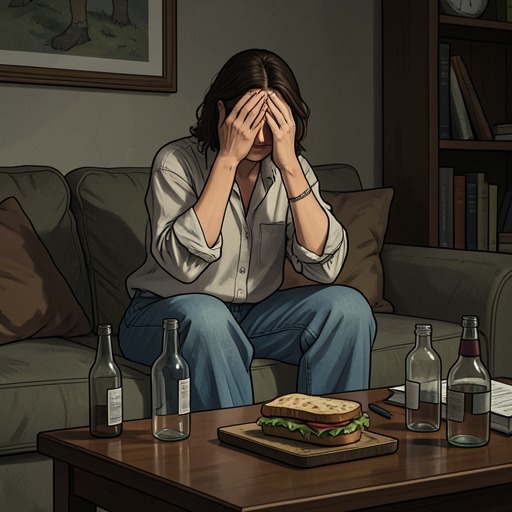
Since G-----, when the relationship finally ended the previous June, Kelly had made love with no man. She had wanted to die after the breakup and had not touched another man in desire, or even under the pretense of desire. At the time of her later encounter with The Senator, the question of whether she was ready for intimacy therefore carried the weight of a long interval of abstention and distress, rather than being a casual response to a new suitor.
Kelly had also used food as a means of control and punishment. Since her freshman year at Brown, she had starved herself to discipline herself, reduce her menstrual periods, and, after G-----, punish herself for loving a man more than he seemed to love her. In the year before the later events, she resolved to become healthy and normal: she forced herself to eat regularly and regained eleven of the twenty pounds she had lost. She also stopped needing sleeping pills and no longer needed even the glass of red wine that had once been part of her bedtime ritual with G-----.
Her recovery was neither a claim that the relationship no longer mattered nor a return to the person she had been before it. Kelly regained health and some physical confidence, and later thought of G----- as a friend rather than continuing to wish him dead, a wish she regarded as bitter and childish. Yet her silence about him, her prolonged absence from sexual intimacy, and the self-punishment that followed the breakup make clear that the relationship remained a measure against which she understood both loss and recovery.
Memory in the Car and Narrative Significance
During the drive with The Senator, Kelly’s immediate circumstances become increasingly frightening: the car crashes, she is trapped, and the Senator’s body is thrown against her as both struggle for air. The remembered relationship offers a sharp but limited point of comparison. Kelly recalls that G----- had hurt her unconsciously; when The Senator kicks her in blind terror as he tries to escape, she recognizes that he does not know what he is doing and understands his action as panic. This interpretation connects two distinct kinds of bodily harm without treating them as morally identical or making the accident an extension of the romance.
The novel’s movement between Kelly’s present danger and her remembered intimacy gives the relationship force beyond its chronology. G----- is absent from the car, but the history of being loved, hurt, and left without reciprocal power informs the terms in which Kelly reads the Senator’s touch and fear. At the same time, her recognition of his panic does not erase her own terror or free her from the consequences of his actions. The relationship thus helps define a central tension in Kelly’s experience: understanding another person’s motives and feelings is not the same as being safe with him, and compassion does not restore the power she feels she lost.