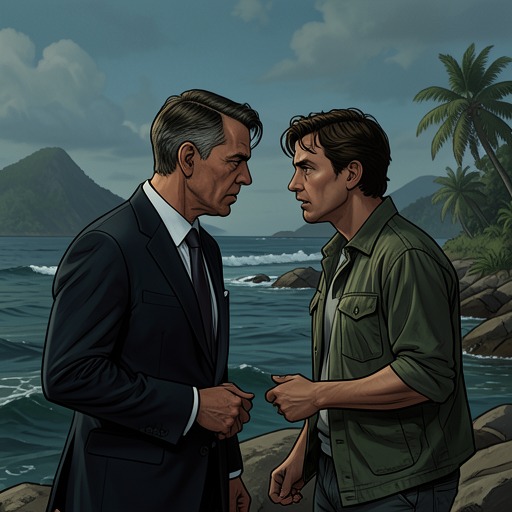
The Senator and Kelly Kelleher’s Grayling Island encounter
Black Water (Joyce Carol Oates Edition)The Senator and Kelly Kelleher’s Grayling Island encounter is the brief, consequential meeting that turns an ordinary Fourth of July gathering into the prelude to Kelly’s death. Their relationship unfolds over several hours: Kelly first regards the politician with skepticism, then becomes drawn into an intimacy shaped by his public authority and her own responses to his attention. Their departure from the party leads onto an unpaved road and into a crash; the contrast between the island’s patriotic celebration and Kelly’s isolated peril gives the encounter its tragic force.
Setting and First Impressions
The meeting takes place on the Fourth of July at an oceanfront cottage on Derry Road, owned by Mr. and Mrs. Edgar St. John, who are away. The gathering is hosted by Buffy St. John, Kelly’s closest friend and former roommate at Brown University. Kelly and The Senator have not previously met: Buffy’s lawyer friend Ray Annick, who attended Andover with the politician, has invited him to the island. The party is one of many on Grayling Island that evening, with cars lining narrow sandy roads and fireworks expected after dark.
The Senator arrives in a rented black Toyota, and his presence changes the atmosphere. Guests recognize him and react with excitement. Kelly, however, initially sees a practiced political performer: as he vigorously greets people, she thinks of him as someone who is always campaigning. His stature and youthful energy are part of the impression he makes. At six feet four inches tall and around two hundred fifteen pounds, he appears physically imposing, but also peppy and approachable. He loosens his tie and greets the gathering with a light remark about the party having started without him.
Kelly is twenty-six and works for Citizens' Inquiry, a Boston magazine. Her first response to the famous visitor is guarded and inwardly skeptical; she knows about politicians from her studies of American history and politics at Brown. During the afternoon, however, she revises her opinion. He proves warm and attentive rather than condescending, addressing the guests as though they were old friends. The account of their meeting emphasizes this turn without claiming that either fell in love: what they felt beyond the events of that night remains unknowable.
From Conversation to Intimacy
Kelly tells The Senator that she wrote her senior honors thesis on him at Brown. Rather than treating the disclosure as tiresome or embarrassing, he responds with pleasure and asks whether the work was worth it. When Kelly worries that he must have heard such praise many times, he answers courteously that he has never heard it from her. The exchange makes his attention feel personal even as it remains entangled with his public identity.
They spend time together on a walk through the dunes behind the St. John house. The wind, gulls, and sound of the surf frame a change in their physical relationship: The Senator grips Kelly’s bare shoulders and kisses her. Kelly is startled, but the development is not wholly unexpected to her. She experiences both excitement and a sense that events are moving quickly. Their kiss makes the private attraction visible to others and helps explain why she later chooses to leave with him rather than remain at the party.
The narrative distinguishes Kelly’s desire from the desire she perceives in men. She experiences the force of The Senator’s attention as galvanizing, but also associates being wanted with anxiety and obligation: she worries that having made a man want her will make refusal difficult. That tension matters to the encounter. Her participation is not presented as a simple, uncomplicated romance; attraction, self-consciousness, and concern about what may follow coexist.
Leaving the Party
The plan is to slip away at seven in the evening and catch the 7:30 ferry to Boothbay Harbor. New guests arrive, however, and The Senator remains absorbed in conversation. Kelly reasons that missing one ferry need not matter because another will come. They do miss the 7:30 crossing, but resolve not to miss the 8:20. During their last hour at the party, his mood shifts: he seems less coherent and less quick in conversation, and his gaze at Kelly takes on a proprietary quality edged with anxiety and indignation.
His drinking also becomes part of the circumstances of their departure. He has begun with white wine, Perrier water, and low-calorie beer, then switched to stronger drinks with Ray Annick. When they leave, he asks Kelly to bring him another drink for the road; she declines to have one herself but hesitates only briefly before agreeing to carry his. The scene gives the departure an air of haste and impaired judgment without making the missed ferry itself the cause of the crash.
Buffy catches Kelly in the driveway, squeezes her hand, and asks her to call the next day. Kelly is embarrassed by leaving and understands that Buffy may later feel hurt, but she does not explain what both women understand. Her decision is a public acknowledgment that she is going with The Senator. The pair set out in the Toyota along an unpaved road, the politician driving impatiently and exuberantly. The account leaves open whether they are lost or whether getting lost is part of their intention.
The Crash and Its Consequences
The road is rough and poorly defined. As the Toyota skids through sandy ruts, it goes off the road and overturns into black water, sinking rapidly. Kelly is trapped inside as water fills the car. At first, she cannot summon the driver’s name; she has known him only since that afternoon. The sudden loss of the radio and the party’s distance sharpen the separation between their public evening and the isolated emergency.
The Senator escapes from the sinking car and leaves Kelly behind. In the immediate crisis, the narrative presents his action as panic rather than a deliberate decision: Kelly, herself fighting to survive, understands that he kicked at her in terror as he tried to get out. That interpretation does not undo the consequence. Kelly remains trapped, bargaining in her thoughts that rescuers may amputate one or both legs if that is what saving her requires; she even imagines taking responsibility so her father, Artie Kelleher, will not have to bear blame. The encounter’s flirtation and anticipated ferry crossing have become a struggle for life.
The Senator eventually reaches the highway on foot, limping with one shoe on and one off. He is afraid of being seen or recognized and of the damage the accident may do to his political future. From a telephone booth, he calls Ray Annick, initially giving a false identity before admitting who he is and saying there has been an accident and that the girl is dead. His call makes clear how quickly his attention turns from the immediate scene to the consequences for himself and his public prospects.
Public Celebration and Tragic Contrast
The encounter is set against the island’s Fourth of July festivities. At the St. John cottage, the American flag flies from a tall flagpole; nearby, firecrackers sound, and the party carries on around food and conversation. Buffy’s father is described as a patriot who served in the CIA. The flag and celebration recur in the narrative as signs of national belonging and public confidence, while the crash leaves Kelly alone in a dangerous, unpopulated place.
The juxtaposition becomes especially pointed as The Senator fears that the accident may end his political ambitions. His thoughts turn to nomination, election, shame, and the possibility of losing the favor that has seemed to protect him. Meanwhile, rockets rise in red, white, and blue over the night. The national spectacle continues; it does not rescue Kelly. In this contrast, the encounter exposes the distance between the Senator’s public image and the private consequences of the choices made during their few hours together.