
Custody, Secrecy, and the Absent Father
BlondeThis thread traces how Gladys’s unstable motherhood and insistence on secrecy leave Norma Jeane dependent on other people’s accounts of her family and unable to secure a permanent home.
increasing Bearing strength in each event
 decreasing
Bearing strength in each eventdecreasingA Birthday Revelation

A Father in a Photograph
The promised surprise
Gladys takes Norma Jeane away from the household where she lives with Della and brings her to a cramped apartment. She presents a photograph of a man as Norma Jeane’s father, turning a birthday visit into a revelation that the child has never been allowed to expect.
A story without proof
Gladys gives the absent man a romantic history: he was an actor, is abroad, and will return for mother and daughter. She insists that the story is a secret, so Norma Jeane receives both a new hope and a new prohibition against seeking answers.
For the child, the photograph becomes evidence more powerful than any explanation. She cannot verify who the man is or whether he will come back, but the image helps her imagine that her absence from his life is not her fault.
Names and Missing Sisters
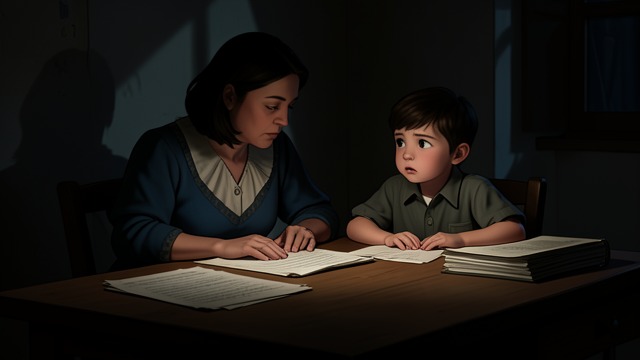
Family Names as Unstable Ground
A shifting account
Della tells neighbors that Gladys has been married more than once and that her surname has changed, while Gladys resists questions about her earlier children and relationships. Norma Jeane hears these fragments without being given a dependable account of who her father is or where her sisters went.
A child made to wait
Gladys’s explanations make family history feel like a secret that can be disclosed or withdrawn according to her mood. Even the child’s legal name carries traces of absent men, while Gladys insists that nobody else has the right to claim her daughter.
The uncertainty shapes Norma Jeane’s understanding of belonging: family is not a stable household she can rely on, but a story adults tell about her, sometimes lovingly and sometimes as a warning.
Della’s Last Blessing
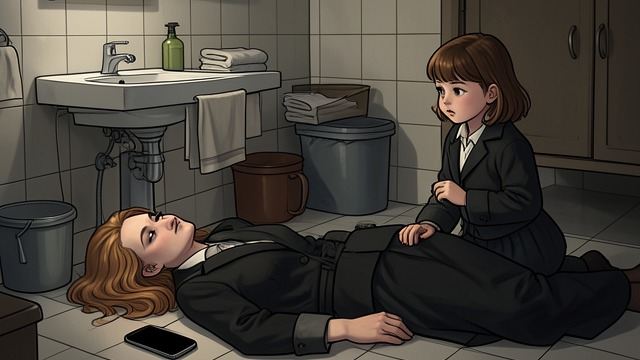
A Grandmother’s Final Words
The missed call
When Della calls for Norma Jeane, the child hides rather than answer. By the time she returns to the apartment, Della has collapsed, and Norma Jeane finds her on the bathroom floor.
Love and guilt
Della manages to tell her granddaughter, “God bless you, my child, I love you,” before she dies. The words offer tenderness, but Norma Jeane immediately interprets her own earlier disobedience as a possible cause of the death.
Gladys does not soothe that guilt in a way the child can trust. The loss removes Norma Jeane’s most dependable protector and leaves her more exposed to the mother whose affection is unpredictable.
The Hospital Wall
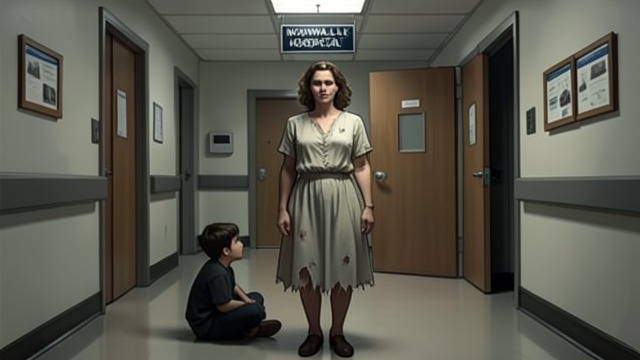
A Mother Removed
Crisis in the bungalow
As the wildfires and family instability converge, Gladys’s behavior becomes more dangerous. After a violent episode, she is taken to Norwalk State Hospital, while Norma Jeane is left temporarily with Jess Flynn and Clive Pearce.
Separation made permanent
The adults tell Norma Jeane that her mother is ill and that she will visit her, but instead she is brought to the Los Angeles Orphanage. She protests that she has a mother and a father, and the institution’s director answers that she should save her tears.
Gladys’s hospitalization does not end the relationship: it turns it into a long, uncertain wait. Her later refusal to approve adoption keeps Norma Jeane legally tied to a mother who cannot care for her, narrowing the child’s routes out of institutional life.
The Adoption That Never Comes
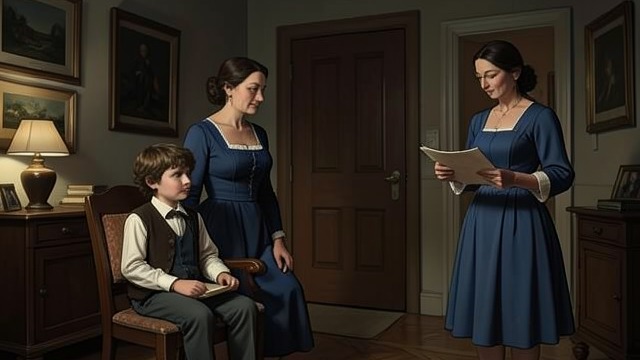
Hope Held in Abeyance
Families who want her
Two couples seek to adopt Norma Jeane, and she eagerly imagines new parents, a real home, and a life beyond the orphanage. Each visit lets her briefly become the daughter those adults hope to find.
Gladys refuses consent
Gladys blocks the adoptions, sometimes through hospital officials who explain that she cannot yet relinquish her identity as Norma Jeane’s mother. The child experiences this as a contradiction: Gladys will not raise her, yet will not let another family do so.
By the time Norma Jeane moves into foster care, she has learned to plead for acceptance while distrusting its permanence. Her mother’s signature remains an unseen gatekeeper, turning adoption into a hope repeatedly offered and withdrawn.
June 1932, on Norma Jeane’s sixth birthday
Early childhood, before Della’s death
Summer 1934, after Norma Jeane hides from Della
Autumn 1934, after Gladys’s breakdown
1936–1938, during Norma Jeane’s years at the orphanage
