
Custody, Adoption, and Forced Early Marriage
BlondeThis thread follows Norma Jeane Baker’s struggle against adults and institutions that control where she lives, culminating in a marriage arranged as a way to avoid the orphanage.
increasing Bearing strength in each event
 decreasing
Bearing strength in each eventdecreasingThe Orphanage Denial
The Orphanage Denial
Hope offered by strangers
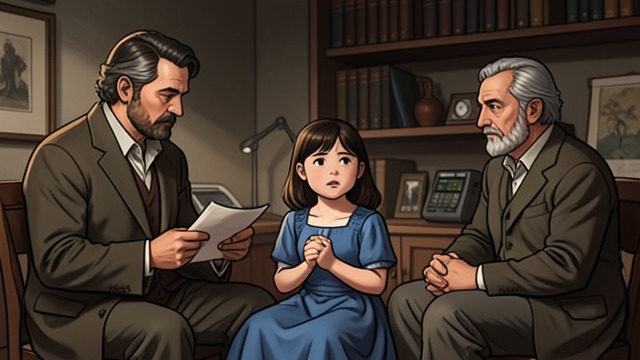
At the orphanage, couples interested in adopting Norma Jeane offer the possibility of a stable home. She imagines becoming part of a family and, in one case, accepts the new name and identity the prospective parents suggest.
A mother’s refusal blocks escape
Gladys refuses to authorize the adoptions, even while unable to care for her daughter herself. The result is a painful contradiction: Norma Jeane is denied both a dependable life with her mother and the chance to belong to another family.
Faith Against the Body
Faith Against the Body
A crisis interpreted as a test
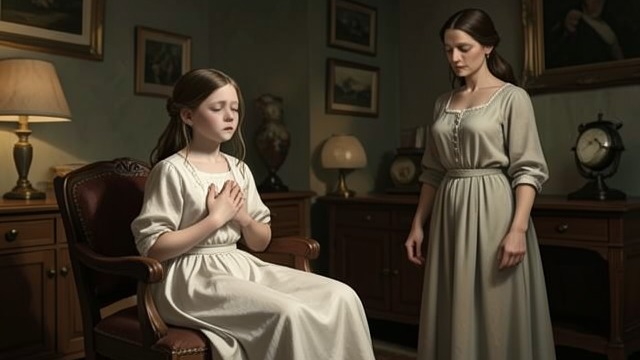
As she enters adolescence, Norma Jeane experiences severe pain and bleeding but tries to treat them as unreal. Lessons in Christian Science have taught her that faith can overcome illness, and she resists asking for help or taking medicine.
Belief collides with physical need
Her distress grows until she hides from the other girls and seeks refuge alone. The attempt to deny her body does not make its suffering vanish; it deepens her isolation and establishes a conflict between the healing doctrine she has learned and the practical care she needs.
The Threat of Being Sent Back
The Threat of Being Sent Back
Foster care becomes conditional
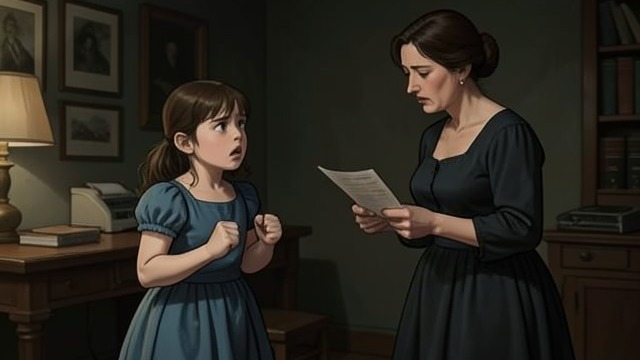
Elsie Pirig tells Norma Jeane that she may have to leave the household and return to the orphanage. The explanation invokes the attention she receives from men, the family’s reputation, and the rules of social services rather than anything Norma Jeane has done wrong.
A child is pushed toward marriage
Terrified of losing the closest thing she has to a family, Norma Jeane pleads to stay and offers to work or sleep anywhere. Elsie instead proposes finding her a husband. The decision turns marriage into a means of managing a vulnerable teenager and protecting the adults’ household.
An Unequal Marriage

An Unequal Marriage
Rescue mistaken for security
Norma Jeane marries Buchanan Glazer soon after meeting him, with adults around them treating the match as a solution to the risk of her being returned to the orphanage. The wedding is joyful on the surface, but she enters it young, frightened, and dependent on the idea that a husband can make her safe.
Affection cannot erase the imbalance
She works to become a perfect wife, while Buchanan Glazer wants loyalty, domestic service, and a conventional marriage. Their expectations diverge as he prepares to leave for service and she seeks both love and a future of her own.
The Marriage Ends

The Marriage Ends
Separation becomes a source of independence
After Buchanan Glazer sails with the merchant marine, Norma Jeane leaves the Glazer household and supports herself through wartime factory work. She experiences the separation as both abandonment and freedom, no longer defined solely as daughter, foster child, or wife.
A private loss becomes another break
The marriage does not survive the distance and changing lives. Norma Jeane later describes the couple as too young and their relationship as over, while continuing to carry the belief that being wanted by a man is proof that she exists and is safe.
Spring 1936 and the adoption attempts that follow
The first weeks of the 1938 school year
Late 1941, before Norma Jeane’s sixteenth birthday
June 19, 1942
From spring 1944 through the end of the marriage
