
The Body as Career and Commodity
BlondeThis thread traces the conflict between Norma Jeane Baker’s wish to be valued as an actress and Hollywood’s demand that Marilyn Monroe sell a marketable body and image.
increasing Bearing strength in each event
 decreasing
Bearing strength in each eventdecreasingThe Camera Finds Her

The Camera Finds Her
An accidental opening
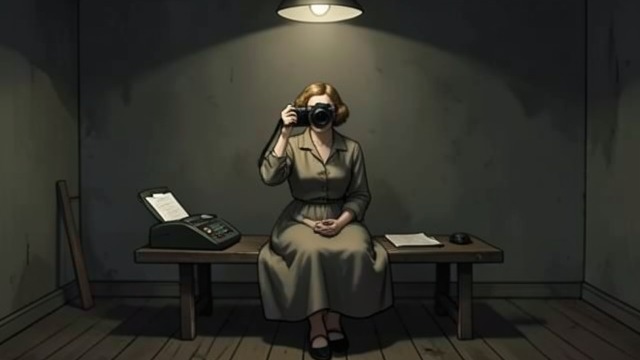
While Norma Jeane works on an aircraft production line, photographer Otto öse photographs her for a wartime feature. She is reluctant and self-conscious, but the images circulate beyond the factory and make her visible to people in the entertainment business.
Visibility brings new terms
The photographs lead to modeling work and lessons in posing, makeup, and presentation. Norma Jeane gains opportunities, but she also encounters a system that evaluates her body, hair, and face as marketable material rather than asking what kind of actress she wants to become.
A Name and a Contract

A Name and a Contract
A career identity chosen for her
After a screen test, studio executives and her agent settle on the name Marilyn Monroe. Norma Jeane is present while others decide how she will be presented, and she can preserve only a small connection to her earlier identity in the chosen name.
The new role narrows her choices
The studio contract promises access to film work but also places her image and behavior under commercial control. Marilyn becomes a public-facing role before she has secured the serious acting work she hopes will make that role meaningful.
The Nude Calendar Bargain
The Nude Calendar Bargain
A choice made under financial pressure
Needing money and losing confidence in her prospects, Norma Jeane agrees to pose nude for Otto öse for fifty dollars. She tells herself that she is accepting paid work, not selling herself, while recognizing that the decision crosses a boundary she had hoped to keep.
A photograph outlives its bargain
The image is published anonymously in a calendar and becomes valuable to others while Norma Jeane receives little. Years later its discovery threatens the respectability of Marilyn Monroe’s studio image, forcing her to confront the difference between the photograph’s commercial life and her own account of why she posed.
The Scandal and the Price

The Scandal and the Price
A private choice becomes public evidence
When the calendar image is linked to Marilyn Monroe, studio executives fear damage to their investment and to Hollywood’s public image. Norma Jeane explains that she posed once, while poor and desperate, but the publicity machine turns that explanation into another part of the story it sells.
Survival requires a performance
She gives a controlled public account rather than denying the photograph, protecting her career by presenting Marilyn as confident and candid. The episode sharpens the conflict: the same industry that profits from sexual display punishes her when the display escapes its control.
The Image Outgrows Its Maker

The Image Outgrows Its Maker
Fame intensifies the spectacle
After Niagara and Gentlemen Prefer Blondes, Marilyn Monroe’s image spreads through posters, magazines, premieres, and public appearances. The attention offers proof that she can draw an audience, but the studio continues to treat her body and persona as assets to be displayed and managed.
Public attention becomes coercive
At a Hollywood gathering, men touch and scrutinize her as if her body were available to them, while her husband’s presence does not protect her. She tries to present herself as a serious actress, yet the public spectacle repeatedly recasts her as a sexual commodity.
Late 1944
September 1947
1949; the photograph resurfaces in 1952
Spring 1952
1953, after the success of Niagara
