
Acting Against the Studio’s Image
BlondeThis thread follows Norma Jeane Baker’s struggle to claim serious artistic agency while the studio, directors, and publicity system push Marilyn Monroe toward a narrow commercial role.
increasing Bearing strength in each event
 decreasing
Bearing strength in each eventdecreasingThe Rejected School Auditions
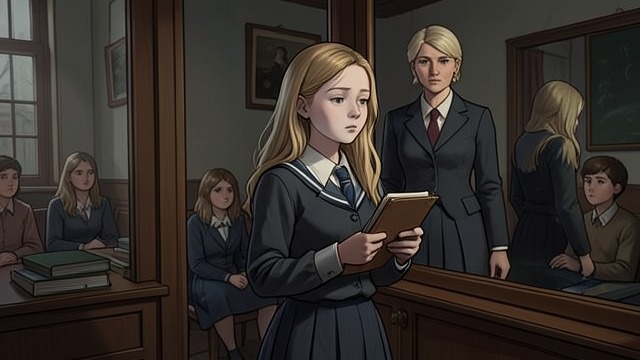
The Rejected School Auditions
A desire to perform
Norma Jeane tries out for the majorettes, school drama, and choir, hoping to be chosen and to find a place among her peers. Her nerves overwhelm her: she freezes, stumbles over words, and cannot make her voice behave as she expects.
Rejection becomes a private wound
Teachers and students dismiss her efforts, leaving her ashamed and convinced that she is not naturally gifted. The failures do not extinguish her desire to act; they teach her to imagine that being seen might offer a home she cannot find elsewhere.
The Studio Renames Her
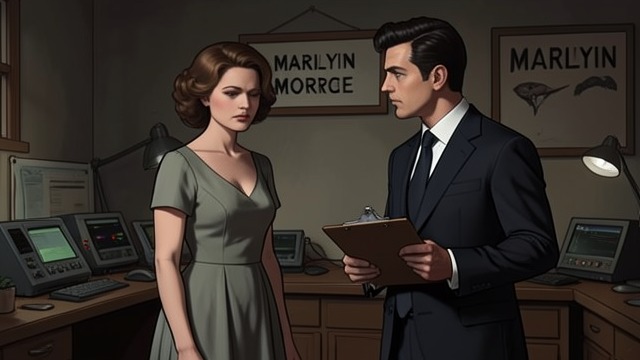
The Studio Renames Her
A debut controlled by executives
After Norma Jeane receives her first film role, studio executives and her agent choose the screen name Marilyn Monroe without meaningfully consulting her. She manages to preserve “Monroe,” but the new identity is designed for the studio’s publicity rather than chosen as an expression of her own self.
A small role and a large promise
Her first appearance in Scudda-Hoo! Scudda-Hay! is cut to a few seconds, yet the studio continues to sell the possibility of a career. Norma Jeane is caught between the hope that acting will redeem her life and the fear that she is being reduced to a name and a face.
Earning the Role of Angela
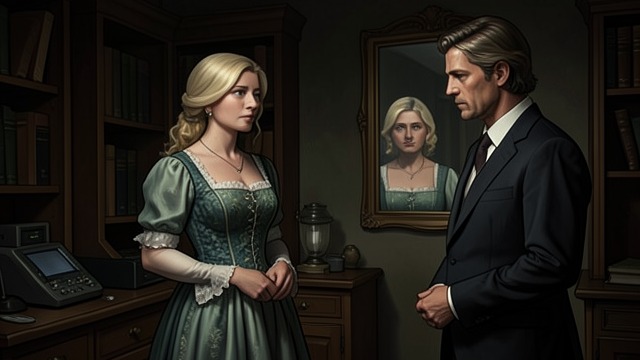
Earning the Role of Angela
An audition becomes a test of agency
Although initially cast as a secondary blonde, Norma Jeane approaches the audition for Angela as a serious acting challenge. She insists on trying again and uses stillness and vulnerability to shape a performance that surprises John Huston and Louis Calhern.
A role exceeds the studio’s caricature
Her work gives the small part a depth the screenplay does not fully provide. The success makes her visible, but the studio still measures her partly through her body and treats her breakthrough as a marketable image rather than proof of lasting artistic authority.
The Conflict Over Serious Roles
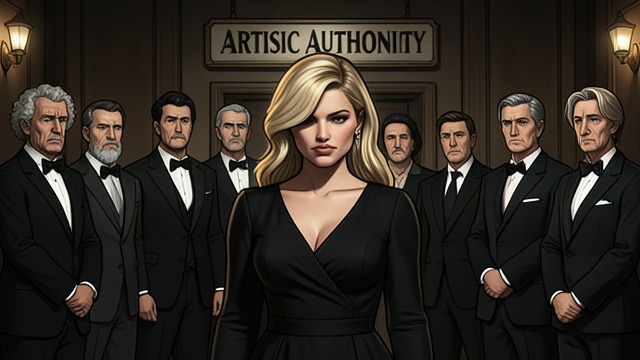
The Conflict Over Serious Roles
A star presses for control
As Niagara and Gentlemen Prefer Blondes make Marilyn Monroe a major attraction, she seeks roles that will establish her as more than a blonde comic figure. The studio values the image that sells tickets, while she wants to control her work and to prove she can act beyond it.
Success does not end the struggle
During The Prince and the Showgirl, she pushes for better work and clashes with the production, while exhaustion and medication threaten her ability to function. Each success brings more scrutiny and higher demands without resolving the conflict over who gets to define Marilyn Monroe.
A Fight for Cherie
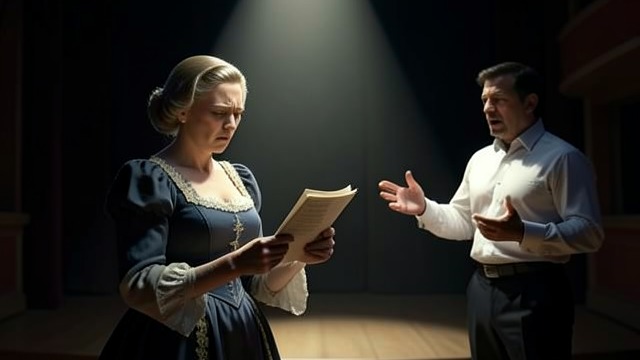
A Fight for Cherie
A performer contests the script
While playing Cherie, Norma Jeane Baker argues that the character deserves greater complexity and resists being treated as a glamorous image with no inner life. She works intensely, repeating scenes and studying acting texts, determined to make the character’s fears and hopes legible.
Artistic effort collides with expectation
Her insistence frustrates colleagues and worries the director, but it also produces a performance that draws on her own vulnerability. The conflict is not simply between actor and director: it is between a woman trying to create a credible character and an industry ready to market her as a body first.
The 1941 school year
September 1947 and the release of Scudda-Hoo! Scudda-Hay!
The audition and filming of The Asphalt Jungle, 1950
From the 1953 breakthrough through the 1956 production of The Prince and the Showgirl
The 1956 production of Bus Stop
