
The Grandmother Who Called Her Home
BlondeThis thread follows the protective yet demanding bond between Norma Jeane Baker and Della Monroe, whose practical care gives the child a rare sense of safety before grief turns their relationship into a lasting source of guilt.
increasing Bearing strength in each event
 decreasing
Bearing strength in each eventdecreasingA Place with Grandparents
Care in the Household
The reliable caregiver
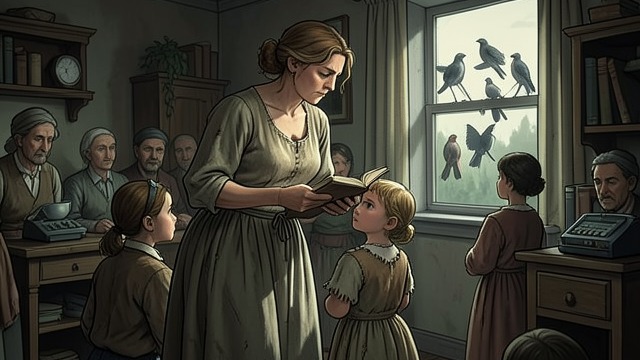
While Gladys Mortensen is unable to raise her daughter consistently, Della Monroe and her husband care for Norma Jeane Baker in their crowded home. Della is stern, practical, and outspoken, but she provides food, supervision, work, and the dependable routines that the child lacks elsewhere.
Affection in ordinary rituals
Della takes Norma Jeane on walks to feed birds and reads her stories, including unsettling tales that make the child curious about the world. Their closeness is not sentimental: Della expects the girl to help with chores and does not spare her blunt opinions.
For Norma Jeane, however, this demanding care is also protection. Della is the person who calls her home, notices where she is, and gives her a place to return to.
A Call from the Doorway

The Call She Avoids
A child hides
Della calls for Norma Jeane Baker from outside the apartment building while the girl plays with other children near the beach. Embarrassed by the way the neighborhood mocks her grandmother, Norma Jeane hides instead of answering.
Affection beneath shame
The child is fond of Della and knows she is the one person who loves her without deliberately hurting her. Yet peer ridicule and childish pride make her hesitate, and she chooses not to be found until the calling stops.
That small act of disobedience becomes lodged in Norma Jeane’s memory. The bond is warm enough to make her feel safe, but also strong enough that a missed call will later feel like a moral failure.
The Final Blessing
Finding Della
A familiar emergency
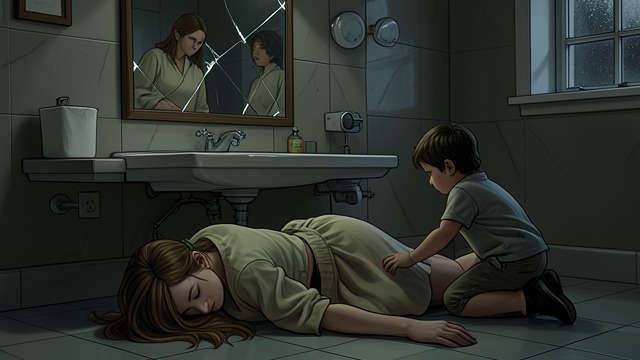
Norma Jeane returns to the apartment and finds Della collapsed on the bathroom floor. She has helped her grandmother through earlier fainting spells, but this time Della is gravely ill and cannot be restored by the familiar remedies.
Words at the end
As Norma Jeane kneels beside her, Della struggles to reach for the child’s hand. She manages to bless her granddaughter and tell her that she loves her. The plainness of those last words gives the child a final expression of tenderness she can hold onto.
Della’s death breaks the practical bond that had anchored Norma Jeane’s childhood. Because she had hidden when Della called, the bereaved child interprets the death as punishment for her own choice, although no one could have changed what happened.
A Promise of Forgiveness
Guilt in the Dark
A child blames herself
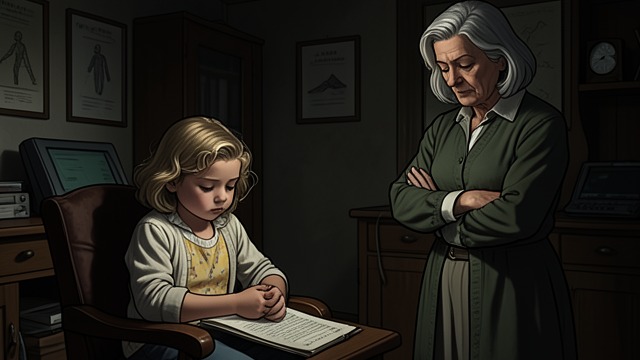
Norma Jeane Baker tells Gladys Mortensen that Della Monroe died because she hid instead of answering her grandmother’s call. The child is not asking for a factual explanation so much as reassurance that she has not caused the loss.
Comfort that does not comfort
Gladys rejects the idea that the child is responsible, but she does so harshly, telling Norma Jeane not to call her “Mammina” and to stop imagining the death as her fault. Gladys’s response contains a denial of blame without the warmth Norma Jeane needs.
The scene leaves Della’s love and the child’s guilt bound together. The blessing remains a source of comfort, but the last call she ignored continues to shadow her memories of their relationship.
The Memory That Endures
A Grandmother in Memory
Lessons carried forward
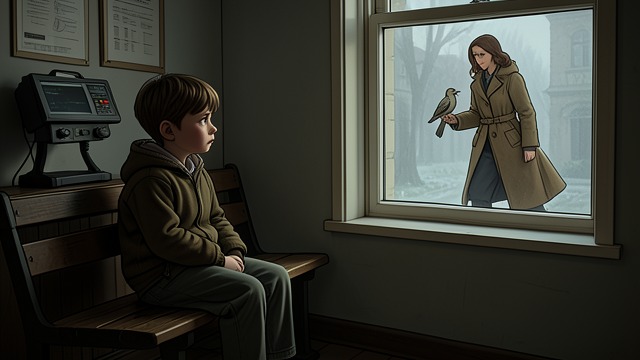
At the orphanage, Norma Jeane Baker remembers Della Monroe’s bird-feeding walks and the stories she told. She recalls Della not as a perfect or gentle grandmother, but as someone who gave her practical care and made the child feel noticed.
The need to be forgiven
Norma Jeane repeatedly returns to the belief that she behaved badly by hiding on the day Della called. The memory becomes part of her larger fear that love can be withdrawn because of a mistake, even when Della’s last words were a blessing.
Della’s place in Norma Jeane’s emotional life therefore outlasts her physical presence. The grandmother remains a figure of protection and judgment at once, a remembered voice against which later losses are measured.
Early childhood, before Norma Jeane Baker turns six
Summer 1934, shortly before Della Monroe’s death
Later that summer in 1934, in Della Monroe’s apartment
The night after Della Monroe’s death, in 1934
After Della’s death, during Norma Jeane Baker’s orphanage years
