
Motherhood and the Lost Child
BlondeThis thread follows motherhood as an imagined source of belonging and renewal, then as a site of bodily danger, grief, and unresolved guilt.
increasing Bearing strength in each event
 decreasing
Bearing strength in each eventdecreasingThe Doll as First Child
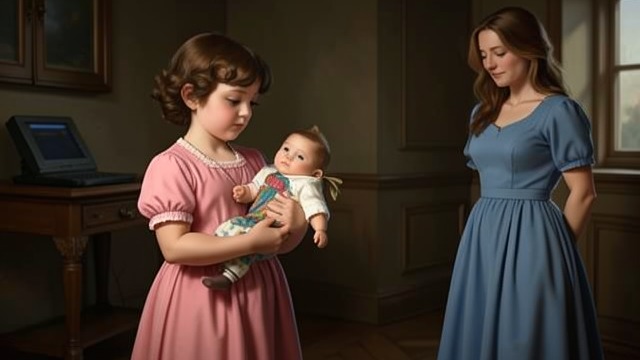
The Doll as First Child
A gift with a burden
Gladys gives Norma Jeane a beautiful doll and tells her that the child herself once slept in a drawer. The doll offers a focus for affection, but Gladys also frames it as a responsibility, joining care with anxiety and obligation.
Learning tenderness through an object
The doll’s limp limbs and fixed expression echo Norma Jeane’s uncertain sense of safety. She names it only through an intimate “you,” as if addressing herself in a mirror. The novel makes the doll an early rehearsal for motherhood: a small, fragile presence to protect, even when the child herself has rarely been protected.
Borrowed Motherhood
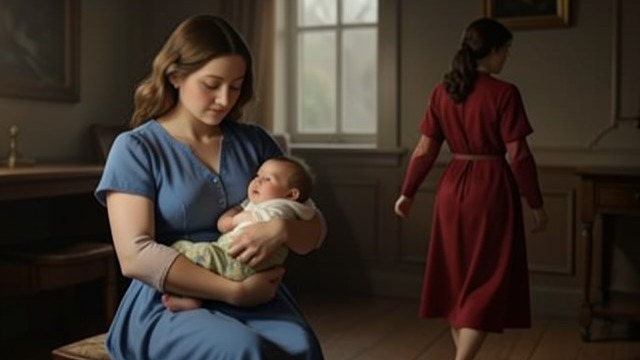
Borrowed Motherhood
Caring for another child
While her husband is away, Norma Jeane cares for Harriet’s infant, Irina, with tenderness and devotion. Their walks and small rituals give her a temporary experience of belonging as a mother, although the child is not hers and her husband remains absent.
A second disappearance
When Harriet leaves with Irina, Norma Jeane experiences the loss as another sudden abandonment. Her efforts to protect the child cannot secure a lasting bond, and the vanished mother and daughter become part of the private history she cannot resolve. Motherhood appears both as comfort and as a relationship she has no power to keep.
The Dream of a Child
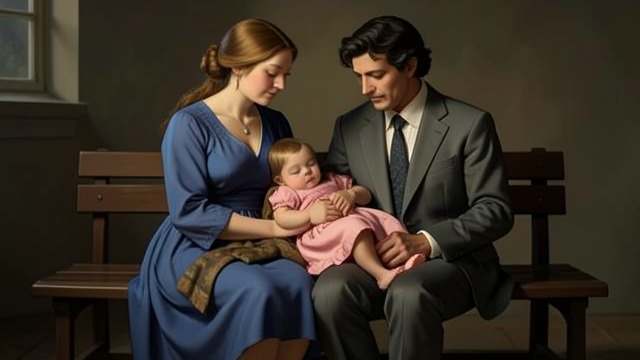
The Dream of a Child
A future imagined as belonging
With Cass and Eddy G, Norma Jeane imagines a child who might bind their unconventional household into a family. The fantasy offers a way to transform her own abandonment into something new: a child would be loved, claimed, and kept.
Hope entangled with danger
Her desire is sincere, but it unfolds amid unstable intimacy, secrecy, and a dependence on medication. The novel keeps the child’s paternity uncertain and shows how an imagined future can intensify risk as well as hope. Baby becomes a figure of renewal before becoming a source of grief.
The Lost Pregnancy
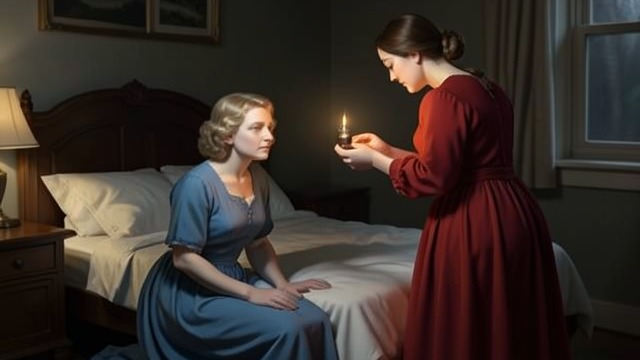
The Lost Pregnancy
Expectation and bodily crisis
During the summer at Galapagos Cove, Norma Jeane believes she is pregnant and imagines a child as a new beginning. The miscarriage turns that hope into a physical crisis and leaves her with the sense that the child has been taken from her before she could become a mother.
Grief without a secure explanation
The loss is entangled with fear, guilt, and the unstable intimacy of her marriage. She and the Drammaturgo understand the event differently, while she struggles to distinguish what happened from what she fears or remembers. The novel presents grief as real even when the facts of the loss remain uncertain.
A Mother’s Future Reimagined
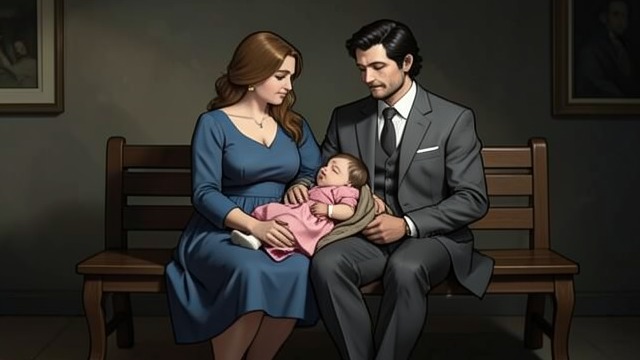
A Mother’s Future Reimagined
Hope after loss
After the miscarriage, Norma Jeane continues to imagine a future in which she and the Drammaturgo have a family. She tries to treat the loss as a grief they may survive together, and their shared plans briefly give shape to a future beyond Hollywood.
The past returns through Gladys
Her mother’s illness and her own memories of childhood complicate that hope. In visiting Gladys, Norma Jeane encounters both the wish to care for her and the fear of inheriting her suffering. Motherhood remains a promise of belonging, but it also carries the unresolved question of whether love can protect a child from harm.
June 1, 1932, during Norma Jeane’s sixth-birthday visit
1943–March 1944, while caring for Irina and after Harriet’s disappearance
1952–1953, during the Gemini relationship and before the pregnancy loss
August 10, 1956, at the Captain’s House in Maine
1956–1957, after the loss and during visits to Gladys
