
The Xerxine Cover-Up
Blood ShotThe investigation uncovers how Humboldt Chemical concealed years of toxic exposure, manipulated insurance arrangements, and left workers ignorant of their deteriorating health.
increasing Bearing strength in each event
 decreasing
Bearing strength in each eventdecreasingThe Unsettling Inquiry
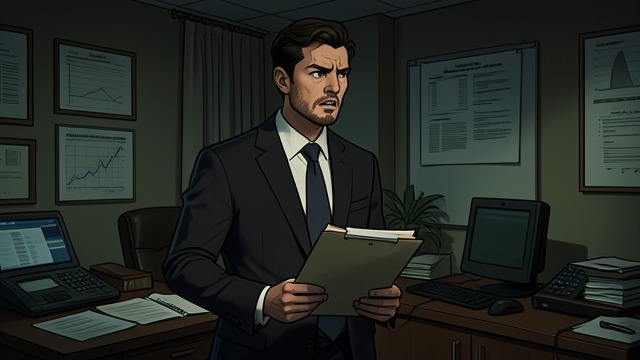
Questions at Xerxes
The records trail
V. I. Warshawski asks Gary Joiner for employee histories, but he first claims Steve Ferraro and Joey Pankowski never worked there.
Corporate alarm
Curtis Chigwell also reacts angrily to questions about his medical records, suggesting the old employee files remain dangerous.
The defensive answers make a routine search feel like an effort to contain information rather than locate former workers.
The Unreported Measurements
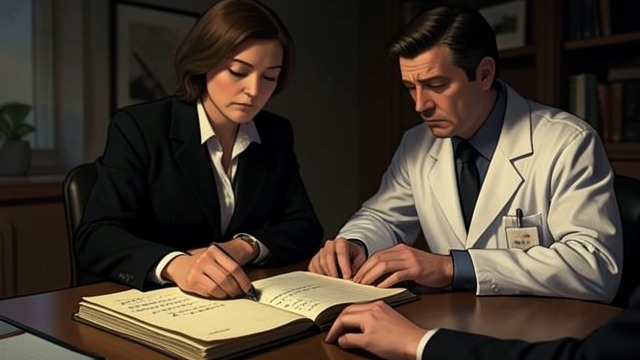
A Medical Archive
Long-term records
Clio Chigwell gives V. I. Warshawski the medical diaries kept by Curtis Chigwell, covering hundreds of Xerxes employees across decades.
A disturbing pattern
Medical review links the recorded blood changes of Louisa Djiak and Steve Ferraro to kidney, liver, and bone-marrow dysfunction.
The data show that the harm was visible in records even when workers themselves received no meaningful explanation.
The Insurance Motive
Numbers and Liability
The insurer’s warning
Curtis Chigwell explains that rising health claims led insurers to reject Xerxes, prompting Humboldt Chemical to seek a way to appear insurable.
The concealed costs
The company commissioned blood studies to project illness and workforce costs, not to warn employees or establish a claim for compensation.
That distinction exposes a system in which people’s bodies became financial data while the people themselves remained uninformed.
The Workers’ Case

A Case Reopened
Earlier defeat
Frederick Manheim explains that Steve Ferraro and Joey Pankowski sought workers’ compensation after severe illnesses forced them out of work.
The evidentiary reversal
The employer won by disputing causation and arguing that the danger was not yet known, but the medical records undermine that defense.
The new evidence transforms a lost local claim into the prospect of a broad legal challenge for former workers and families.
The Corporate Reckoning

Evidence in Motion
A rejected bargain
Gustav Humboldt offers money and protection if V. I. Warshawski returns the medical notebooks, but she refuses.
The legal horizon
Frederick Manheim takes the evidence to specialists and prepares to pursue claims, while public scrutiny begins to affect Humboldt Chemical’s value.
The company’s secrecy cannot erase the records; its attempt to buy silence instead confirms how much it fears their consequences.
early in V. I. Warshawski’s search
after Clio Chigwell shares the diaries
after the blood records are medically interpreted
when Frederick Manheim revisits the failed lawsuit
after the final confrontation at the Roanoke Building
